AI in Healthcare: ‘Often seen as a band-aid for structural problems’
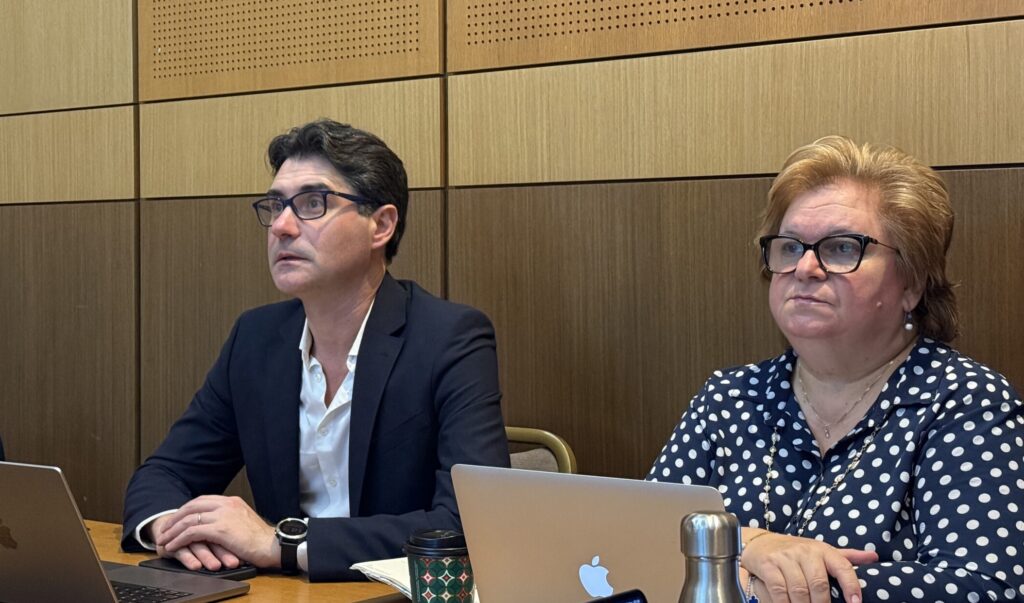
Recently, INDICATE co-lead Michel van Genderen shared his expertise on the Dutch Radio national news program De Nieuws BV(BNN VARA)at NPO Radio 1, discussing the challenges of implementing artificial intelligence in healthcare.
Artificial intelligence is often presented as the solution to the growing problems in healthcare. From administrative burdens to staff shortages, in theory, AI could provide relief. But in practice, only two percent of the AI applications studied are actually used on the care floor. “We conducted this research in 2021 as well, and we see exactly the same outcome now,” says internist-intensivist Michel van Genderen on De Nieuws BV. “We simply aren’t making any progress.”
According to the internist, the problem doesn’t lie in a lack of innovation, but in how that innovation is implemented. AI is often applied on top of existing healthcare systems without fundamentally changing those systems. AI is used because it can be used, not because it actually solves a real problem. “Healthcare is like a car,” Van Genderen explains. “And what we’re doing now is trying to install all these new gadgets, while the car itself actually needs to be redesigned. Many AI models are technically very impressive, but in practice they don’t solve a relevant, existing problem.”
“Predicting models can perform very well based on a dataset, but the real question is: what use is it for a doctor or patient? What problem are we actually solving with this?”
Clinical Application
This is evident, for example, in AI models that predict the likelihood of a patient dying. “Predicting models can perform very well based on a dataset,” says the internist. “But the real question is: what use is it for a doctor or patient?” Without a clear clinical application, the added value of these kinds of tools remains limited. The fundamental question “What problem are we actually solving with this?” is, according to Van Genderen, too rarely asked when developing AI applications.
The AI Hype
The AI hype is reinforced by consumer behavior. Technologies like ChatGPT are adopted rapidly, often without critical questions about reliability. This pattern can also be seen in healthcare. “We tend to think: this is new and smart, so we should use it,” says the internist. But in healthcare, different standards apply: transparency, safety, and explainability are crucial. “AI sells well and sounds promising, but it doesn’t always provide good solutions.” Discussions about responsibility are quickly seen as a hindrance to progress, whereas that responsibility is actually essential.
Innovation is Necessary
This nuance is important because the problems in healthcare are real. Van Genderen points to his experiences during the COVID-19 pandemic: the demand for care is growing rapidly, while the number of healthcare workers is falling behind. Technological innovation is therefore necessary. According to Van Genderen, AI is too often seen as a band-aid for structural problems. “Some of the things we try to solve with AI might not even need solving,” he suggests.
Ethics by Design
Recent research shows that language models respond differently in medical diagnoses when sociodemographic characteristics are included. In some cases, this leads to a completely different, and sometimes incorrect, assessment. Such “black-box” models undermine the trust of healthcare professionals and patients. Van Genderen argues that trust is essential for successful innovation. That’s why he advocates for so-called ethics by design – ethical, legal, and societal considerations that must be incorporated from the very start of the development process. “If you do it afterward, it’s already too late,” he states.
Read the full article or watch the radio item here (in Dutch).
Step into the future of Intensive Care innovation by participating in our Hackathon on ICU federated data usage. This dynamic event on February 5, 2026 invites ICU clinicians, engineers, data scientists, and startups from the INDICATE and EIT Health network to co-create a vision for a global, real-time federated data infrastructure.
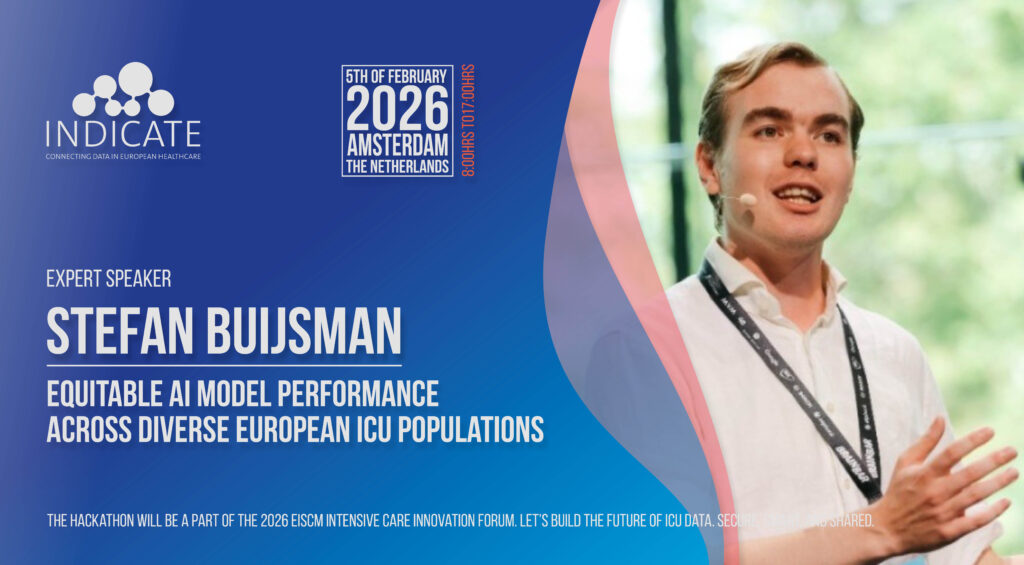
Expert speakers Our first expert speaker Dr. Stefan Buijsman, Associate Professor Responsible AI at TU Delft and member of the INDICATE Ethics Advisory Board, will focus on the topic of Equitable AI Model Performance Across Diverse European ICU Populations. Our second speaker will be announced soon!
On 25th and 26th November, the INDICATE Training & Education Workgroup gathered in Athens for a productive two-day workshop focused on advancing activities according to the ADDIE model (Analysis–Design–Development–Implementation–Evaluation) such as needs assessment, content and resource design, selection of methods and activities according to the expected outcomes.
These steps are essential building blocks for developing specialised and targeted education tracks that will support successful implementation and use of the INDICATE federated infrastructure for ICU data. The tracks are developed for clinicians, researchers, innovators, data providers, data users, service providers and infrastructure providers across Europe.
Key outcomes
Planning of next steps to deliver first education tracks and training materials
Alignment on learner needs and educational requirements
Strong commitment to developing shared resources: glossary & knowledge repository
Prioritization of educational topics: Legal Framework & Data Models
The first version of the ETL flow of the Indicate-platform is almost ready! Work Package 2 recognized the need for a clear data flow to support data provider onboarding and ETL processes, and is developing this valuable and useful document in close coordination with the other Work Packages. While the ETL flow is ultimately a result of WP2, it is truly a joint effort.
Wiki-page Critical Path and Timeline
The critical path and project timeline wiki-page is now live on the INDICATE wiki platform. The page also provides an overview on all milestones and deliverables, allowing you to quickly see what’s coming up and easily track the project’s progress.
INDICATE Academy
All consortium members now have access to the INDICATE Academy. Currently, they can find the course “INDICATE – The Basics” there.
This course functions as a short and to-the-point online learning module in which several aspects of INDICATE are explained, such as the scope of the European Union, data space concepts, the need for a Common Data Model, federated data analysis, the INDICATE use cases, and the FAIR principles. Please feel free to fill out the open questions at the end in order to help shape the educational program.
In the coming months, the educational material will be expanded with the help of the Training and Education Workgroup and the input from the various Work Packages to support the effective, correct, and secure use of the INDICATE infrastructure. You can expect an update when new content becomes available.
INDICATE GitHub
The INDICATE GitHub is established as a public-facing repository for collaborative development, for example for a minimal viable dataset and benchmarking dashboards. It is not intended for central infrastructure code or study execution (handled via Azure DevOps). This is particularly useful for advanced use cases, such as machine learning models and benchmarking dashboards.
This group was established in February 2025 to meet milestone MS3: “Data Provider Support Workgroup established.” Since it is aligned with the development of the Data Provider Handbook – and that work has progressed significantly in recent months – we have identified the need to refine the composition of this group and update the experts involved (November 2025).
The new structure will help ensure that we can provide meaningful guidance and effective support to data providers during their onboarding and throughout the ETL process required to comply with the INDICATE Common Data Model.
I am originally from California and have been living in the Netherlands for the past two years. My academic background is in political science and public policy, and I completed my Master’s in Public Policy and Governance at the University of Amsterdam. Throughout my studies and professional experience, I have been driven by a strong commitment to social justice, equitable access to public services, and the belief that healthcare systems should work for everyone. This combination of international experience and policy expertise shapes my approach to supporting large, collaborative European projects.
What do I do in INDICATE?
I’m one of the Project Managers for INDICATE, and I help keep the consortium running smoothly from day to day. I coordinate activities across the project, keep an eye on timelines, and make sure our deliverables are completed on time and to a good standard. I work closely with the project’s Principal Investigators, Michel van Genderen and Christian Jung, supporting them in their role as coordinators, and I collaborate with Jan van den Brand who leads the scientific and technical direction of INDICATE.
I’m also one of the main contact points for our consortium partners. Whether someone has a quick question or needs to be connected with the right expert, I make sure they get the support they need. Alongside that, I handle our communication with the European Commission, keep track of our obligations, and make sure all the required reporting and documentation, including technical, administrative, and financial information, is organized and submitted properly. Additionally, I’ve been working on the evaluation of all international legal regulations and how INDICATE stays compliant with these rules.
What motivates me to be part of INDICATE?
I have deep personal motivation for working in the healthcare domain, and INDICATE offers a unique opportunity to contribute to a project that will ultimately improve patient journeys and strengthen healthcare systems across Europe. The project’s mission, which focuses on enabling safe, trustworthy, and interoperable use of health data for diagnostics and decision support, aligns closely with my passion for fairness and healthcare equity.
Being part of INDICATE means contributing to a future where healthcare is more responsive, more data-driven, and more accessible for all people. The idea that our work can support better clinical outcomes, reduce structural inequalities, and empower both patients and clinicians inspires me every day.
What do I expect to accomplish within INDICATE?
My goal is to help ensure that the INDICATE platform becomes a resource that benefits all European citizens, regardless of their nationality, background, or the country where they receive care. I want to contribute to building a system that embeds inclusivity from the start, supports minority and underserved communities, and reflects the rich diversity of Europe’s population in its data and design.
Beyond this, I hope to help create project structures and workflows that make collaboration easier across the consortium, leading to a smooth implementation of the INDICATE blueprint, the demonstrators, and the long-term sustainability model.
How does my background or expertise contribute to INDICATE’s goals?
The field of AI-enabled healthcare is rapidly evolving, and it requires careful navigation of emerging regulations, ethical guidelines, and governance frameworks. My policy and legal background helps me interpret complex documentation, ranging from EU digital health regulations to AI Act requirements, and translate these into practical steps for compliance within the project.
Additionally, my experience in public governance and stakeholder coordination supports INDICATE’s emphasis on trust, transparency, and responsible innovation.
I bring an ability to bridge legal and organizational perspectives, which is essential for a project that must integrate scientific innovation with robust governance and real-world implementation.
My name is María Parra Rodríguez Armijo. I am part of the Computational Health Informatics Group at Virgen del Rocío University Hospital, within the Andalusian Health Service (SAS). My work focuses on data interoperability, FAIR principles and the preparation of clinical data for research and innovation.
What do I do in INDICATE?
I contribute to the methodological guidance developed in WP2, designing the ETL dataflow and translating interoperability standards into practical instructions that hospitals can apply when preparing their ICU data.
What am I up to during INDICATE?
I am part of Work Package 2 (WP2), which focuses on defining the INDICATE Common Data Models and supporting data providers in preparing their ICU data for the federated infrastructure. Within WP2, I am responsible for drafting the Data Provider Handbook, which provides the methodological and technical guidance that data providers will follow when preparing and transforming their data. I also support coordination across WP2 to ensure that the guidance is coherent, feasible and aligned with the needs of the clinical use cases.
What motivates me to be part of INDICATE?
I am motivated by the challenge of making complex data harmonisation processes accessible and supporting the adoption of shared methodologies across hospitals.
As the year comes to a close, we would like to extend our warmest wishes for a healthy, inspiring New Year.
In 2026, we will continue our mission to advance patient-centered care and promoting ethically responsible data use and the development and implementation of trustworthy AI models.
Thank you for your commitment, collaboration, and enthusiasm. We look forward to continuing this meaningful journey together in the coming year!
Warm wishes,
The INDICATE team
INDICATE Education Workshop
Date: Thursday, 5 February 2026 Time: 08.00 – 17.00 Location: Pakhuis de Zwijger, Amsterdam
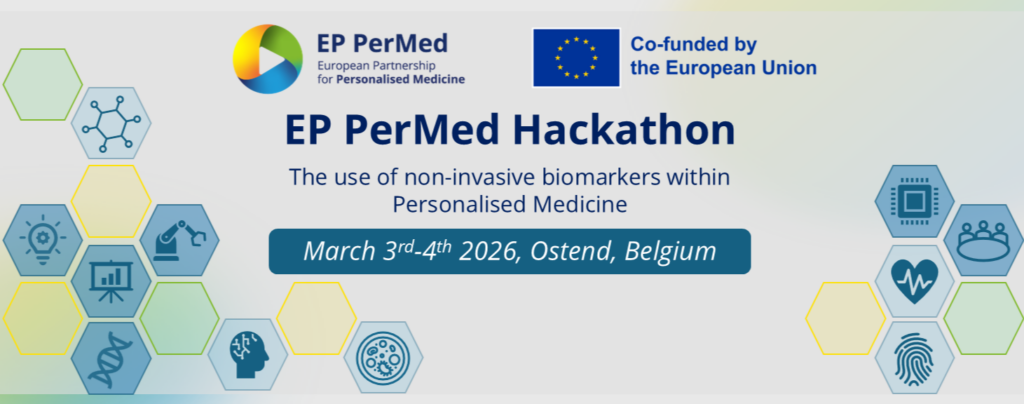
EP PerMed, the European Partnership for Personalized Medicine, is organizing its first Hackathon from March 3 to 4, 2026, in Ostend, Belgium. EIT-Health is official partner of this event.
Date: April 18-20, 2026 Location: SS Rotterdam, The Netherlands
The seventh European OHDSI Symposium ‘Continuous Collaboration for Living Evidence Generation’ will be held in Rotterdam (NL) on April 18-20, 2026, again at an inspiring location, the Steam Ship Rotterdam. The symposium is a platform to share results and ideas about the use of the OMOP-CDM, tool development, and future research.
This meeting is organized by WP5 Date: March 17, 2026 Time: 12.30 pm (CEST) Location: Online Attend the meeting via:info@indicate-europe.eu
Design Workshop
Save the date: March 26-27, 2026 Location: ESICM Headquarters, Brussels, Belgium
Training & Education Workgroup
Date: Wednesday June 10, 2026 Location: ESICM Headquarters, Brussels, Belgium
Communication Network
This meeting is organized by WP5 Date: September 8, 2026 Time: 12.30 pm (CEST) Location: Online Attend the meeting via:info@indicate-europe.eu
INDICATE Consortium meeting
Date: September 14-16, 2026 Location: Rome, Italy More details will follow!
Training & Education Workgroup
Date: December 2-3, 2026 Location: Athens, Greece
Do you have a special request? Would you like to share news or a publication? Would you like to be (digitally) connected to a certain person? Did you speak or went to an event related to INDICATE or INDICATE-subjects? Please feel very welcome to share your questions or input with: info@indicate-europe.eu
When sharing your news, please make sure to attach your photos/images or figures and always make sure when people are visible, you have their permission to use the pictures.
Below with the format you can use to share your news with us:
What is the purpose of your news?
What title can we use?
Who attended (names, roles, if related to INDICATE meetings/events)?
What were the main topics discussed or key findings?
Were any follow-up actions or appointments agreed upon?
Release of closed beta version of the core services (KPMG)
WP6 | MS17
Public release of the Quality Benchmark portal for ICUs across Europe (UMG)
Deliverables
WP3 | D3.2
Roadmap for the sustained operations and governance of the ICU data infrastructure, including on-boarding and off-boarding plan and business model (KPMG)
WP4 | D4.2
Closed beta of the core services and data federation network, metadata catalogue, and centralised marketplace for services (KPMG)
WP5 | D5.2
MVP of the collaborative knowledge transfer platform (Cradeq)
The seventh European OHDSI SymposiumContinuous Collaboration for Living Evidence Generation will be held in Rotterdam (NL) on April 20th, 2026, again at an inspiring location, the Steam Ship Rotterdam.
The symposium is a platform to share results and ideas about the use of the OMOP-CDM, tool development, and future research. The day will include a collaborator showcase including posters and podium presentations to highlight OHDSI’s research achievements, and interactive demonstrations of OHDSI’s open-source software tools.
During the symposium, you will be updated on the exciting work being done all over Europe, in National Nodes, large European Projects, and other initiatives. Like last year, they will also reserve a lot of time for networking.
The event encourages people who are new to OHDSI and are interested to learn more about this exciting initiative to join their journey. There is a slot reserved for newcomers to meet the experts in one-to-one sessions.
The main symposium will take place on Monday, April 20th, 2026 on the ship SS Rotterdam. Saturday, April 18th, and Sunday, April 19thwill be dedicated to workshops and workgroup meetings, to be held in the Education Centre of the Erasmus University Medical Center, Rotterdam, The Netherlands.
My name is María Parra Rodríguez Armijo. I am part of the Computational Health Informatics Group at Virgen del Rocío University Hospital, within the Andalusian Health Service (SAS). My work focuses on data interoperability, FAIR principles and the preparation of clinical data for research and innovation.
What do I do in INDICATE?
I contribute to the methodological guidance developed in WP2, designing the ETL dataflow and translating interoperability standards into practical instructions that hospitals can apply when preparing their ICU data.
What am I up to during INDICATE?
I am part of Work Package 2 (WP2), which focuses on defining the INDICATE Common Data Models and supporting data providers in preparing their ICU data for the federated infrastructure. Within WP2, I am responsible for drafting the Data Provider Handbook, which provides the methodological and technical guidance that data providers will follow when preparing and transforming their data. I also support coordination across WP2 to ensure that the guidance is coherent, feasible and aligned with the needs of the clinical use cases.
What motivates me to be part of INDICATE?
I am motivated by the challenge of making complex data harmonisation processes accessible and supporting the adoption of shared methodologies across hospitals.
I am originally from California and hold both a BA and MSc in Political Science, specializing in Public Policy and Governance. During my studies, I participated in the UCDC program and completed a semester abroad at Bocconi University. My background combines academic training in politics, law, and governance with experience in international and policy-oriented environments.
What do I do in INDICATE?
Within INDICATE, I work as a Project Administrator supporting the Project Manager, Lisanne van Prooyen Schuurman, and the coordination team. My role focuses on the day-to-day administrative and organizational support of the consortium, including assisting with technical and financial reporting, organizing meetings and preparing minutes, supporting communication between partners and with the European Commission, and helping track project milestones and deadlines.
What motivates me to be part of INDICATE?
I am motivated by contributing to an international research collaboration that focuses on improving intensive care through ethical and privacy-preserving data use. INDICATE’s federated approach to health data is particularly meaningful, as it enables collaboration across Europe while ensuring patient data remains protected within hospitals. I value being part of a project that combines governance, innovation, and real-world healthcare impact.
What do I expect to accomplish within INDICATE?
I aim to support the smooth implementation of the project by ensuring that coordination, communication, and administrative processes run effectively across the consortium. I also hope to strengthen my experience in supporting large-scale European collaborations and contribute to maintaining clear structures that help the project meet its milestones and deliverables.
How does my background or expertise contribute to INDICATE’s goals?
My academic background in Political Science and Public Policy and Governance provides a strong foundation for understanding institutional structures, governance frameworks, and multi-stakeholder collaboration within European projects. My professional experience across policy, legal, and organizational environments has strengthened my ability to support structured communication, manage detailed processes, and work across diverse teams. This allows me to contribute to the effective coordination and administration that supports INDICATE’s goal of building a secure federated infrastructure for intensive care data across Europe.
On 25th and 26th November, the INDICATE Training & Education Workgroup gathered in Athens for a productive two-day workshop focused on advancing activities according to the ADDIE model (Analysis–Design–Development–Implementation–Evaluation) such as needs assessment, content and resource design, selection of methods and activities according to the expected outcomes.
These steps are essential building blocks for developing specialised and targeted education tracks that will support successful implementation and use of the INDICATE federated infrastructure for ICU data. The tracks are developed for clinicians, researchers, innovators, data providers, data users, service providers and infrastructure providers across Europe.
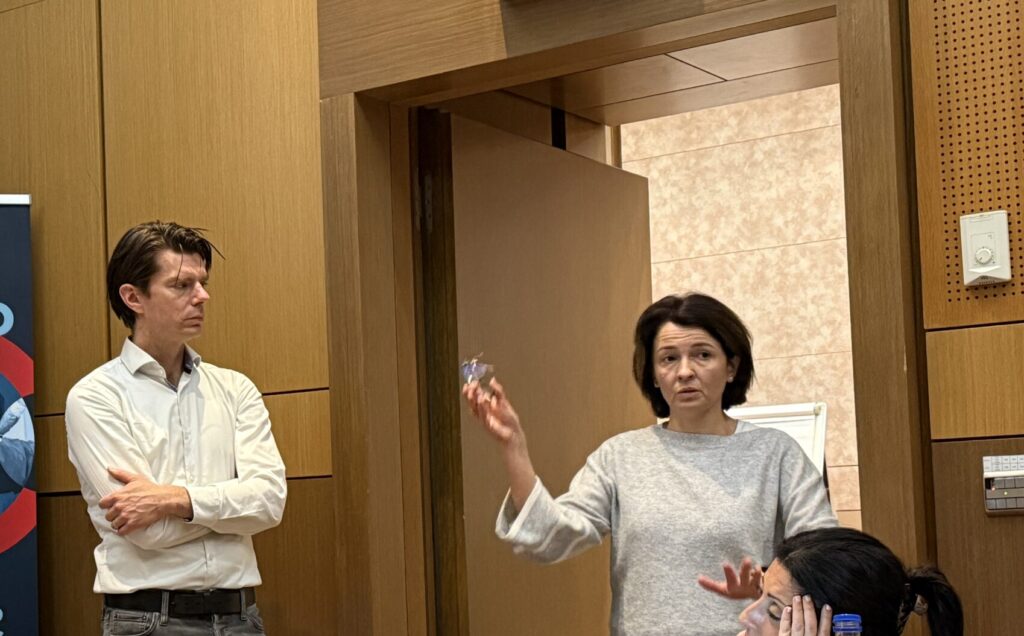
The meeting opened with a roundtable introduction, where all attendees briefly presented themselves, setting the stage for cross-disciplinary collaboration. Day one featured a showcase of the INDICATE knowledge platform, a review of the needs-assessment activities, and the breakout sessions of the three working groups.
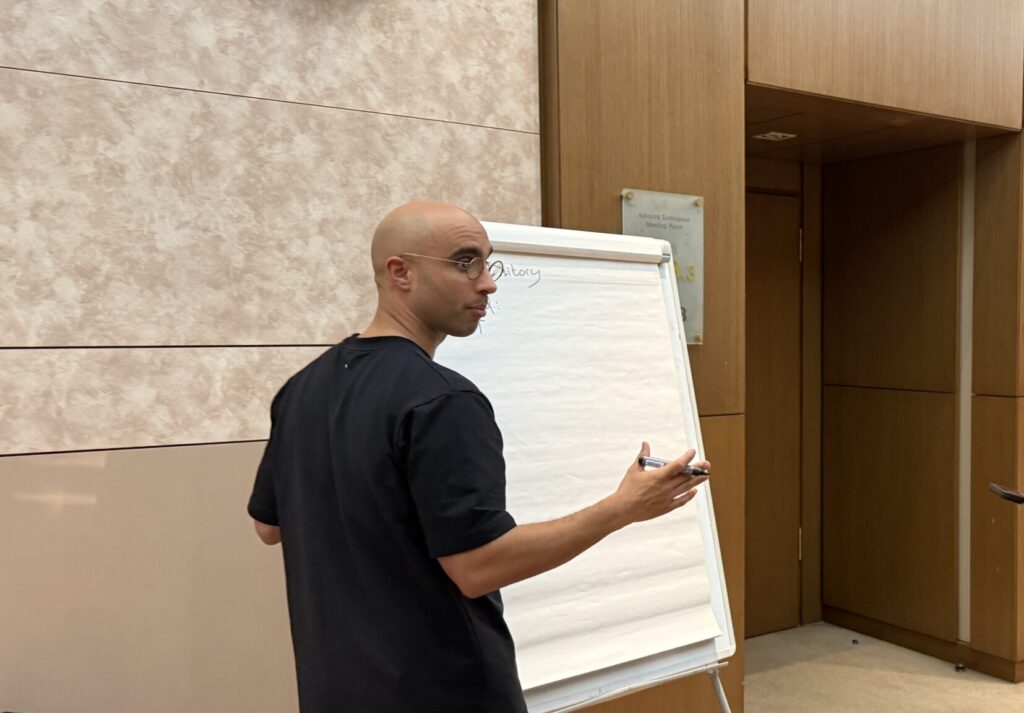
Day two kicked off with great energy, as the groups shared their initial findings and continued shaping key priorities for the first topics and educational activities to be developed and delivered by June 2026. The sessions concluded with a concrete planning of the next steps for the Training & Education Workgroup.
Key highlights:
Productive alignment on the needs assessment activities, ensuring the educational solutions address learner requirements.
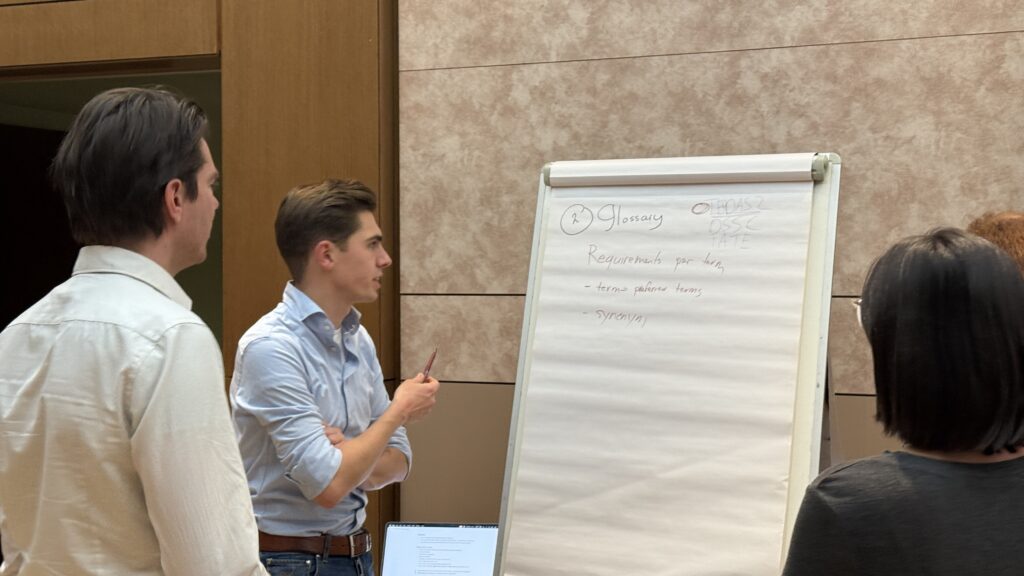
Strong collective commitment to advancing the development of critical resources for the INDICATE community such as a common glossary and repository, ensuring alignment on definitions and evidence-based insights that reflect the need for education on AI-driven critical care across Europe.
Clear prioritisation of educational topics on the Legal Framework and Data Models, expected outcomes, methods, activities and timeline to take the next steps in developing education tracks and training materials.
A big thank you to Maria Theodorakopoulou and Despina Nikolopoulou (HSICM) for hosting us these two days!
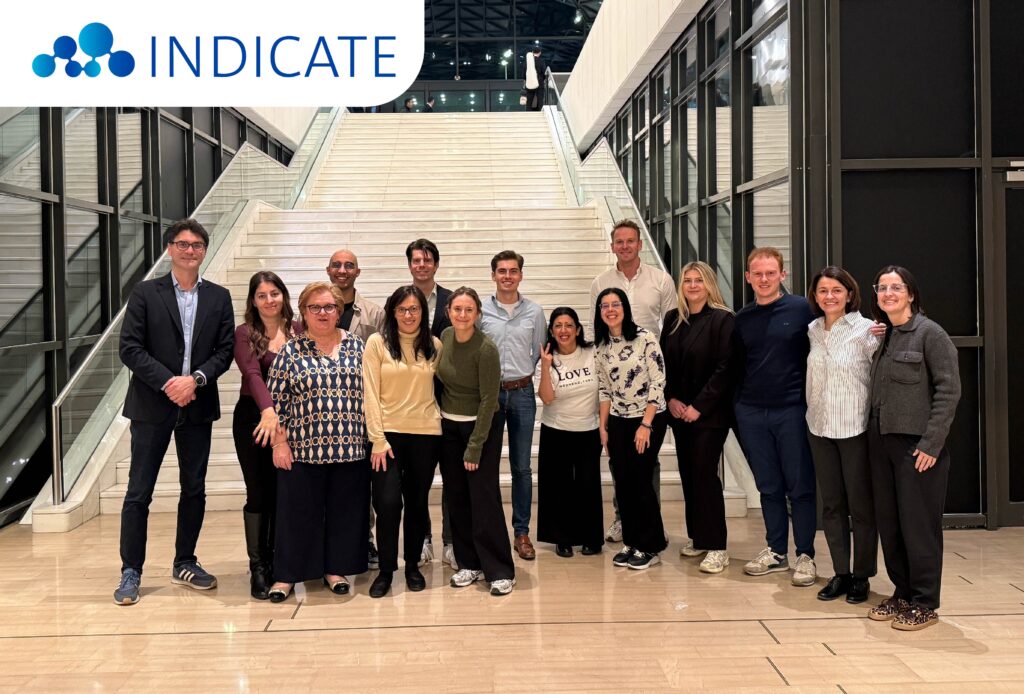
And also thank you to all who joined! Michel van Genderen (INDICATE PI), Jan van den Brand (Erasmus MC) Joel Alexandre (ESICM), Maurizio Cecconi (ESICM), Maria Theodorakopoulou (HSICM), Maarten Ligtenberg (Cradeq), Melania Istrate (ESICM), Aliza Bos (Erasmus MC), Elisa Vera (ESICM), Despina Nikolopoulou (HSICM), Giovanna Mercurio (FPG), Celia Alvarez (SAS), Bert Cappelle (UZGhent), Mark Driessen (KPMG) and Philogirl.