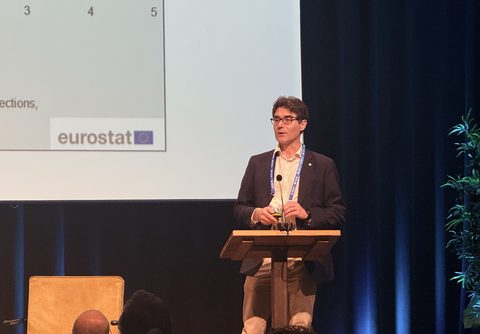
My name is Mark Driessen, Manager at KPMG Netherlands, based in Amstelveen. I started my professional career as a physical therapist, which gave me a strong grounding in clinical practice and the day‑to‑day realities of healthcare delivery. After a period at the Royal Dutch Marines I continued my career in consultancy with a focus on digital strategy and healthcare transformation, where I now work at the intersection of care, data, and technology.
What do I do?
In my current role, I advise healthcare organizations on digital strategy, data & AI, cloud transformation, and governance. I support organizations in translating strategic ambitions into practical, sustainable solutions, with a strong focus on collaboration between care providers, technology partners, and policymakers. My work combines strategic design with hands‑on implementation, always anchored in real healthcare needs.
What am I up to during INDICATE? Connected to which WP? Which cases do I work on?
Within INDICATE, I contribute primarily to Work Package 3 (WP3). My focus is on topics such as governance models, business models and the organizational structure of the future organization, and sustainable collaboration mechanisms for data sharing. WP3 focuses on supporting partners in translating technical and clinical ambitions into viable organizational and governance setups that can scale beyond the project context into a sustainable organization.
What motivates me to be part of INDICATE?
I’m excited to contribute to Indicate. What motivates me most is INDICATE’s ambition to bridge the gap between data, technology, and real clinical impact. Having started my career in direct patient care, I am driven by initiatives that do not stop at technical innovation, but actively improve how healthcare professionals collaborate and how patients ultimately benefit from better use of data.
What do I expect to accomplish within INDICATE?
Within INDICATE, I aim to help create clear, workable governance and organizational foundations that enable data sharing to function in practice – not only during the project, but also afterwards. My goal is to contribute to outcomes that are legally sound, organizationally feasible, and broadly adoptable across different healthcare contexts in Europe. Together we can drive meaningful change.
How does my background or expertise contribute to the goals of INDICATE?
My background combines experience in direct patient care, management roles in healthcare institutions and working in digital strategy and large‑scale healthcare transformation. This allows me to connect strategic, technical, and organizational perspectives, and to help different stakeholders understand each other’s challenges and goals. Within INDICATE, I aim to use this bridging role to support solutions that are trusted, usable, and sustainable across diverse healthcare settings.
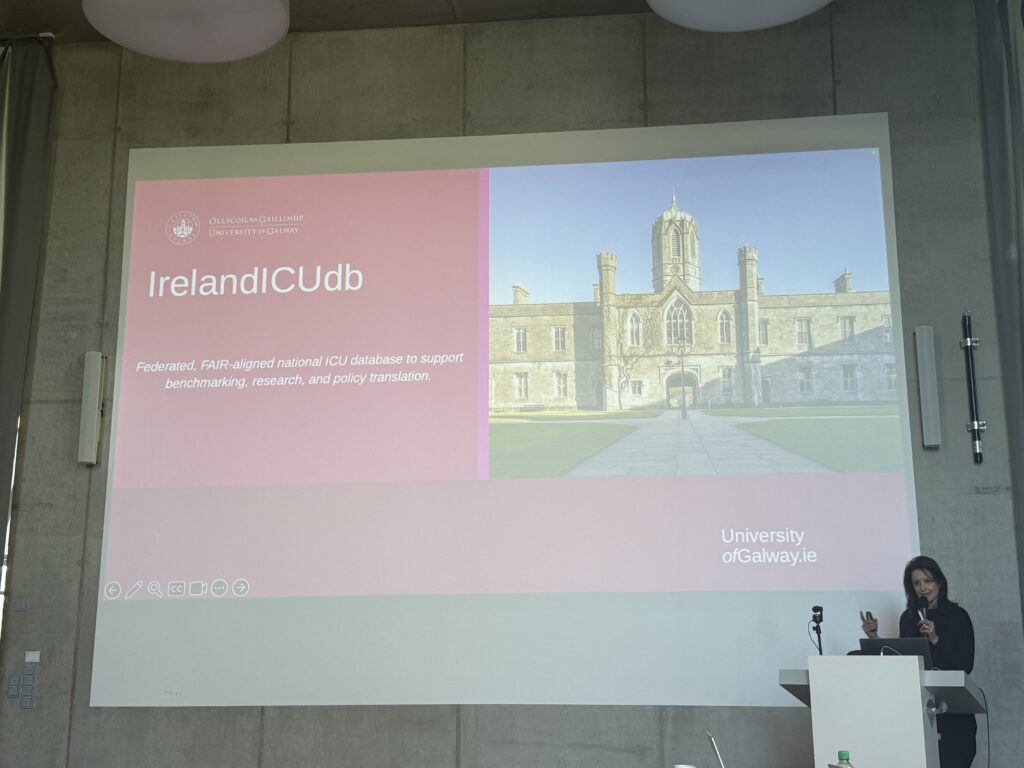
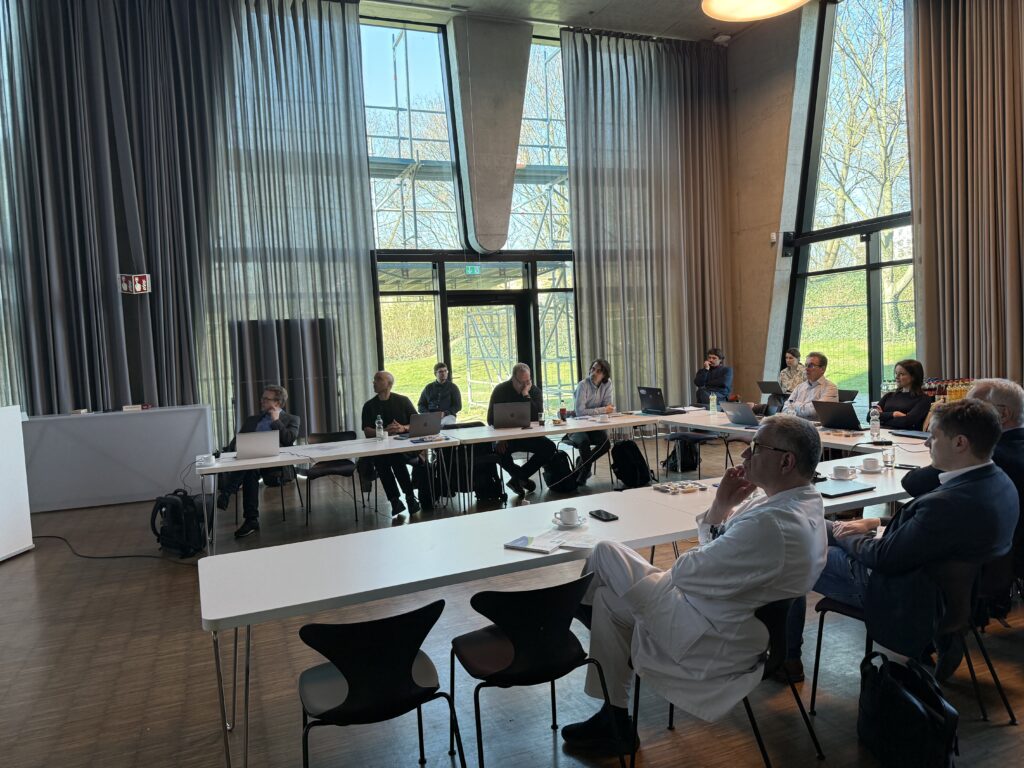
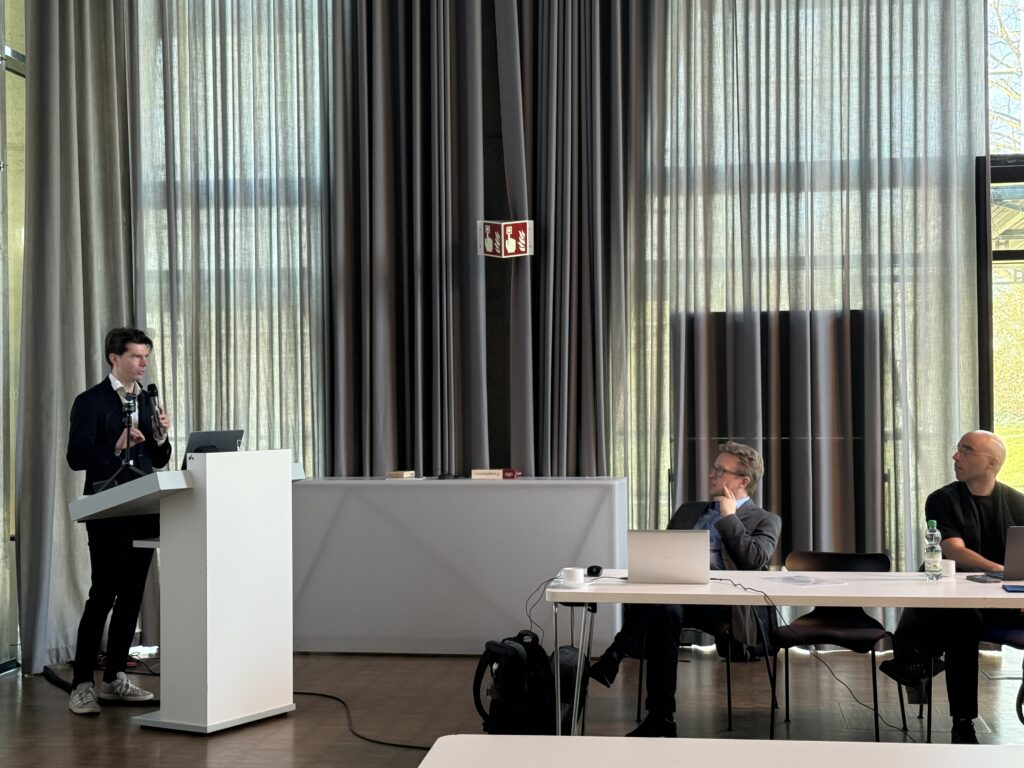
On 5 March 2026, INDICATE hosted a hybrid round table in Düsseldorf, bringing together experts from across Europe for an active exchange between clinicians, researchers, and technical experts working on data-driven healthcare. The day was moderated by INDICATE PI’s Michel van Genderen from Erasmus MC and Christian Jung from Universitätsklinikum Düsseldorf.
The event featured presentations from leading initiatives, including:
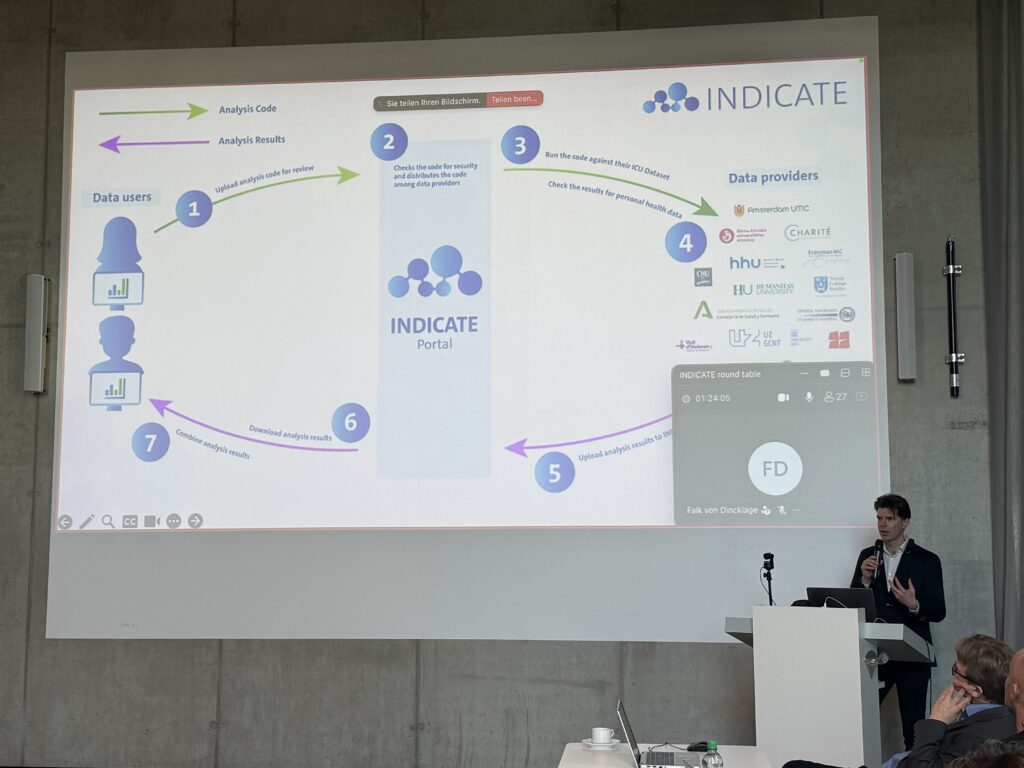
INDICATE – Jan van den Brand (Technical Lead INDICATE)
Each project shared its objectives, current progress, and key lessons learned.
Key topics included:
Building federated platforms for cross-hospital research
Ensuring secure, privacy-by-design data sharing
Governance and legal frameworks for multi-institutional studies
Interoperability and data harmonization across systems
Insights
Federated infrastructures are increasingly viable, but challenges remain around data standards, governance, and coordination. Synthetic data environments and shared governance models are helping build trust while enabling large-scale research and AI development.
The round table was a valuable forum for sharing experiences, identifying challenges, and exploring future European collaborations in health data research.
On 5 March, Luis Martín-Villén (Head of ICU), Carlos Luis Parra-Calderón (Head of Technological Innovation), Celia Alvarez-Romero, María González-López, María Parra-Rodríguez-Armijo, Paloma Bravo-del-CID, and Paco Rey-Garduño (Computational Health Informatics Group) from Hospital Universitario Virgen del Rocío and part of the INDICATE consortium, presented an INDICATE poster at the XXII Researchers’ Forum, organised by the Institute of Biomedicine of Seville.
The forum offered a great space for researchers from the hospital to exchange ideas and showcase their work. Our poster highlighted INDICATE’s main goal: developing a European federated infrastructure for ICU data. This approach enables collaborative research without physically sharing sensitive information, improves clinical data quality, and supports evidence-based decision-making.
Key topics included the federated infrastructure model, ICU data harmonization, and the hospital’s strategic role within the European network. As a follow-up, clinical and technical alignment for local implementation of the common data model was proposed.
In order to support all consortium members in using the INDICATE infrastructure effectively, correctly, and securely, we are organizing a training programme on Data Enablement & Data Model consisting of five sessions.
The programme will give participants a solid grounding in the INDICATE onboarding framework, interoperability, and the OMOP data model, along with practical skills in ETL workflow design, data quality checks, and metadata/cataloguing to support secure, reusable data within INDICATE.
Session dates
All sessions will be held from 14.00 – 16.00 (CEST) via Zoom.
March 30 – Session 1 | Onboarding Introduction & Data Model
April 9 – Session 2 | Interoperability, OMOP & Vocabularies
May 7 – Session 3 | ETL – Workflow
May 21 – Session 4 | ETL – Best practices, common pitfalls, and Data Provider Handbook references
June 17 – Session 5 | Metadata standards, cataloguing workflows, and examples of best practices
INDICATE Hackathon: Building the future of European Intensive Care Data
ICU clinicians, engineers, and data scientists from across Europe gathered for the INDICATE Hackathon, exploring how federated ICU data can improve patient care, drive equitable AI, and deliver real-world clinical value.
Two main challenges guided the teams:
Value Proposition & Long-term Sustainability
Equitable AI Model Performance Across Diverse European ICU Populations
Interview with INDICATE co-lead Michel van Genderen on De Nieuws BV at NPO Radio 1
Recently, INDICATE co-lead Michel van Genderen shared his expertise on the Dutch Radio national news program De Nieuws BV (BNN VARA)at NPO Radio 1, discussing the challenges of implementing artificial intelligence in healthcare.
Maurizio Cecconi speaks on innovation during the ESICM Intensive Care Innovation conference
During the recent ESICM event, Intensive Care Innovation, Maurizio Cecconi delivered a talk titled “Innovations: what should they mean for Intensive Care.” He explored the role of technological and organizational innovation in shaping the future of intensive care, highlighting clinical impact, implementation, patient value and the INDICATE Project.
INDICATE Round Table on Federated Infrastructures in Medical Research
On 5 March 2026, the hybrid INDICATE Round Table titled “Challenges and opportunities of federated infrastructures in medical research” will take place. The event will bring together leading experts to exchange experiences between EU projects, discuss challenges and lessons learned, and foster networking opportunities. The programme will be moderated by INDICATE Co-PI’s Michel van Genderen and Christian Jung.
Michel van Genderen appointed Adjunct Professor at Duke University
We are delighted to announce that Michel van Genderen, Principle Investigator (PI) of the INDICATE project, has been appointed Adjunct Professor in the Department of Biostatistics and Bioinformatics at Duke University School of Medicine. In this role, he will focus on the global alignment of responsible AI development and implementation in healthcare.
INDICATE Data Provider Onboarding – Design Workshop – March 26 – 27
On March 26 till March 27, INDICATE will host the INDICATE Data Provider Onboarding Meeting at the ESICM Headquarters in Brussels, Belgium.
This two-day workshop will focus on translating INDICATE’s vision into practical implementation, guiding data providers through the onboarding process and the pathway toward federated ICU research participation. The sessions will include hands-on discussions, technical alignment, and collaborative planning to ensure smooth integration within the INDICATE framework.
INDICATE Training Programme – Data Enablement & Data Model
We are happy to invite you to the five sessions of the INDICATE Training Programme on Data Enablement & Data Model.
This training programme aims to support all consortium members in using the INDICATE infrastructure effectively, correctly, and securely! The programme will give you a solid grounding in the INDICATE onboarding framework, interoperability, and the OMOP data model, along with practical skills in ETL workflow design, data quality checks, and metadata/cataloguing to support secure, reusable data within INDICATE.
Session dates All sessions will be held from 14.00 – 16.00 (CEST) via Zoom.
March 30 – Session 1 | Onboarding Introduction & Data Model
April 9 – Session 2 | Interoperability, OMOP & Vocabularies
May 7 – Session 3 | ETL – Workflow
May 21 – Session 4 | ETL – Best practices, common pitfalls, and Data Provider Handbook references
June 17 – Session 5 | Metadata standards, cataloguing workflows, and examples of best practices
Bert Cappelle
University Hospital of Ghent
My name is Bert Cappelle. I work as a data engineer at the University Hospital of Ghent (UZ Gent) within the Data Science Institute.
My work focuses on enabling and facilitating clinical research by making complex healthcare data accessible and usable for non-technical users, such as clinicians and researchers.I design and maintain data pipelines, data models, and validation workflows that allow research teams to work with high-quality data without needing deep technical expertise. I am also the technical representative for UZ Gent within the Federated Health Innovation Network (FHIN), which supports federated learning for relevant clinical use cases. In addition, I am leading implementation and maintenance of the Observational Medical Outcomes Partnership (OMOP) Common Data Model (CDM) at UZ Gent.
Find out more about Bert’s contributions to INDICATE in his complete bio.
Location: Rome, Italy More details will be announced soon.
Dec 2-3
Training & Education Workgroup
In-person meeting
Location: Athens, Greece
External events
Apr 18-20
OHDSI Europe Symposium 2026
Location: SS Rotterdam, The Netherlands
The seventh European OHDSI Symposium ‘Continuous Collaboration for Living Evidence Generation’ will be held in Rotterdam (NL) on April 18-20, 2026, again at an inspiring location, the Steam Ship Rotterdam. The symposium is a platform to share results and ideas about the use of the OMOP-CDM, tool development, and future research.
The main symposium will take place on Monday, April 20th, 2026 on the ship SS Rotterdam. Saturday, April 18th, and Sunday, April 19th will be dedicated to workshops and workgroup meetings, to be held in the Education Centre of the Erasmus University Medical Center, Rotterdam, The Netherlands.
Do you have a special request? Would you like to share news or a publication? Would you like to be (digitally) connected to a certain person? Did you speak or went to an event related to INDICATE or INDICATE-subjects? Please feel very welcome to share your questions or input with: info@indicate-europe.eu
When sharing your news, please make sure to attach your photos/images or figures and always make sure when people are visible, you have their permission to use the pictures.
Below with the format you can use to share your news with us:
What is the purpose of your news?
What title can we use?
Who attended (names, roles, if related to INDICATE meetings/events)?
What were the main topics discussed or key findings?
Were any follow-up actions or appointments agreed upon?
Release of closed beta version of the core services (KPMG)
WP6 | MS17
Public release of the Quality Benchmark portal for ICUs across Europe (UMG)
Deliverables
WP3 | D3.2
Roadmap for the sustained operations and governance of the ICU data infrastructure, including on-boarding and off-boarding plan and business model (KPMG)
WP4 | D4.2
Closed beta of the core services and data federation network, metadata catalogue, and centralised marketplace for services (KPMG)
WP5 | D5.2
MVP of the collaborative knowledge transfer platform (Cradeq)
On March 26 till March 27, INDICATE will host the INDICATE Data Provider Onboarding Meeting at the ESICM Headquarters in Brussels, Belgium. The two-day event will focus on moving from vision to implementation in federated ICU research.
Participants will learn about INDICATE’s mission and how it aligns with European healthcare priorities, as well as how federated data works to protect data sovereignty. The programme will also cover the benefits, risks, and potential returns for institutions joining the initiative.
A key part of the meeting is guiding organisations through the full onboarding process for Data Providers, including legal agreements, data preparation and ETL workflows, required software and infrastructure, and the essential organisational roles involved. By the end of the event, attendees will have developed a practical implementation roadmap outlining milestones, deliverables, resource needs, and timelines for onboarding their institution. The objective is not to reach a final decision, but to collaboratively explore:
What steps, dependencies, and challenges may arise across legal, technical, and data domains
Which internal stakeholders need to be involved
What roles and responsibilities are required
Programme Day 1 – Understanding the Landscape
Theme: What is INDICATE and what does success look like?
09.00 – 09.25
Registration & Welcome Coffee
09.25 – 09.35
Opening and Welcome
Christian Jung
09.30 – 11.00
Module 1: The INDICATE Mission Interactive lecture
Why federated ICU data matters for European healthcare
Jan van den Brand
11.00 – 11.15
Coffee Break
11.15 – 12.45
Module 2: Federated Data Demystified Technical Demo
See federated analytics in action (sneak peak)
Bert Cappelle
12.45 – 13.45
Lunch
13.45 – 15.15
Module 3: The Onboarding Blueprint Case Study Analysis
Understanding the journey from commitment to production
Jan van den Brand
15.15 – 15.30
Coffee Break
15.30 – 17.00
Module 4: Where Are You on the Journey? Group discussion
Assessing your institution’s digital readiness
17.00 – 17.15
Day 1 Wrap-up & Reflections
Christian Jung
Programme Day 2 – Planning Your Implementation
Theme: How do we make this happen at our institution?
09.00 – 09.15
Welcome & Day 1 Recap
Christian Jung
09.15 – 12.15
Module 5: The Onboarding Simulation Tabletop Workshop
Experience the 12-month onboarding journey
10.45 – 11.00 – Coffee Break during Simulation
12.15 – 13.15
Lunch
13.15 – 15.30
Module 6: Your Implementation Roadmap Strategic Planning
Building your institution’s concrete action plan
15.30 – 15.45
Coffee Break
15.45 – 16.45
Module 7: Next Steps & Commitments Action Planning