Author: Irene Gebuis

INDICATE Technical Lead Jan van den Brand joins EU panel on Virtual Human Twins in Brussels

The high-level event on Virtual Human Twins (VHTs), held on the 21st of October in Brussels, Belgium, brought together leading voices from the European Commission, academia, industry, and patient organisations, all united by a shared goal: accelerating innovation in health through AI, data, and trustworthy digital ecosystems.

Key takeaways:

  • Europe has the technology, talent, and ambition to lead, but success depends on access to high-quality, interoperable data. This highlights the importance of our INDICATE project, as well as other European health data initiatives such as Genome Of Europe, EUCAIM, and PHEMS, all of which strengthen the foundation for innovation.
  • Trust remains essential. It is one of the key underlying principles of the European Health Data Space (EHDS) Regulation, and aims to give individuals more control over their health data while enabling safe and secure use for research and innovation.
  • VHTs offer a unique testbed for AI in healthcare, helping translate innovation from lab to clinic.
  • Collaboration across disciplines, sectors, and borders is vital to build an inclusive, patient-centred ecosystem.
  • Robust regulatory frameworks Medical Device Regulation (MDR), In Vitro Diagnostics Regulation (IVDR), AI Act and European health data spaces will be key to scaling impact safely and responsibly.

Our technical lead of INDICATE, Jan van den Brand, had the honour to join the panel discussion on Harnessing data for advancing integrated VHTs with a focus on EU data spaces and infrastructures. He shared how our federated approach to data availability will enhance access to critical ICU population data, ensuring that valuable insights can be generated without compromising privacy or data sovereignty.

Discussions during the technical and regulatory sessions further highlighted the importance of secure data environments, data harmonisation, and clear guidance for AI-enabled research. Experts agreed that VHTs can accelerate clinical evidence generation, potentially reducing animal testing and enabling personalised care. The event concluded with a shared message: VHTs sit at the crossroads of digital, data, and health policy.

That intersection brings enormous potential, but also challenges, as it means VHTs touch upon regulatory frameworks across multiple domains. Building trust, ensuring quality, and fostering collaboration will determine how quickly Europe can turn this vision into real impact for patients.

II National Congress on Innovation for the Advancement of Health Data Management and Evaluation (INNODATA 2025)

At the II National Congress on Innovation for the Advancement of Health Data Management and Evaluation (INNODATA 2025), held on 24–25 September 2025 in Seville (Spain), the Computational Health Informatics Group from the Virgen del Rocio University Hospital, as part of the Andalusian Health Service (Servicio Andaluz de Salud—SAS), presented their work on advancing federated integration of ICU data in Europe.

The audience—composed of healthcare professionals, clinical researchers, biomedical informatics experts, data engineers, governance managers, and institutional stakeholders—gathered to hear the presentation titled “ETL Guide for the Federated Integration of ICU Data in Europe”, delivered by Maria Parra Rodriguez-Armijo, Celia Alvarez Romero, Maria Gonzalez Lopez, Alberto Garcia-Agundez Blanco, Silvia Rodriguez Mejias, and Carlos Luis Parra-Calderón.

The talk began by setting the stage with the motivation behind the work: the pressing need for federated infrastructures that comply with FAIR principles in order to enable the secondary use of ICU data and facilitate the deployment of Artificial Intelligence in critical care. The talk also outlined key regulatory hurdles, including GDPR compliance, governance responsibilities, and the challenge of building trust in data sharing, alongside persistent technical barriers such as data fragmentation, limited semantic interoperability, and the absence of common ETL (Extract, Transform, Load) pipelines.

The session then introduced the ETL pipeline structure of INDICATE, which operates within a federated architecture, ensuring that data remain under local governance. The pipeline is organised into three essential layers:

  1. Extraction through HL7 FHIR resources.
  2. Transformation and storage in OMOP-CDM for analytics and AI model development.
  3. FAIR metadata to support data discovery, interoperability, and reuse.

At the heart of the presentation was the ETL Guide (INDICATE Data Provider Handbook), conceived as a living document designed to support data providers in navigating the complexities of ICU data integration. The Handbook encompasses:

  • A dual approach using both OMOP-CDM and HL7 FHIR.
  • Adoption of semantic and syntactic standards, including SNOMED CT, LOINC, ATC, ICD-10, and DICOM.
  • Practical guidance on ETL processes, de-identification, and GDPR compliance.
  • Data quality assessment frameworks such as OHDSI DQD (Data Quality Dashboard from the Observational Health Data Sciences and Informatics (OHDSI) community) and validation metrics.
  • A publication and maintenance strategy to ensure the document evolves continuously with emerging needs.

The closing remarks emphasized the Handbook’s pivotal role as a bridge between local ICU data and the INDICATE federated infrastructure, guaranteeing standardisation, GDPR compliance, interoperability, and scalability. By underpinning the six INDICATE clinical use cases, the Handbook contributes directly to the European Health Data Space (EHDS), aligns with the FAIR principles, and lays the groundwork for AI-readiness in critical care.

Abbreviations 

  • ETL (Extract, Transform, Load)
  • Observational Medical Outcomes Partnership (OMOP) Common Data Model (CDM)
  • OHDSI DQD = the Data Quality Dashboard from the Observational Health Data Sciences and Informatics (OHDSI) community.
  • HL7 FHIR (Fast Healthcare Interoperability Resources)
  • SNOMED CT: Systematized Nomenclature of Medicine – Clinical Terms
  • LOINC: Logical Observation Identifiers Names and Codes
  • ATC: Anatomical Therapeutic Chemical Classification System
  • ICD-10: International Classification of Diseases (Tenth Revision)
  • DICOM: Digital Imaging and Communications in Medicine

INDICATE Design Workshop in Rotterdam at KPMG

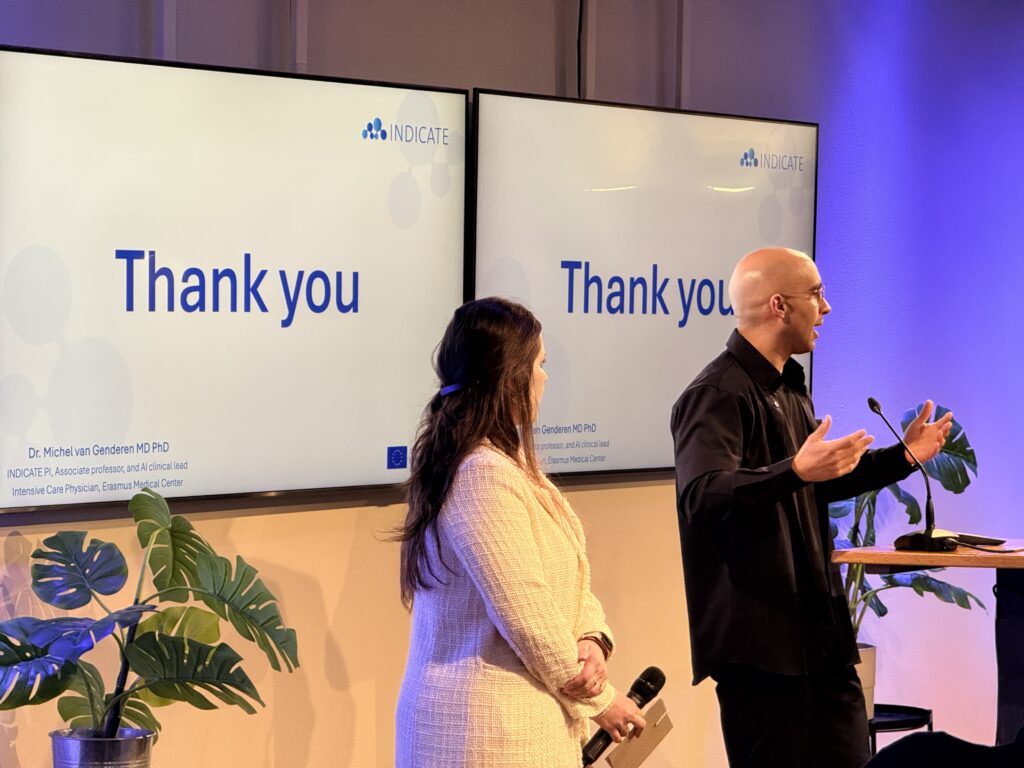
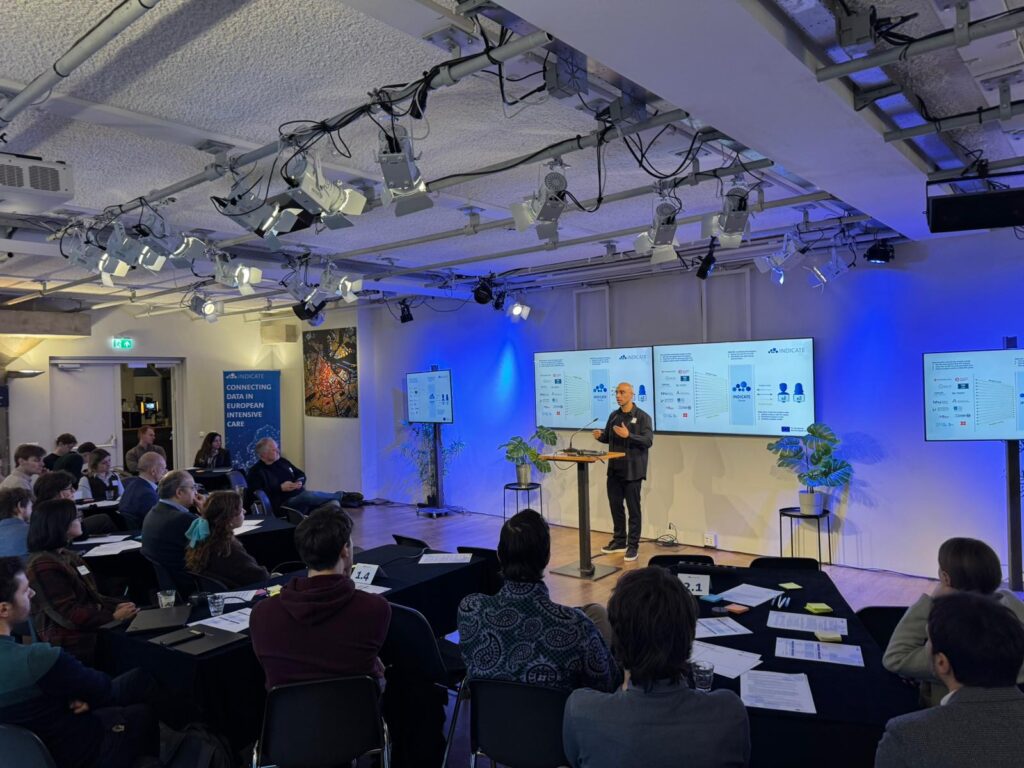
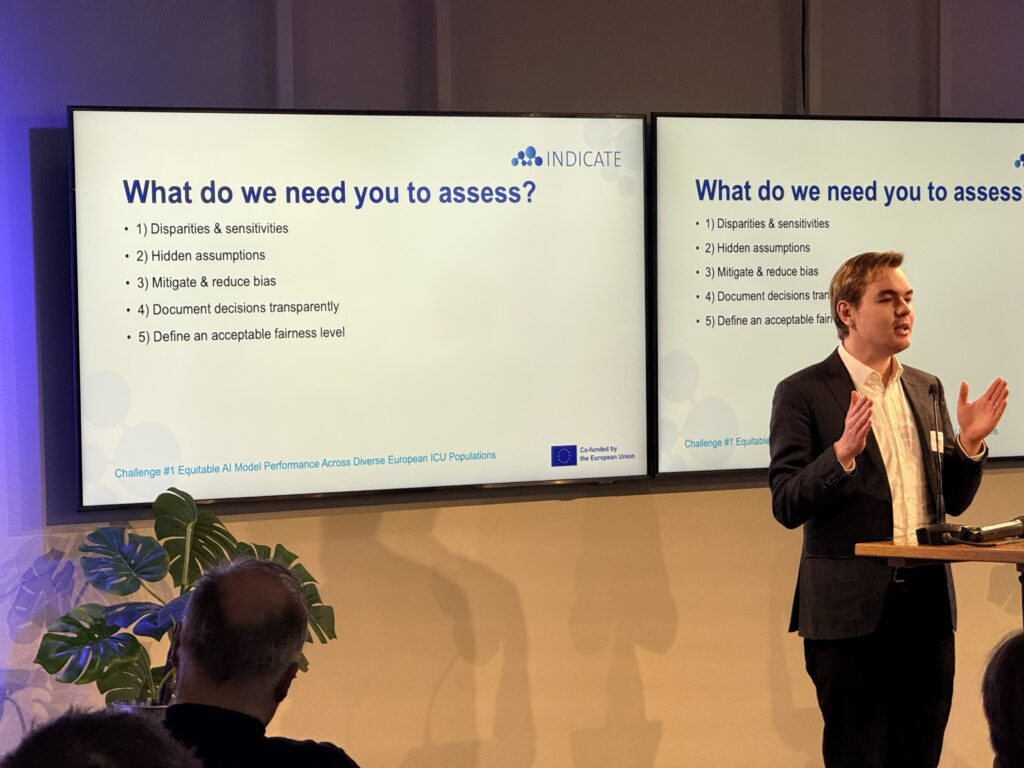
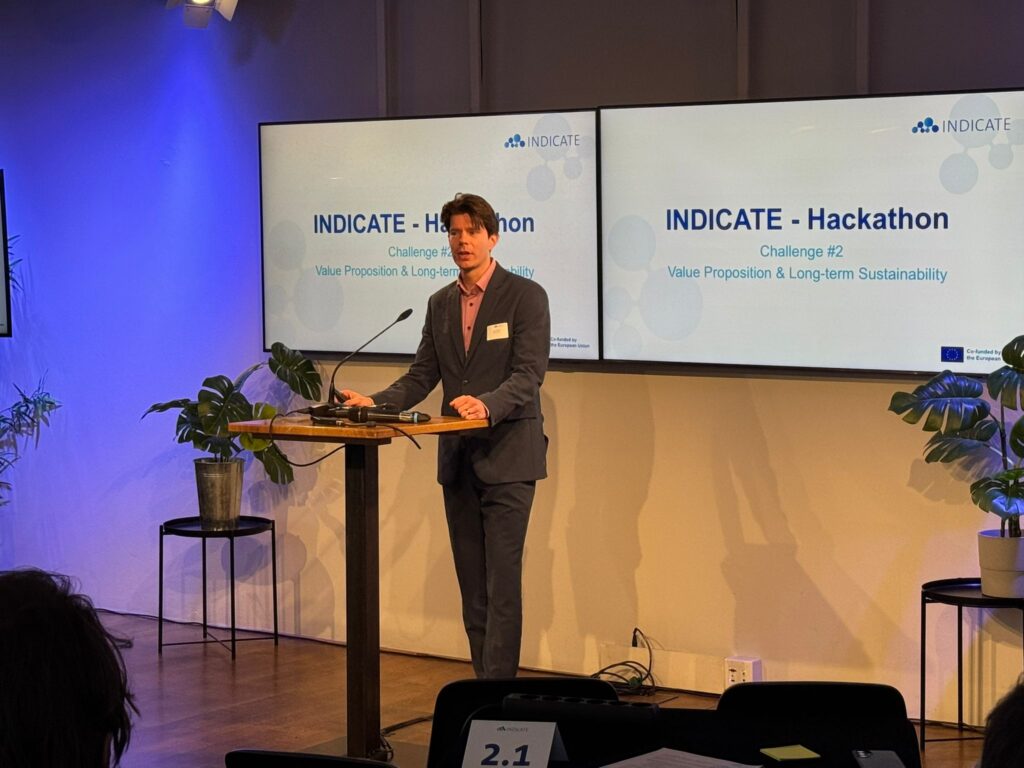
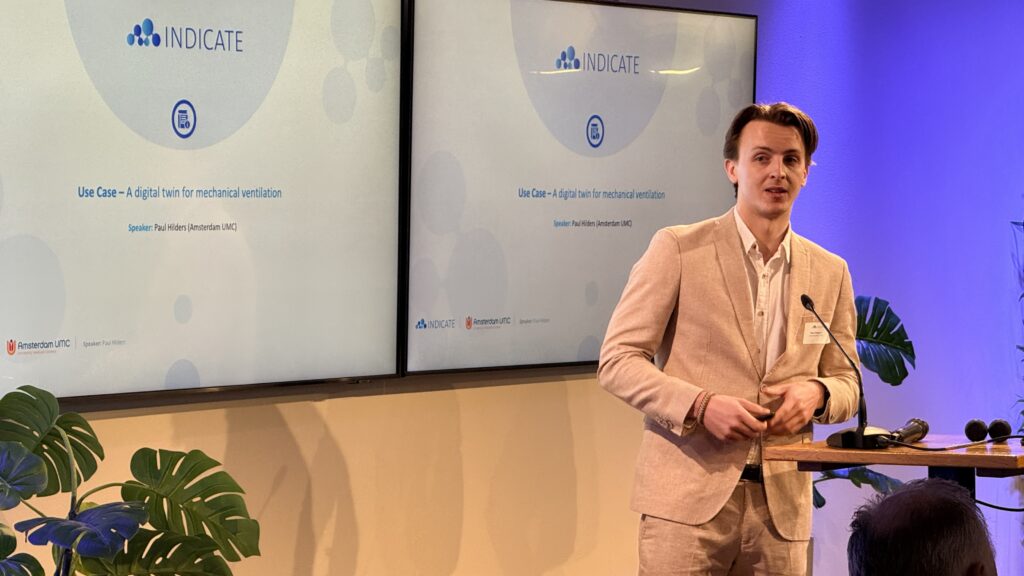
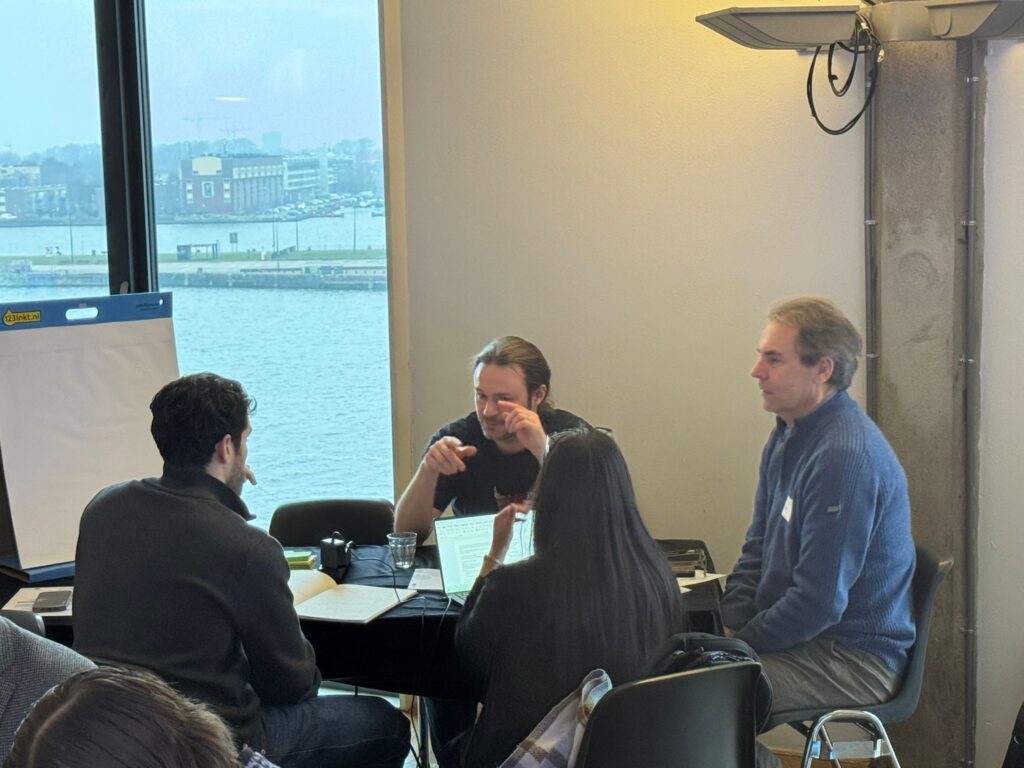
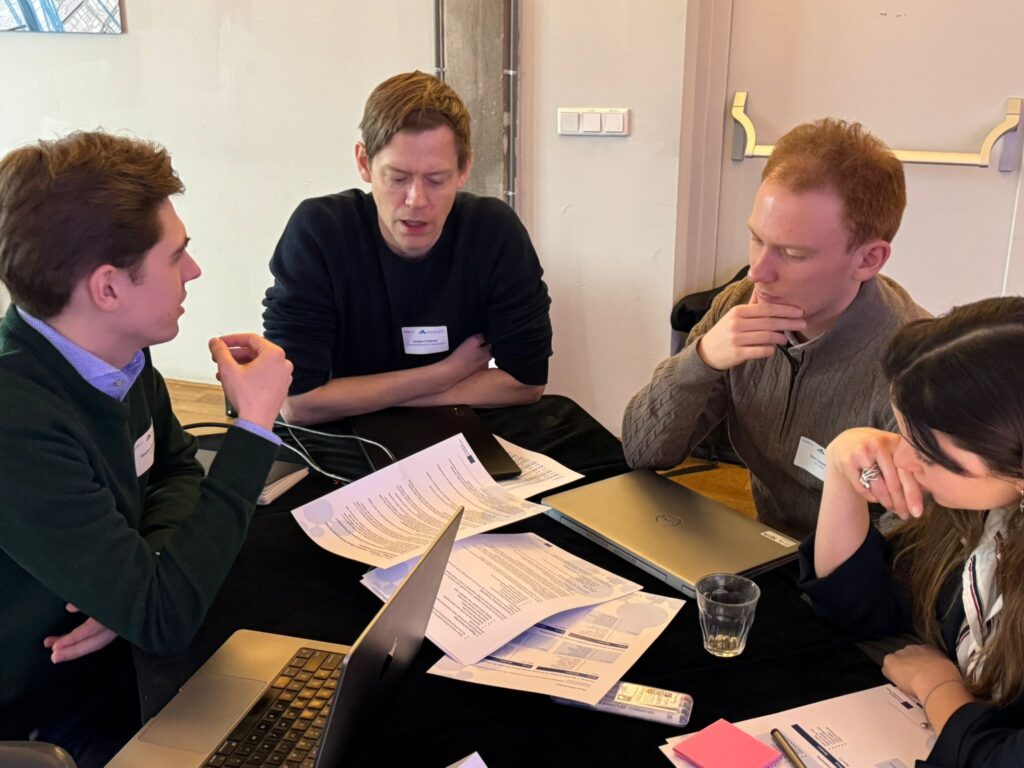
End of September: INDICATE Design Workshop in Rotterdam at KPMG – lots of bright minds in the room thinking about how we can advance patient-centered care and promote the use of Intensive Care data by developing and implementing responsible and trustworthy AI models.

One of the AI use-cases discussed was the model to predict sepsis using ai on the neonatal intensive care department. The main goal is to develop and validate a continuous prediction model which detects late onset neonatal sepsis before symptoms occur.

Other AI use-cases discussed are the atlas of anonymous acute care cases covering infectious diseases, cancer, heart diseases, and brain injury, the early detection of organ failure, and a digital twin for mechanical ventilation.

As you can imagine, when developing these use-cases, a fine balance is needed between innovation and dealing with sensitive data of patients.

Read the full programme here.

Indicate Plateau 2 Workshop – Rotterdam

Indicate Plateau 2 Workshop – Rotterdam

Get ready for the Indicate Plateau 2 Workshop — three days to kick-off design phase for INDICATE infrastructure ‘Plateau 2’

Location: KPMG office, Rotterdam, Weena 650
Start date & time: Wed, Sept 24 at 12:00 CET (including lunch)
End date & time: Fri, Sept 25 at 18:00 CET (including drinks)

Costs: Travel and accommodation costs should be covered by each partner individually (INDICATE budget). 

Hotel recommendations

Don’t miss this chance to connect, share ideas, and shape the next steps of our project!

Program Wednesday, September 24th  

12.00 – 13.00

Arrival & Lunch

13.00 – 13.30
Opening

Welcome, agenda, and workshop goals

Prof. dr Christian Jung

Head, Coronary Heart Disease
and Critical Care division 
Universitätsklinikum Düsseldorf 

Lisanne van Prooyen Schuurman
Operations Manager at Datahub Erasmus MC, Project Manager INDICATE

13.30 – 14.15
External keynote: Introduction to Federated Learning

• PHEMS lessons learned: do’s and don’ts
• What is horizontal federated learning?

14.15 – 14.45

Project timeline
• Upcoming deliverables, milestones and dependencies
• Data provider onboarding linked to use cases

Lisanne van Prooyen Schuurman
Operations Manager at Datahub Erasmus MC, Project Manager INDICATE

14.45 – 15:45
Use case 1: MIMIC-EU
Prof. dr Christian Jung

Head, Coronary Heart Disease
and Critical Care division 
Universitätsklinikum Düsseldorf
15.45 – 16.00

Break

16.00 – 17.00

Use case 2: Early detection of organ failure 

17.00 – 18.00

Use case 3: Virtual digital twin of mechanical ventilation

Paul Hilders
PhD candidate at the Amsterdam UMC

Evening program

18.00 – 19.00

Walk trough the city center to restaurant

19.00

Dinner

Program Thursday, September 25th

08.30 – 08.50
Arrival & Coffee
08.50 – 09.00
Day start: recap of Day 1-2, agenda & goals for Day 3

Lisanne van Prooyen Schuurman
Operations Manager at Datahub Erasmus MC, Project Manager INDICATE

Dr. Michel van Genderen
Internist-Intensivist, Erasmus MC

09.00 – 10.00
Use case 4: Prediction of neonatal and paediatrics sepsis

Janno Schouten
Technical Physician – PhD Candidate
Erasmus MC

10.00 – 11.00
Use case 5: Quality benchmarking dashboards

Falk von Dincklage 
Universitätsmedizin Greifswald
11.00 – 12.00
Use case 6: Grand rounds workspace

Ignacio Martin-Loeches
Trinity College Dublin

12.00 – 13.00

Lunch

13.00 – 14.00
Risk analysis session (focus on security)

Jan van den Brand
Technical Lead INDICATE
14.00 – 15.00

WP2 presentation: Data Provider Handbook

  • Current status
  • Survey analysis
  • Gap analysis: what data is missing for use cases

Celia Alvarez-Romero
Work Package 2 leader

Carlos Parra Calderón
Head of Computational Health Informatics – Institute of Biomedicine of Seville

15.00 – 15.30

Break

15.30 – 16.30

WP3 presentation: ELSI framework, with a focus on consent management

  • Consent handling at organizational & use case levels
  • Legal basis & IP, shared ownership of results

Program Friday, September 26th

08.30 – 08.50
Arrival & Coffee
08.50 – 09.00
Day start: recap of Day 1, agenda & goals for Day 2

Lisanne van Prooyen Schuurman
Operations Manager at Datahub Erasmus MC, Project Manager INDICATE

Prof. dr Christian Jung

Head, Coronary Heart Disease
and Critical Care division 
Universitätsklinikum Düsseldorf 

09.00 – 10.30

WP5 presentation: INDICATE Education Program 

  • Approach and link to infrastructure development
  • Relation to project deliverables and milestones
  • How WP5 will collect input

Melania Istrate
HSICM

Maarten Ligtenberg
Cradeq

10.30 – 11.00

Coffee break

11.00 – 12.30
Workshop recap & follow-up actions

Jan van den Brand
Technical Lead INDICATE
12.30

Closing lunch & departures

Continue reading

INDICATE Hybrid Consortium Meeting – ESICM LIVE

INDICATE Hybrid Consortium Meeting – ESICM LIVE

Join us for the INDICATE Consortium Meeting, where each Work Package (WP) will give a brief update on progress, challenges, and next steps. Instructions for preparing your WP update will be shared in advance.

Date: October 28, 2025
Time: 15:30–17:00
Location: online

This is a great chance to connect with other consortium members, share insights, and coordinate upcoming activities.

Online links and access details will be provided closer to the meeting.

INDICATE Newsletter July 2025

INDICATE: 
What is federated data analysis?!

Healthcare institutions possess vast amounts of untapped data that could drive innovation and improve patient outcomes. As much as 97% of health data world-wide is not re-used. With INDICATE we aim to unlock this potential by building a federated data infrastructure for Intensive Care Units (ICUs) across Europe.

But how can you analyze data without accessing it directly? The answer lies in INDICATE’s design, specifically in its first development phase due for delivery in August 2025. 

INDICATE’s federated analysis architecture enables data users, such as researchers, innovators, and policy makers, to derive insights from ICU data across multiple institutions, regions, and European countries.

This figure is conceptual, please feel free to share any feedback or suggestions!


Work Package 5 in Brussels with European Parliament

A big day for INDICATE in Brussels: Wednesday 25 June was a great day for communication and collaboration. Workpackage 5 of INDICATE started the morning with a productive meeting about communications, and in the afternoon, a delegation of INDICATE, including Maurizio Cecconi – Maria Theodorakopoulou – Margo van Mol and Joel Alexandre, met with members of the European Parliament.

As Maurizio put it: “Research is essential to improving patient outcomes, but without sharing information, we cannot progress. By building a Federated Data Platform and opening it up on a European level, we can safeguard patient privacy while still sharing valuable knowledge that benefits clinicians, researchers, and patients alike. To truly unlock the power of AI and innovation in intensive care, we must share data not only across Europe, but potentially on a global scale, always with privacy and trust at the core.”


INDICATE represented at international 3CT Workshop in Washington, DC

Christian Jung, coordinator of the European INDICATE project, represented our European consortium on Thursday 26th of June at the 3CT Workshop in Washington, DC. The 3CT (Critical Care Clinical Trialists) Workshop is an international think tank focused on clinical research in intensive care.


Introducing the Principal Architect for INDICATE

We’re excited to welcome Arie as the Principal Architect for our European data infrastructure project, INDICATE! His experience as Cloud Architect & Lead Architect with complex, large-scale data environments is a tremendous asset to INDICATE.


High Level Design Plateau 1 has been finalized

The high level design for the MVP phase of INDICATE has been finalized. This design brings together much of the work of the last couple of months. The teams of WP2, WP3, and WP4 are now working hard to implement it through a minimal set of data according to the OMOP CDM, Standard Operating Procedures and templates for important documents, such as Data Sharing Agreements and Study Definitions, and the applications and infrastructure to support federated studies on real-world data. After having seen the first demos we are very excited and look forward to share more with all of you in the months to come!


D3.1:  ELSI Framework of INDICATE

The INDICATE project is developing European system that allows hospitals’ intensive care units to securely access patient data for medical research without compromising privacy. It is a network where hospitals can collaborate on research by asking questions about patient trends and outcomes, but the actual sensitive patient information never leaves the original hospital. Only anonymous, aggregated answers are shared. 

The ELSI (Ethical, Legal, and Social Implications) framework is rulebook that ensures this data sharing happens safely, legally, and ethically across different European countries with varying regulations. This framework addresses the complex web of European data laws (like GDPR), establishes clear contracts between participating hospitals, implements privacy-by-design principles, and creates governance structures to oversee the entire system. The ultimate goal is to enable life-saving medical research that can improve intensive care treatments across Europe.

Logo Erasmus Universitair Medical Center Rotterdam

Lisanne van Prooyen Schuurman

Erasmus MC

My name is Lisanne van Prooyen Schuurman. I started my career as a PhD student at Erasmus MC and later transitioned to the Datahub, where I currently work as Operations Manager. In addition to this role, I serve as Project Manager for INDICATE. I also lead the coordination of other grant applications that are written or supported by the Datahub.

What am I up to during INDICATE?
I am the Project Manager of INDICATE. My main responsibility is to oversee the day-to-day coordination of the project, ensuring that timelines are met and deliverables are completed on time and at the right quality. I act as the central point of contact for consortium members, answering their questions or connecting them with the appropriate person within the project. I also handle communication with the European Commission (EC), monitor compliance with EC obligations, and ensure all required reporting and documentation is organized and submitted accordingly. In this role, I support the project’s Principal Investigators Michel van Genderen and Christian Jung in fulfilling their responsibilities under the grant agreement, and I work closely with Jan van den Brand, the project’s Technical Lead, who manages the project’s content.

What motivates me to be part of INDICATE?
As a researcher, I have personally experienced how crucial data availability is for conducting meaningful research, but also how challenging it can be to access data, especially across hospital boundaries. At the same time, I see a constant wave of new technical innovations and tools that could truly improve healthcare, but whose potential remains untapped due to data inaccessibility. I see INDICATE as a unique opportunity to take a first step in changing this. Starting with the ICU (a critical domain in light of aging populations and potential future pandemics) I believe this project lays the foundation for a larger, scalable data infrastructure that can unlock the value of health data across Europe.

What do I expect to accomplish within INDICATE?
Personally, I hope to successfully guide the project toward a strong and impactful result, where cross-border data is made accessible to various end users: researchers, clinicians, nurses, start-ups, governments, and more. I want to ensure every consortium partner feels heard and involved, and to serve as the “spider in the web” connecting all the fantastic 150 members from 30 different institutions who are contributing to this effort. I am confident that with this incredible team, we will have a fully functional infrastructure by 2028, complete with the governance mechanisms required to continue growing and evolving beyond the project’s end.

How does my background or expertise contribute to the goals of INDICATE?
With a background in econometrics, I’m comfortable working with data and analytics. Combined with my hands-on research experience in a hospital setting, this gives me a solid understanding of both the necessity and complexity of the INDICATE project. It allows me to engage with the content, contribute to discussions, and grasp the broader context. In my role as Project Manager, this helps me ask the right questions and make meaningful connections across the six work packages. This is something I see as essential for navigating the interdependencies in such a large and multidisciplinary project.

Get in contact!
e: e.vanprooyenschuurman@erasmusmc.nl


Maria Theodorakopoulou

Hellenic Society of Intensive Care Medicine (HSICM)

I am a Surgeon and an Intensive Care Specialist and Head of the Intensive Care Department at General Hospital “KAT” a Trauma Center in Athens Greece. I have studied and trained in Canada, UK and Greece and hold degrees in Biology, Medicine, Public Health and a PhD in Medicine and Clinical Research. I have been working in Intensive Care units since 1999. I am presently the President of the Hellenic Society of Intensive Care Medicine (HSICM) and the Treasurer of the European Society of Intensive Care Medicine (ESICM).

What am I up to during INDICATE?
For the INDICATE project, my colleagues from the EIT HEALTH and the CRADEQ teams with the endorsement of the ESICM and I are leading Work Package 5 (WP5), which focuses on Dissemination, Exploitation and Communication of the project’s outputs to the relevant target groups and stakeholders including data providers, data users, service providers, healthcare workforce, systems and public authorities.

Get in contact!
e: mariatheodor10@gmail.com


Maurizio Cecconi

Humanitas Research Hospital
Endorsed by: ESICM

Maurizio Cecconi is an anesthesiologist, intensive care specialist, and Chair of Anesthesia and Intensive Care Units at Humanitas Research Hospital in Milan, Italy. He is the Vice Scientific Director for Clinical Research, and the Vice President of the joint Medicine-Bioengineering degree “MEDTEC School” at Humanitas University in Milan. 

He studied in Italy (University of Udine), Spain (Universidad Autonoma de Madrid), the UK (St George’s University of London), and the USA (Harvard Medical School), He worked for 14 years as an NHS Consultant UK, before joining Humanitas in Milan, Italy in 2018. He has authored more than 450 peer-reviewed articles and an H-Index of 95. His research focuses on improving outcomes in perioperative care, data science and artificial intelligence, and the physiology of shock, acute respiratory failure, and sepsis.

He is the Past President of the European Society of Intensive Care Medicine, which he led through the COVID-19 pandemic. He designed and directed the EU-funded C19_SPACE training course, which provided 20,000 healthcare workers with practical training in record time during the pandemic. He is part of the Surviving Sepsis Campaign and has collaborated with WHO on the COVID-19 and Influenza Clinical Guidelines.

In 2018, the Italian president nominated him Knight of the Order of Merit (O.M.R.I) of the Italian Republic. For INDICATE, he collaborates with WP5 and leads the work related to INDICATE at his University.

Get in contact!
e: maurizio.cecconi@hunimed.eu


logo Vereniging EIT Health België-Nederland

Bart Haex

EIT Health – Belgium – Netherlands

While obtaining my MSc and PhD degree (both at KU Leuven) I studied sleep; my research is captured in the book “Back and Bed” and has resulted in several patents and spinoff companies. I have been advising the Flemish minister of Science, Innovation and Economy, and have been instrumental in setting up public-private institutions both at the regional, national and international level (such as Leuven Health Technology Centre and EIT Health). As a professor at Maastricht University (valorization of research) I obtained an MBA (Vlerick Business School) and joined EIT Health, as Director of Strategy and later as Director Business Development (Belgium-Netherlands), with a focus on digital health.

For the INDICATE project, my colleagues from EIT Health and I are working on a Business Model to make INDICATE (financially) sustainable in the long term (Work Package 3) and on Education (Work Package 5).

What I particularly like about INDICATE, is the hands-on pragmatic approach to advance patient-centred care, by sharing and using data, and the multinational consortium of different organisations and people that will make it happen.

Get in contact!
e: bart.haex@eithealth.eu


Julie Benbenishty

European Federation of Critical Care Nurses

I am Julie Benbenishty I work as a nurse with a PhD degree in an ICU in Jerusalem Israel. I am an educator, clinician and researcher. In addition, I am the deputy chair of the European Federation of Critical Care Nurses. 

With all of the above experience, I am working in WP5 Dissemination, Exploitation, and Communication with my colleagues to promote the INDICATE project and develop educational modules for clinicians and researchers to be able to learn about and utilize INDICATE data to it’s best advantage. In every aspect of the development of the INDICATE project, I try to include nurses, nursing data and research so the nurses’ voice can be heard. My goal is to achieve as much nursing exposure to INDICATE as possible.

Get in contact!
e: julie@hadassah.org.il


Yolanda Sánchez

EIT Health – Belgium Netherlands

I am an expert in health innovation and communication. I currently focus on the visibility of EIT Health’s education portfolio; I do market and audience research to understand how to best design and implement a new marketing strategy. 

I have over 10 years of experience in communication and quality management of healthcare projects at regional, national and European levels. I am committed to social change and collaboration. You can always talk to me about women empowerment, patient centre health innovations, worldwide cuisine, and dancing.

What am I up to during INDICATE?
Together with the WP5 team I support the implementation of different communication and education strategies, such as the organization of Hackathons/Datathons and design of educational programs. In addition, as EIT Health we bring in a network of European partners and engage with the broader European health ecosystem.

Get in contact!
e: Yolanda.Sanchez@eithealth.eu


Maarten Ligtenberg

Cradeq

Excited to work together on INDICATE!

I’m Maarten Ligtenberg and the co-founder of Cradeq along with Bram van Dalen. The objective of Cradeq is to promote understanding and purpose in professional practice by stimulating collaboration on sharing both education and knowledge among health care institutions. To that end we develop and implement web applications for education and information management with a specific focus on medicine and data science.


Within INDICATE as Cradeq we are mainly responsible for the development of educational material, infrastructure onboarding training, and documentation. We do this in close collaboration with the team members of Work Package 5 Dissemination, Exploitation and Communication. Aiming to ensure the effective, correct, and secure use of the INDICATE infrastructure by all different kinds of end users.


P.S. Did you know that “INDICATE” literally means “towards making known”? That’s precisely what we strive to do – make data and outcomes known to advance patient-centered care.

Get in contact!
e: maarten@cradeq.nl


Logo Erasmus Universitair Medical Center Rotterdam

Margo van Mol

Erasmus MC
Endorsed by: ESICM

I am Margo van Mol. With a background as ICU nurse, including 25 years of clinical experience, and educated as health psychologist, I currently work as assistant professor. My research interests focus on the emotional impact of critical illness on patients and their relatives and developing (digital) interventions to support them during and after an ICU treatment. 

For INDICATE, I contribute in WP5 Dissemination, Exploitation, and Communication from my role as chair of Nurses & Allied Healthcare Professionals committee of ESICM (2024-2026). I expect to help bridging a discrepancy in what ICU nurses know about data sharing and what is possible to improve the quality of their work. I find it essential to develop nursing data on-boarding and education on digital skills that goes beyond the already established basic competencies.

Get in contact!
e: m.vanmol@erasmusmc.nl


Alicia San José

European Federation of Critical Care Nurses
Endorsed by: ESICM

Alicia San José, RN, PhD, is a distinguished nursing professional with a global perspective shaped by years of clinical experience in the United Kingdom, France, Spain, and Sweden. Certified sworn translator (English/French), Dr. San José is an effective communicator and advocate for high-quality healthcare within an international environment.

A passionate educator and researcher, Dr. San José is committed to advancing nursing practice through innovative curricula, simulation-based learning, and impactful international collaborations. Dr. San José is a board member of the European Federation of Critical Care Nurses (EfCCNa).

As a participant in the INDICATE project, a pan-European initiative to create a federated infrastructure for ICU data, Dr. San José contributes to Work Package 5 (Dissemination, Exploitation, and Communication), focusing on data user on-boarding, provision of digital skills training, and educational resources.

Her expertise in nursing education, research, and international collaboration is essential to realizing INDICATE’s vision of a data-driven healthcare ecosystem.

Get in contact!
e: sanjosealicia@gmail.com


Share your bio with us!

We are keen to post a bio of everyone involved in this project on the website and in the newsletter as well! 

Please share:

  • Who am I?
  • What do I do?
  • What am I up to during INDICATE? Connected to which WP? Which cases do I work on?
  • What do you expect to accomplish within INDICATE?

Please share your bio and picture with: maaike@indicate-europe.eu


Date: September 11, 2025 – September 12, 2025
Location: Hilton Rotterdam, The Netherlands

Artificial Intelligence (AI) continues to impact society in various and profound ways. It is inevitable that health care will face significant changes through the introduction of AI systems that are intended to support the health care system with diagnosis, treatment decision-making, hospital management, medical research and development, nursing care, and the health infrastructure (homecare, insurance etc.) more broadly.

The conference ‘Responsible AI in Health Care’ will clearly map how the introduction of AI in medicine unfolds, which aspects of the health care systems will be impacted most, and how this impact will unfold. First and foremost, it intends to discuss in depth, the question how to shape this transition in a responsible way.


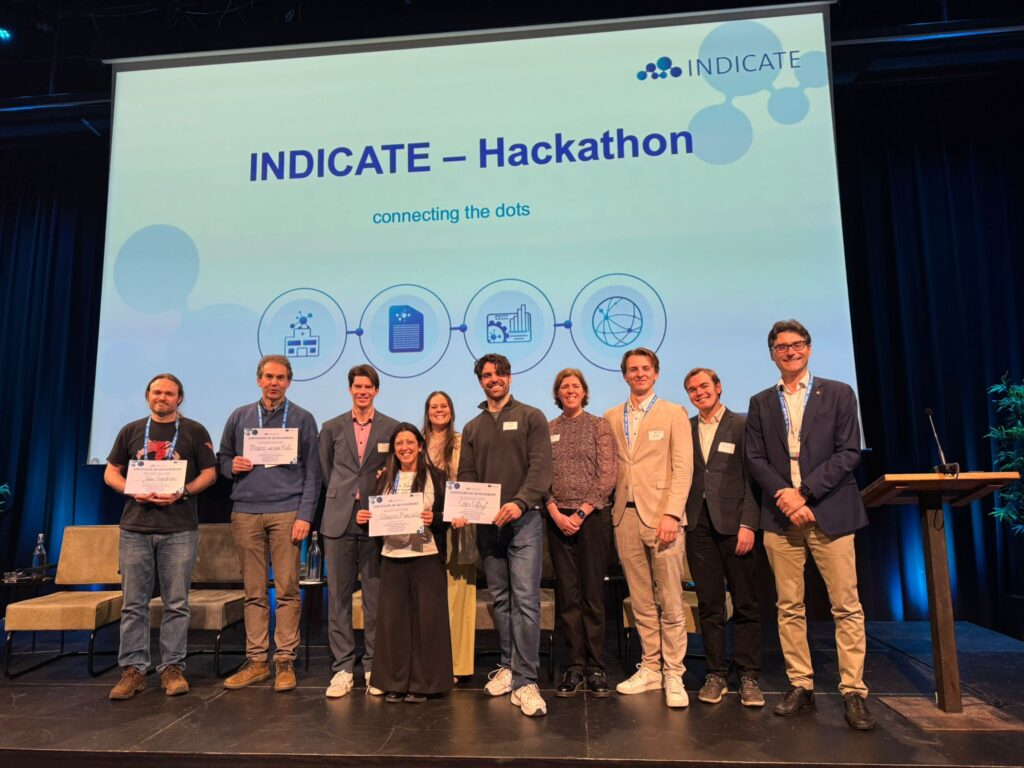
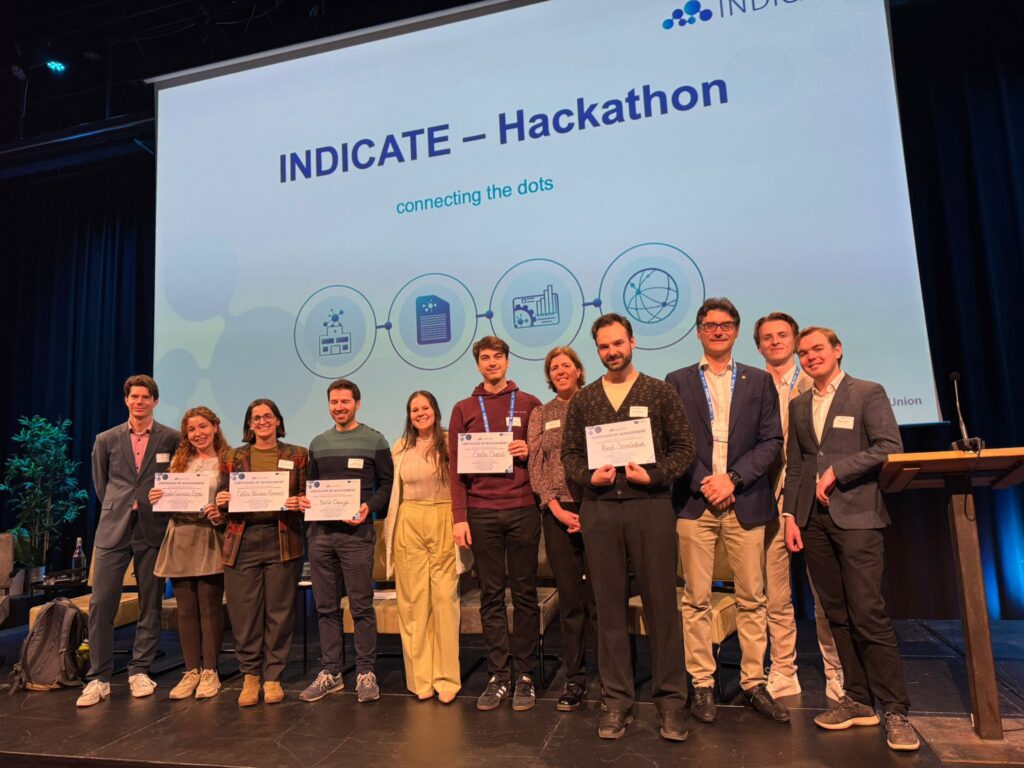
INDICATE Hackathon

Date: February, 2026, aligned with the ESICM Intensive Care Innovation Forum
Location: Amsterdam, The Netherlands

More details will be shared later!


Do you have a special request? Would you like to share news or a publication? Would you like to be (digitally) connected to a certain person? Did you speak or went to an event related to INDICATE or INDICATE-subjects? Please feel very welcome to share your questions or input with: info@indicate-europe.eu

When sharing your news, please make sure to attach your photos/images or figures and always make sure when people are visible, you have their permission to use the pictures.

Below with the format you can use to share your news with us: 

  • What is the purpose of your news? 
  • What title can we use?
  • Who attended (names, roles, if related to INDICATE meetings/events)?
  • What were the main topics discussed or key findings?
  • Were any follow-up actions or appointments agreed upon?
  • Is there anything special or noteworthy?

Milestones

Deliverables


Michel van Genderen
Co-lead INDICATE
e: m.vangenderen@erasmusmc.nl

Christian Jung
Co-lead INDICATE
e: Christian.Jung@med.uni-duesseldorf.de

Lisanne van Prooyen Schuurman
Project Manager
e: e.vanprooyenschuurman@erasmusmc.nl

Jan van den Brand
Technical Lead
e: a.vandenbrand@erasmusmc.nl


Logo Assistance Publique Hospitaux de Paris
Bērnu klīniskā universitātes slimnīca Valsts Sia (Children’s Clinical University Hospital)
Logo Cradeq B.V.
logo Vereniging EIT Health België-Nederland
Logo Erasmus Universitair Medical Center Rotterdam
European Federation of Critical Care Nursing Association
Logo Fraunhofer Gesellschaft Zur Forderung der Angewandten Forschung
Logo Heinrich-Heine-Univeristaet Duesseldorf - universiteitsziekenhuis Dusseldorf
Logo HELLENIC SOCIETY OF INTENSIVE CARE MEDICINE
Logo Servicio Madrileno de Salud (Hospital Universitario 12 de Octubre)
Logo logo ervicio Andaluz de Salud (Virgen del Rocío University Hospital)
Logo INSTITUT CATALA DE LA SALUT
Logo INSTITUT NATIONAL DE LA SANTE ET DE LA RECHERCHE MEDICALE
Logo Region Stockholm (Karolinska University Hospital)
logo KPMG Advisory NV
Logo Medizinische Universitat Innsbruck
Logo Medizinische Universitaet Wien
Logo Paracelsus Medizinische Privatuniversitat Salzburg
Logo Sorbonne Université (INSERM-SU)
Logo Universitair Medisch Centrum Utrecht
Logo Ghent University Hospital
Logo Logo Univerisitatsmedizin Greifswald Kopperschaft Des Offentlichen Rechts
Logo Université de Rennes

Endorsed by:


Get in contact via e-mail:
Email address: info@indicate-europe.eu
Email address: support@indicate-europe.eu
Email address: indicate@erasmusmc.nl