The 2026 Mobilising Computable Biomedical Knowledge (MCBK) Global Meeting will take place online on 13 and 14 October, bringing together the international community made up of representatives from academia, the scientific community and the public sector who work together to ensure that biomedical knowledge in computable format is easy to find, accessible, interoperable and reusable.
This year’s meeting will be fully virtual, with session times designed to accommodate participants across the globe.
For the Americas & Europe October 13–14 9 AM – 12 PM US Eastern 10 AM – 1 PM Argentina & Brazil 2 PM – 5 PM UK 3 PM – 6 PM Central Europe
For Australia, New Zealand & Asia October 14 9:30 AM – 12:30 PM India 12 PM – 3 PM China 3 PM – 6 PM Australia Eastern 5 PM – 8 PM New Zealand
Celia Alvarez-Romero (Wp2), is part of the European MCBK community and contributes to the organisation of the Global Meeting. Her involvement highlights the close connection between international developments in computable biomedical knowledge and the broader perspective of INDICATE on strengthening research and health data infrastructures.
Led by Bert Cappelle (Ghent University Hospital), the second session of the Legal Framework training sessions, provided participants with a practical overview of the legal and organisational framework required before researchers can access healthdata.
Rather than focusing on legislation alone, the training demonstrated how legal, ethical and technical safeguards work together to enable secure and responsible data sharing across Europe.
Participants were guided through the complete data access process, covering the role of the Consortium Agreement, the Study Protocol, local ethical approval, the Data Sharing Agreement and the Secure Processing Environment (SPE). Together, these elements ensure that data access is always linked to a clearly defined research purpose, with responsibilities, conditions and governance agreed before any study begins.
As Bert Cappelle highlights the importance of this subject: “Federated research succeeds when strong technology meets strong governance.” Clear governance, transparent agreements and collaboration between all partners are essential to protect sensitive health data while enabling high-quality research across the INDICATE consortium.
The fifth INDICATE training session brought together participants from across the consortium to understand the role of metadata in supporting interoperability, data discovery, and federated research across institutions.
Led by María González-Lopez and Paloma Bravo del Cid from the Computational Health Informatics Group at Virgen del Rocío University Hospital, the training focused on metadata standards, cataloguing workflows, and best practices within the INDICATE framework.
A key message throughout the training was that metadata is what makes health data discoverable, understandable and reusable across institutions. Participants explored how researchers often encounter datasets from multiple hospitals without knowing how the data were collected, whether they can be combined or even if they are allowed to access them.
Metadata provides the answers to these questions by describing what a dataset contains, how it was created, under which conditions it can be used and how it can be accessed. Rather than being administrative overhead, metadata forms the foundation of the INDICATE federated catalogue and enables hospitals and researchers to collaborate without sharing patient-level data.
The session concluded with interactive breakout rooms, where participants took on the role of the local INDICATE data provider team for a fictional university hospital. Working with a realistic case study, they assessed whether the hospital’s existing OMOP database, ETL process and ICU data were ready to support a federated study on early organ failure in patients with suspected sepsis.
By reviewing governance, metadata, data quality and technical readiness, each group determined whether the hospital was ready to participate or which improvements were still needed. The exercise highlighted that successful federated research requires more than available data. It depends on well-documented metadata, robust data quality and close collaboration between clinical, technical and governance experts.
The INDICATE Communication Network Meeting, organised by Work Package 5, will take place on 9 September 2026, from 12:30 to 13:30 CEST.
During the meeting, participants will receive the latest updates on the development of the INDICATE platform, educational activities, and the communication materials available to support the project.
A key part of the meeting will be a presentation by Arie de Haan, Principal Architect of INDICATE, on building the INDICATE architecture. Arie will provide an overview of the project’s enterprise architecture and explain how it forms the foundation for the development of the INDICATE ecosystem. Using the analogy of constructing a building, the presentation will illustrate how a shared architectural blueprint ensures that the technical components developed across different work packages fit together into one coherent platform.
The session will also offer an opportunity to exchange experiences and discuss how INDICATE is being communicated within different organisations. Participants are encouraged to share their ideas and provide feedback on the communication materials and support they would find most valuable.
Want to attend the meeting? Please let us know by contacting us via info@indicate-europe.eu.
The official Consortium Meeting of the INDICATE project is taking place from 14 till 16 September 2026 in Rome, Italy. This meeting will be graciously hosted by our partner, Fondazione Policlinio Universitario Agostino Gemelli IRCCS.
As we are in September 2026, approximately halfway through the project, this meeting will focus on reflection and forward planning. We will review key achievements, such as the first use case going live, as well as main challenges, including updates on communication and education.
Looking ahead, we will focus on the second half of the project. The session will zoom in on upcoming deliverables and milestones, progress on data provider onboarding, and the next steps in establishing the legal entity that will operate the infrastructure.
Practical information
Date: 14-16 September Venue
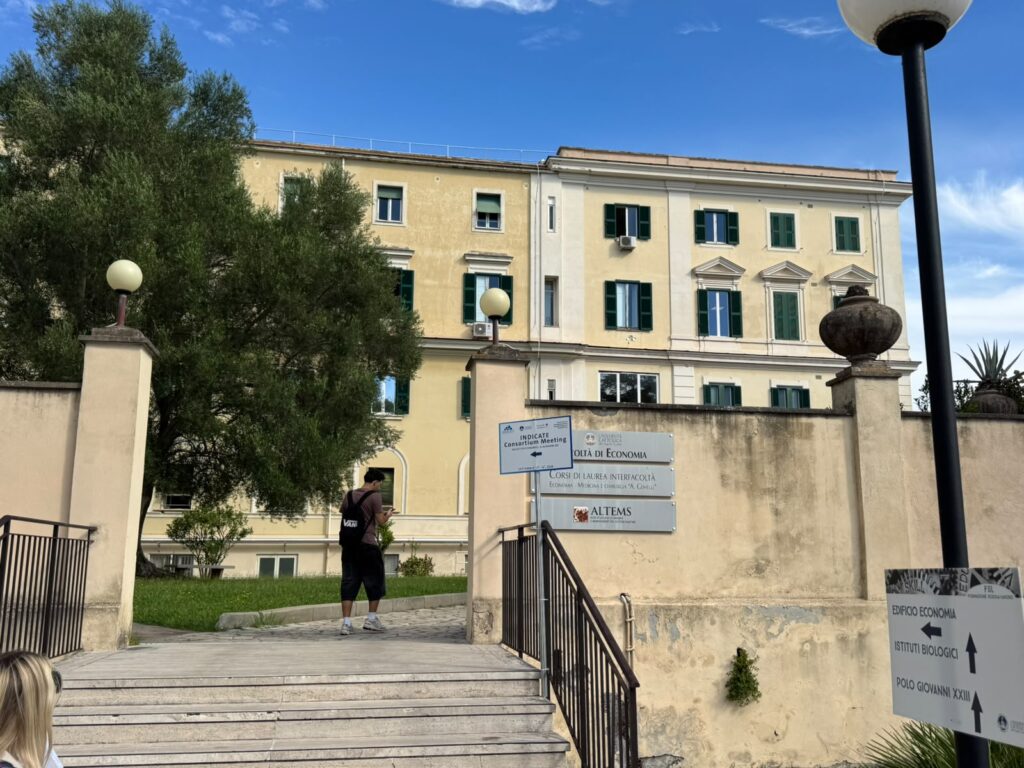
Room 202, School of Economics
Enter through the UCSC campus
Use this address to arrive at the location: Largo Francesco Vito 1, 00168 Roma
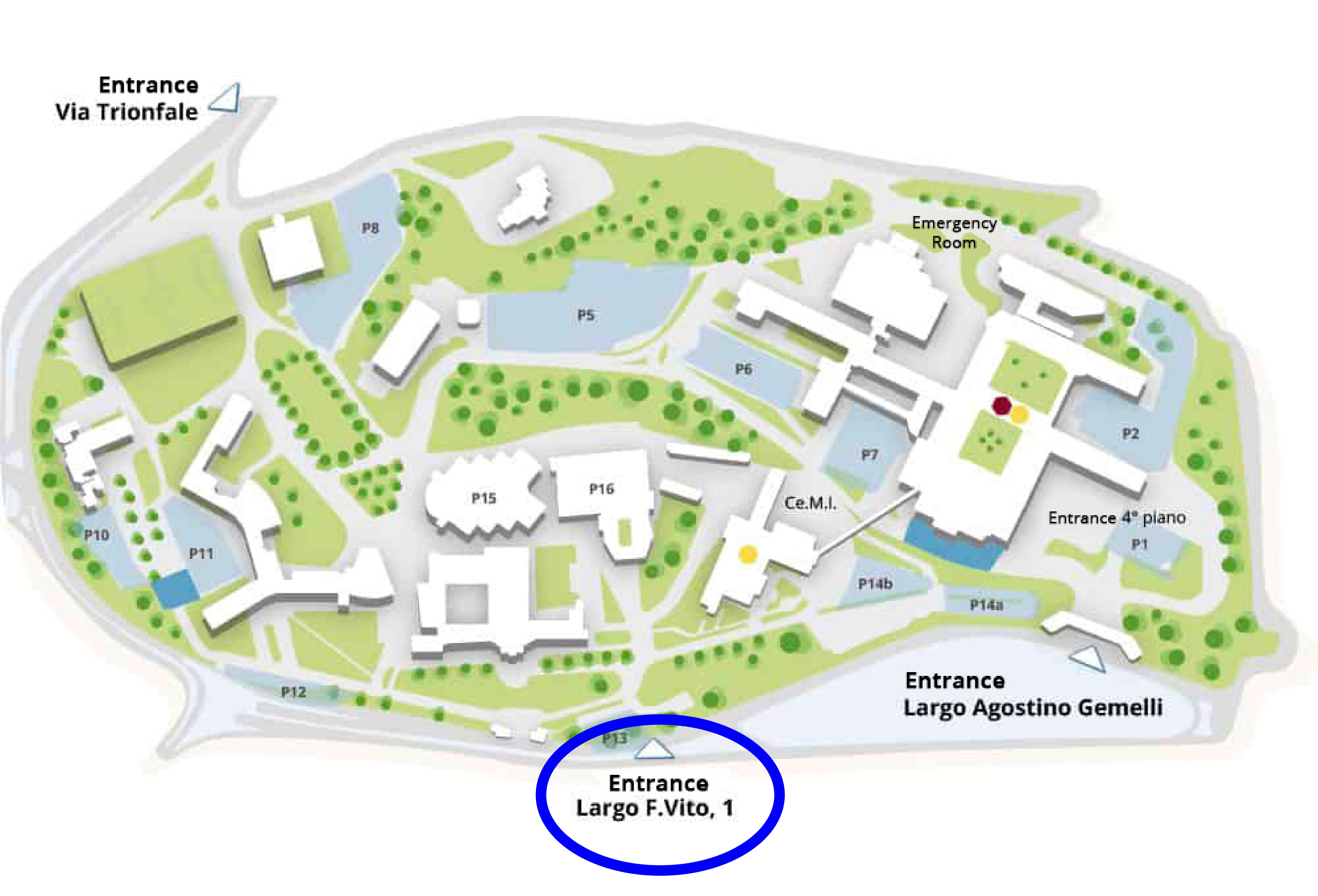
The campus is located in the north-west side of Rome and it includes the Policlinico (the Hospital itself) and the University. For the INDICATE consortium meeting, please use the University Entrance to find your way to the conference room – Room 202, School of Economics on the second floor.
Entrance address
• Largo Francesco Vito, 1, 00168 Roma RM (University entrance)
DAY 1 | Understand INDICATE: Reflect, connect and align
Monday, 14 September 2026 | 12:00 – 17:15 CEST
12.00 – 13.00
Arrival Lunch & networking
Informal networking and introductions.
13.00 – 13.20
Opening and welcome by the host institution
Welcome by Gemelli Hospital. Introduction to the institution’s clinical, scientific, and digital activities.
Prof. Massimo Antonelli Fondazione Policlinio Universitario Agostino Gemelli IRCCS
Dr. Ambra Cerri Fondazione Policlinio Universitario Agostino Gemelli IRCCS
13.20 – 13.50
Welcome & meeting goals
Align on the meeting objectives, intended outputs and three-day arc.
Dr. Michel van Genderen Erasmus MC
Prof. Dr. Christian Jung University Hospital Düsseldorf
13.50 – 14.10
European Commission perspective
Clarify expectations for INDICATE’s second phase and its longer-term contribution to the European programme.
Erica Martinelli EU Project Officer
14.10 – 14.30
Ethical review
External ethics perspective on project governance and compliance.
Dr. Emma-Jane Spencer TU Delft
14.30 – 15.00
Coffee break
15.00 – 16.00
External Expert Advisory Board
External perspectives on INDICATE project development, implementation risks and opportunities.
Prof. Filip Haegdorens University of Antwerp
Dr. Michael Beil NHS Highland The Hebrew University
Dr. David van Laere Innocens BV
16.00 – 16.45
Two years of INDICATE Achievements, lessons learned & key focus points next phase. Concise work-package highlights:
Work Package 1: Project coordination
Lisanne van Prooyen Schuurman Erasmus MC
Work Package 2: Common data models and vocabularies
Data Management Plan (D2.1), INDICATE minimal dataset and data dictionary
Boris Delange CHU Rennes
Data provider Handbook
Celia Alvarez Romero Andalusian Health Service (SAS)
Work Package 3: Governance, Business Models and Legal and Ethical Framework
ELSI and Data Protection Impact Assessment
Jan van den Brand Erasmus MC
Sustained-operations roadmap
Mark Driessen KPMG
Anouk Kruiswijk KPMG
Work Package 4: Technical infrastructure
Plateau 1 MVP
Bert Cappelle UZ Ghent
Work Package 5: Dissemination, Exploitation, and Communication
Knowledge-transfer platform and educational tracks
Maria Theodorakopoulou HSICM
Maarten Ligtenberg Cradeq
Communication strategy and activities
Maaike van Zuilen Philogirl
Work Package 6: Clinical Demonstrations
Live demo of Quality-Benchmarking Use Case
Marcel Giemsa University Hospital Düsseldorf
Falk von Dincklage Universitätsmedizin Greifswald
Gregor Lichtner Universitätsmedizin Greifswald
Bert Cappelle UZ Gent
16.45 – 17.00
Strategic start of INDICATE phase 2
A consortium-level overview of the INDICATE ecosystem, including its working groups, workstreams, work packages, and advisory boards.
The session will clarify how these components interact and jointly support the strategic direction, governance, and implementation of the project’s next phase.
Jan van den Brand Erasmus MC
Lisanne van Prooyen-Schuurman Erasmus MC
17.00 – 17.15
Decisions, actions & confetti moment
Reflection from INDICATE PI Christian Jung on the first half of the project. Confirm the day’s key messages and summarize the decisions, owners, and next steps.
Prof. Dr. Christian Jung University Hospital Düsseldorf
20.00
Consortium dinner
Ristorante del Frate Via degli Scipioni, 118 – Roma
Day 2 | Implement INDICATE: Solve challenges together
Tuesday, 15 September 2026 | 09:00-17:00 CET
08.30 – 09:00
Walk-in coffee
09.00 – 09:15
Opening Day 2 & Recap of Day 1
Prof. Dr. Christian Jung University Hospital Düsseldorf
09.15 – 09:45
Federated Learning, what is it?
Steps hospitals need to take to prepare for participation in federated learning initiatives such as INDICATE
Introduction to federated learning concepts as foundation for INDICATE platform approach. Explanation of preparatory steps hospitals must take to participate in a federated learning initiative.
Jan van den Brand Erasmus MC
Pedro Mesa Flower Labs
Dr. Chong Shen Ng Flower Labs
DimitrisStripelis Flower Labs
Joost Huiskens Microsoft, the Netherlands
09.45 – 10:00
Phase 2 programme planning
Frame the implementation phase: Overall project timeline for infrastructure design and implementation, onboarding and support, training and education, use cases, legal entity set-up, and grant obligations.
Lisanne van Prooyen Schuurman Erasmus MC
10.00 – 10.30
Timeline & dependency workshop
Each group discusses: potential risks, dependencies, mitigation strategies specific to their workstream. Purpose: Ensure all participants engage deeply with the timeline and understand interdependencies, rather than passively listening to presentations.
Jan van den Brand Erasmus MC
Marcel Giemsa University Hospital Düsseldorf
Lisanne van Prooyen Schuurman Erasmus MC
10.30 – 11.00
Coffee break
11.00 – 11.15
Discussion of timeline workshop output
Plenary recap of key risks and mitigation strategies identified during morning workshop.
11.15 – 12.30
Data Provider and DataUser Support
Participants work through the complete onboarding process step-by-step using provided templates and guidance materials.
Facilitators guide participants through each stage – Participants begin documenting their own organization’s onboarding plan – Questions addressed in real-time – Feedback collected on workflow clarity and resource adequacy.
Celia Alvarez Romero Andalusian Health Service (SAS)
Mark Driessen KPMG
Maarten Ligtenberg Cradeq
Jan van den Brand Erasmus MC
Bert Cappelle UZ Gent
12.30 – 13.30
Lunch
13.30 – 13.45
Recap Data Provider and Data User onboarding workshop
13.45 – 15.00
INDICATE project workflow (use case) presentation,demo and workshop
The standard process for conducting a project on the INDICATE platform, including an overview of the support resources currently available through the INDICATE Knowledge Platform.
Marcel Giemsa University Hospital Düsseldorf
15.00 – 15.30
Coffee & Tea break
15.30 – 15.45
Recap of the INDICATE project workflow workshop
15.45 – 16.15
Challenge tables Parallel implementation sessions
WP2: Data DictionaryTool demo and concepts mapping validation
WP4/WP6: Sandbox Requirements & Specifications
What does a sandbox need to include to support use case development and testing?
WP6: Scalability of Legal & Ethical Approvals
How to efficiently scale legal and ethical review processes for growing number of research projects?
WP5: Training Needs Assessment
What training is required for different stakeholder groups (data providers, data users, ethical reviewers, etc.)?
WP5 Communication – Ecosystem Engagement Strategy
How to effectively communicate with prospective data providers and use cases?
Each challenge table will be led by relevant WP experts. Small groups work on specific topics and report back key insights.
16.15 – 16.45
Recap Challenge tables
Summary of gathered feedback on challenge topics and project action items.
16.45 – 17.00
Consortium priorities & confetti moment
Dr. Michel van Genderen Erasmus MC
18.00
Walking tour & dinner
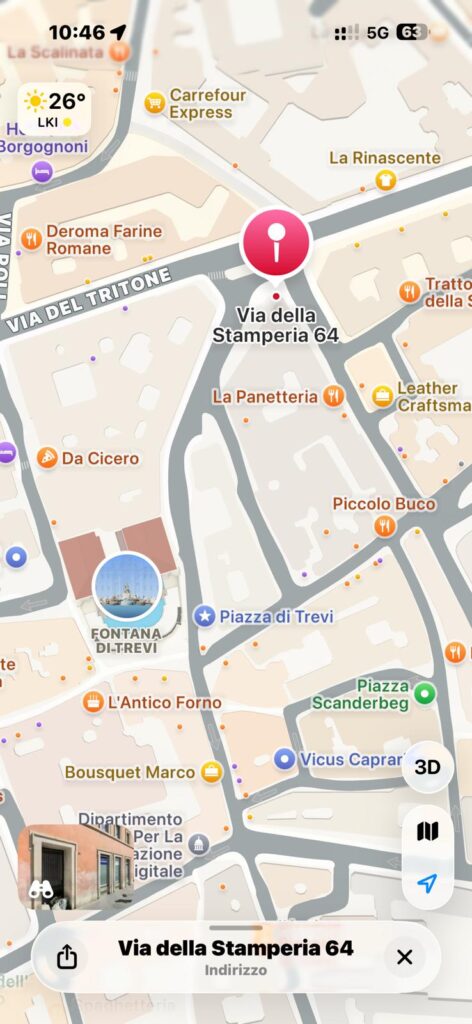
Starting point walking tour Rome:
Via della Stamperia, 64, 00187 Roma (Close to Fontana di Trevi)
Ending at Ristorante Ozio – Via Orazio, 21, 00193 Roma RM. – Dinner starts at 20.00.
DAY 3 | Sustain INDICATE: Build the future organisation
Wednesday, 16 September 2026 | 09:00-13:00 CET
08.30 – 09:00
Walk-in coffee
09.00 – 09:15
Opening Day 3 & Recap Day 2
Dr. Michel van Genderen Erasmus MC
09.15 – 09:45
INDICATE beyond the project
Introduce the ambition for a sustainable entity that supports a growing ecosystem of data providers, data users and research projects.
Hylke Kingma KPMG
09.45 – 10:15
Governance & organisation
Discuss the transition to an independent organisation; recap the European legal-entity analysis and rationale for an SCE; review EDIC uncertainties, post-project roles and collaboration mechanisms.
Mark Driessen KPMG
Anouk Kruiswijk KPMG
10.15 – 11:00
Business Model Workshop | Part 1
Discuss the transition to an independent organisation; recap the European legal-entity analysis and rationale for an SCE; review EDIC uncertainties, post-project roles and collaboration mechanisms.
Mark Driessen KPMG
Anouk Kruiswijk KPMG
Jan van den Brand Erasmus MC
11.00 – 11:30
Coffee break
11.30 – 12:15
Business Model Workshop | Part 2
Consolidate the canvas and resolve the most important themes from Part 1 in a plenary discussion.
Mark Driessen KPMG
Anouk Kruiswijk KPMG
Jan van den Brand Erasmus MC
12.15 – 12:45
Partner action planning
Each organization completes its organization-specific implementation plan identifying:
Key roles and responsibilities within the organization
Concrete actions to be taken after Rome (based on 3 workshops)
Ownership assignments
Timeline for completion
Success metrics
Dr. Michel van Genderen Erasmus MC
12.45 – 13:00
Closing remarks
The meeting’s key decisions and outputs will be summarised, together with concrete next steps for the consortium.
Dr. Michel van Genderen Erasmus MC
Prof. Dr. Christian Jung University Hospital Düsseldorf
How to reach the venue: The campus is located in the north-west side of Rome and it includes the Policlinico (the Hospital itself) and the University. For the INDICATE consortium meeting, please use the University Entrance to find your way to the conference room – Room 202, School of Economics:
Entrance address:
Largo Francesco Vito, 1, 00168 Roma RM (University entrance)
On 9 July, the INDICATE consortium came together for its monthly online update meeting to discuss project progress, upcoming milestones and the next steps towards expanding the INDICATE platform.
Preparations for the Rome Consortium Meeting
The coordination team shared the latest updates on project management and preparations for the upcoming consortium meeting in Rome, taking place from 14–16 September 2026. More than 50 consortium members have already registered, with over 35 participants expected to attend in person. More about the Rome meeting can be found here.
Partners were encouraged to join the meeting onsite, as the programme will focus on preparing the next phase of INDICATE and strengthening collaboration across work packages. The consortium also received an update on the first reporting period. While the technical report has been finalised, the financial review is currently being completed in close collaboration with the European Commission.
Work Package 5 abstract accepted
A major milestone was celebrated during the meeting: the abstract entitled “An Assessment Framework for Evaluating AI and Federated Learning Training in Intensive Care” has been accepted for presentation at the ESICM LIVES Congress in Lisbon.
The abstract reflects the collaborative work of partners across the consortium and highlights INDICATE’s ongoing efforts to develop robust approaches for evaluating federated AI in intensive care. More about this milestone can be found here.
Building the INDICATE architecture
Jan van den Brand (Technical Lead INDICATE) and Arie de Haan (Principal Architect) presented an overview of the project’s enterprise architecture, explaining how it provides the foundation for the development of the INDICATE ecosystem.
Using the analogy of constructing a building, they demonstrated how a shared architectural blueprint ensures that all technical components developed by different work packages fit together into one coherent platform. The presentation also highlighted the roadmap towards the three development plateaus:
Plateau 3: enabling AI model inference for future clinical decision support.
Partners were invited to contribute ideas and requirements during the current design phase, when changes can still be incorporated efficiently.
Supporting data providers
Celia Álvarez Romero (Wp2) introduced the next activities of the Data Provider Support Workgroup, which has been established to provide practical guidance to participating hospitals during the onboarding process.
Between July and October, each data provider will be invited to a dedicated one-to-one onboarding interview to review progress, discuss technical or organisational challenges and define an onboarding roadmap. Institutions are encouraged to participate with representatives from different disciplines, including project management, IT, data engineering, legal and clinical teams.
Towards one clear onboarding journey
Maarten Ligtenberg (Wp5) presented ongoing work to simplify the onboarding process for data providers and the development of the structured onboarding flow within the INDICATE Wiki.
Looking ahead
The meeting concluded with appreciation for the contributions of all work packages and a special thank you to Aliza Bos (project administrator) for her work within the coordination team before moving to another European project.
With the architecture progressing, onboarding activities accelerating and preparations underway for the September consortium meeting, INDICATE continues to build towards a secure and scalable European infrastructure for federated intensive care research.