Interview with INDICATE co-lead Michel van Genderen on NOS Nieuwsuur

AI tool predicts diseases: ‘The risk is that we might interpret it the wrong way.’

Recently, INDICATE co-lead Michel van Genderen shared his expertise on the Dutch national news program NOS Nieuwsuur, discussing the risks associated with AI tools such as Delphi-2M, which predicts the likelihood of developing diseases.

How much risk does someone have of developing a disease like cancer? Or of having a heart attack? The Delphi-2M system can predict that. But does it really help us? Or does it also come with risks?

“When I read about it, I thought: yet another prediction model. Research shows that only two percent of all AI innovations are actually used in healthcare. Innovations often don’t fit well with real-world practice,” says Michel van Genderen, internist-intensivist and co-founder of the AI ethics lab REAiHL, a collaboration between Erasmus MC and TU Delft.

Van Genderen and his colleagues advise the World Health Organization (WHO) on the use of AI in healthcare: “Embracing AI in healthcare will go wrong if there are no moral ground rules. It must be safe and ethical.”

Read the full article here (in Dutch) or watch the news item here (in Dutch). The item starts at 30:30 minutes.

Source: NOS Nieuwsuur

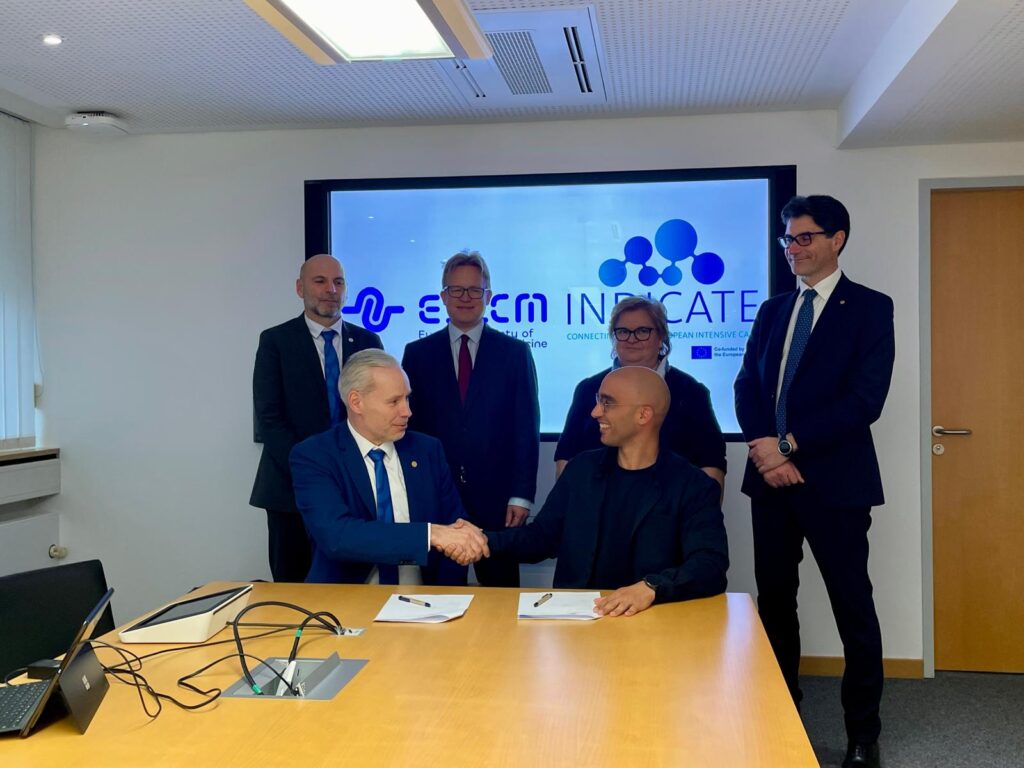
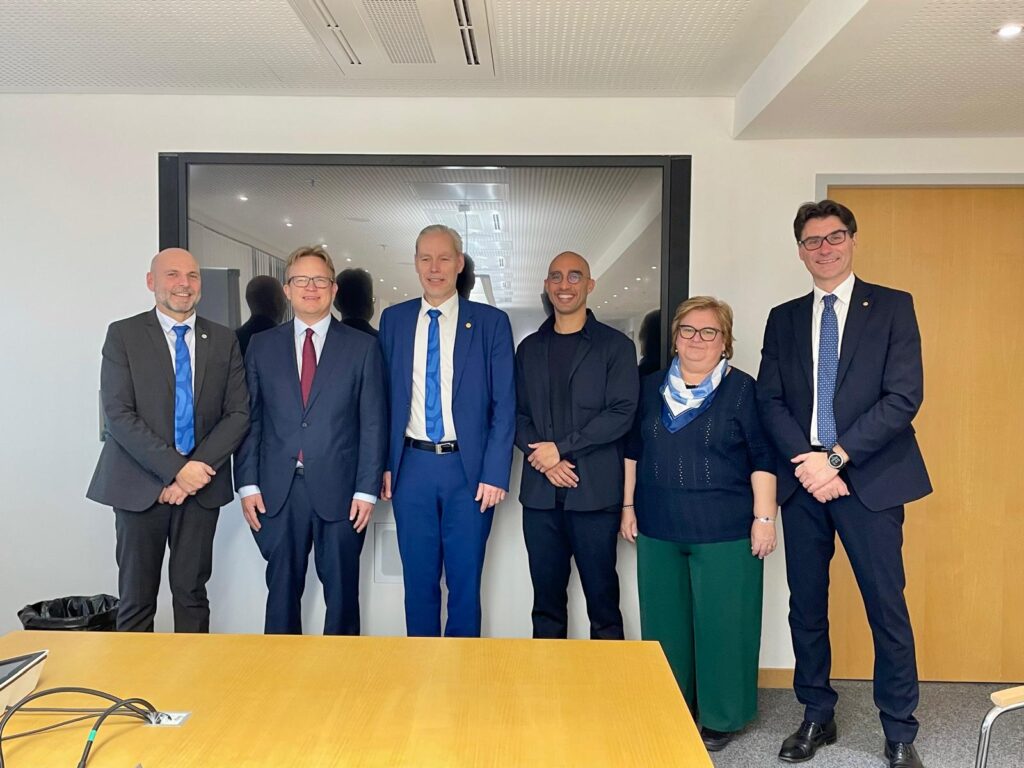
ESICM New member of the External Expert Advisory Board

We are pleased to welcome the European Society of Intensive Care Medicine (ESICM) to the External Expert Advisory Board of the INDICATE Project!

This collaboration strengthens our shared European reach and accelerates progress toward secure, interoperable ICU data sharing, fully aligned with the ambition of the European Health Data Space (EHDS).

Together, we aim to support Intensive Care Units across Europe in responsibly connecting data, advancing research, improving clinical decision-making, and ultimately enhancing patient care. A key element will be the development of a federated data infrastructure, enabling hospitals to collaborate without moving data outside the hospital, while maintaining privacy, trust, and local control.

ESICM will be represented by Maurizio Cecconi in the External Expert Advisory Board of INDICATE.

INDICATE Technical Lead Jan van den Brand joins EU panel on Virtual Human Twins in Brussels

The high-level event on Virtual Human Twins (VHTs), held on the 21st of October in Brussels, Belgium, brought together leading voices from the European Commission, academia, industry, and patient organisations, all united by a shared goal: accelerating innovation in health through AI, data, and trustworthy digital ecosystems.

Key takeaways:

  • Europe has the technology, talent, and ambition to lead, but success depends on access to high-quality, interoperable data. This highlights the importance of our INDICATE project, as well as other European health data initiatives such as Genome Of Europe, EUCAIM, and PHEMS, all of which strengthen the foundation for innovation.
  • Trust remains essential. It is one of the key underlying principles of the European Health Data Space (EHDS) Regulation, and aims to give individuals more control over their health data while enabling safe and secure use for research and innovation.
  • VHTs offer a unique testbed for AI in healthcare, helping translate innovation from lab to clinic.
  • Collaboration across disciplines, sectors, and borders is vital to build an inclusive, patient-centred ecosystem.
  • Robust regulatory frameworks Medical Device Regulation (MDR), In Vitro Diagnostics Regulation (IVDR), AI Act and European health data spaces will be key to scaling impact safely and responsibly.

Our technical lead of INDICATE, Jan van den Brand, had the honour to join the panel discussion on Harnessing data for advancing integrated VHTs with a focus on EU data spaces and infrastructures. He shared how our federated approach to data availability will enhance access to critical ICU population data, ensuring that valuable insights can be generated without compromising privacy or data sovereignty.

Discussions during the technical and regulatory sessions further highlighted the importance of secure data environments, data harmonisation, and clear guidance for AI-enabled research. Experts agreed that VHTs can accelerate clinical evidence generation, potentially reducing animal testing and enabling personalised care. The event concluded with a shared message: VHTs sit at the crossroads of digital, data, and health policy.

That intersection brings enormous potential, but also challenges, as it means VHTs touch upon regulatory frameworks across multiple domains. Building trust, ensuring quality, and fostering collaboration will determine how quickly Europe can turn this vision into real impact for patients.

II National Congress on Innovation for the Advancement of Health Data Management and Evaluation (INNODATA 2025)

At the II National Congress on Innovation for the Advancement of Health Data Management and Evaluation (INNODATA 2025), held on 24–25 September 2025 in Seville (Spain), the Computational Health Informatics Group from the Virgen del Rocio University Hospital, as part of the Andalusian Health Service (Servicio Andaluz de Salud—SAS), presented their work on advancing federated integration of ICU data in Europe.

The audience—composed of healthcare professionals, clinical researchers, biomedical informatics experts, data engineers, governance managers, and institutional stakeholders—gathered to hear the presentation titled “ETL Guide for the Federated Integration of ICU Data in Europe”, delivered by Maria Parra Rodriguez-Armijo, Celia Alvarez Romero, Maria Gonzalez Lopez, Alberto Garcia-Agundez Blanco, Silvia Rodriguez Mejias, and Carlos Luis Parra-Calderón.

The talk began by setting the stage with the motivation behind the work: the pressing need for federated infrastructures that comply with FAIR principles in order to enable the secondary use of ICU data and facilitate the deployment of Artificial Intelligence in critical care. The talk also outlined key regulatory hurdles, including GDPR compliance, governance responsibilities, and the challenge of building trust in data sharing, alongside persistent technical barriers such as data fragmentation, limited semantic interoperability, and the absence of common ETL (Extract, Transform, Load) pipelines.

The session then introduced the ETL pipeline structure of INDICATE, which operates within a federated architecture, ensuring that data remain under local governance. The pipeline is organised into three essential layers:

  1. Extraction through HL7 FHIR resources.
  2. Transformation and storage in OMOP-CDM for analytics and AI model development.
  3. FAIR metadata to support data discovery, interoperability, and reuse.

At the heart of the presentation was the ETL Guide (INDICATE Data Provider Handbook), conceived as a living document designed to support data providers in navigating the complexities of ICU data integration. The Handbook encompasses:

  • A dual approach using both OMOP-CDM and HL7 FHIR.
  • Adoption of semantic and syntactic standards, including SNOMED CT, LOINC, ATC, ICD-10, and DICOM.
  • Practical guidance on ETL processes, de-identification, and GDPR compliance.
  • Data quality assessment frameworks such as OHDSI DQD (Data Quality Dashboard from the Observational Health Data Sciences and Informatics (OHDSI) community) and validation metrics.
  • A publication and maintenance strategy to ensure the document evolves continuously with emerging needs.

The closing remarks emphasized the Handbook’s pivotal role as a bridge between local ICU data and the INDICATE federated infrastructure, guaranteeing standardisation, GDPR compliance, interoperability, and scalability. By underpinning the six INDICATE clinical use cases, the Handbook contributes directly to the European Health Data Space (EHDS), aligns with the FAIR principles, and lays the groundwork for AI-readiness in critical care.

Abbreviations 

  • ETL (Extract, Transform, Load)
  • Observational Medical Outcomes Partnership (OMOP) Common Data Model (CDM)
  • OHDSI DQD = the Data Quality Dashboard from the Observational Health Data Sciences and Informatics (OHDSI) community.
  • HL7 FHIR (Fast Healthcare Interoperability Resources)
  • SNOMED CT: Systematized Nomenclature of Medicine – Clinical Terms
  • LOINC: Logical Observation Identifiers Names and Codes
  • ATC: Anatomical Therapeutic Chemical Classification System
  • ICD-10: International Classification of Diseases (Tenth Revision)
  • DICOM: Digital Imaging and Communications in Medicine

INDICATE Design Workshop in Rotterdam at KPMG

End of September: INDICATE Design Workshop in Rotterdam at KPMG – lots of bright minds in the room thinking about how we can advance patient-centered care and promote the use of Intensive Care data by developing and implementing responsible and trustworthy AI models.

One of the AI use-cases discussed was the model to predict sepsis using ai on the neonatal intensive care department. The main goal is to develop and validate a continuous prediction model which detects late onset neonatal sepsis before symptoms occur.

Other AI use-cases discussed are the atlas of anonymous acute care cases covering infectious diseases, cancer, heart diseases, and brain injury, the early detection of organ failure, and a digital twin for mechanical ventilation.

As you can imagine, when developing these use-cases, a fine balance is needed between innovation and dealing with sensitive data of patients.

Read the full programme here.

Indicate Plateau 2 Workshop – Rotterdam

Indicate Plateau 2 Workshop – Rotterdam

Get ready for the Indicate Plateau 2 Workshop — three days to kick-off design phase for INDICATE infrastructure ‘Plateau 2’

Location: KPMG office, Rotterdam, Weena 650
Start date & time: Wed, Sept 24 at 12:00 CET (including lunch)
End date & time: Fri, Sept 25 at 18:00 CET (including drinks)

Costs: Travel and accommodation costs should be covered by each partner individually (INDICATE budget). 

Hotel recommendations

Don’t miss this chance to connect, share ideas, and shape the next steps of our project!

Program Wednesday, September 24th  

12.00 – 13.00

Arrival & Lunch

13.00 – 13.30
Opening

Welcome, agenda, and workshop goals

Prof. dr Christian Jung

Head, Coronary Heart Disease
and Critical Care division 
Universitätsklinikum Düsseldorf 

Lisanne van Prooyen Schuurman
Operations Manager at Datahub Erasmus MC, Project Manager INDICATE

13.30 – 14.15
External keynote: Introduction to Federated Learning

• PHEMS lessons learned: do’s and don’ts
• What is horizontal federated learning?

14.15 – 14.45

Project timeline
• Upcoming deliverables, milestones and dependencies
• Data provider onboarding linked to use cases

Lisanne van Prooyen Schuurman
Operations Manager at Datahub Erasmus MC, Project Manager INDICATE

14.45 – 15:45
Use case 1: MIMIC-EU
Prof. dr Christian Jung

Head, Coronary Heart Disease
and Critical Care division 
Universitätsklinikum Düsseldorf
15.45 – 16.00

Break

16.00 – 17.00

Use case 2: Early detection of organ failure 

17.00 – 18.00

Use case 3: Virtual digital twin of mechanical ventilation

Paul Hilders
PhD candidate at the Amsterdam UMC

Evening program

18.00 – 19.00

Walk trough the city center to restaurant

19.00

Dinner

Program Thursday, September 25th

08.30 – 08.50
Arrival & Coffee
08.50 – 09.00
Day start: recap of Day 1-2, agenda & goals for Day 3

Lisanne van Prooyen Schuurman
Operations Manager at Datahub Erasmus MC, Project Manager INDICATE

Dr. Michel van Genderen
Internist-Intensivist, Erasmus MC

09.00 – 10.00
Use case 4: Prediction of neonatal and paediatrics sepsis

Janno Schouten
Technical Physician – PhD Candidate
Erasmus MC

10.00 – 11.00
Use case 5: Quality benchmarking dashboards

Falk von Dincklage 
Universitätsmedizin Greifswald
11.00 – 12.00
Use case 6: Grand rounds workspace

Ignacio Martin-Loeches
Trinity College Dublin

12.00 – 13.00

Lunch

13.00 – 14.00
Risk analysis session (focus on security)

Jan van den Brand
Technical Lead INDICATE
14.00 – 15.00

WP2 presentation: Data Provider Handbook

  • Current status
  • Survey analysis
  • Gap analysis: what data is missing for use cases

Celia Alvarez-Romero
Work Package 2 leader

Carlos Parra Calderón
Head of Computational Health Informatics – Institute of Biomedicine of Seville

15.00 – 15.30

Break

15.30 – 16.30

WP3 presentation: ELSI framework, with a focus on consent management

  • Consent handling at organizational & use case levels
  • Legal basis & IP, shared ownership of results

Program Friday, September 26th

08.30 – 08.50
Arrival & Coffee
08.50 – 09.00
Day start: recap of Day 1, agenda & goals for Day 2

Lisanne van Prooyen Schuurman
Operations Manager at Datahub Erasmus MC, Project Manager INDICATE

Prof. dr Christian Jung

Head, Coronary Heart Disease
and Critical Care division 
Universitätsklinikum Düsseldorf 

09.00 – 10.30

WP5 presentation: INDICATE Education Program 

  • Approach and link to infrastructure development
  • Relation to project deliverables and milestones
  • How WP5 will collect input

Melania Istrate
HSICM

Maarten Ligtenberg
Cradeq

10.30 – 11.00

Coffee break

11.00 – 12.30
Workshop recap & follow-up actions

Jan van den Brand
Technical Lead INDICATE
12.30

Closing lunch & departures

Continue reading