Author: indicate

Erasmus MC Contributes to WHO Accreditation for TU Delft

With the support of the AI Ethics Lab at Erasmus MC – co-founded by internist-intensivist Michel van Genderen, Project Coordinator of INDICATE – TU Delft Digital Ethics Centre is accredited by the World Health Organization (WHO). From now on, the centre will advise the WHO on ethical aspects and regulations regarding AI in healthcare.

“AI has great potential to transform healthcare, but that can only happen if what we do is done right,” said Michel van Genderen.

Quality of life

Healthcare systems worldwide are under pressure. Implementing AI in healthcare is one of the most frequently cited solutions. However, applying AI in healthcare is not without challenges. In fact, research shows that only two percent of all AI innovations are actually adopted in practice. Many innovations do not function well in real-world settings or fail to gain acceptance from healthcare professionals. Additionally, AI introduces various ethical dilemmas—such as the decision between initiating life-extending treatments for a patient versus focusing on quality of life.

In practice

To successfully implement AI in healthcare, it is crucial to establish clear ethical standards. International guidelines have been developed, but they must still be translated into practical application. This is where the TU Delft Digital Ethics Centre will play a key role. The centre collaborates with Erasmus MC in the AI Ethics Lab (REAiHL).

Safe and responsible use

Van Genderen co-founded the AI Ethics Lab in 2023 together with intensivist and ICU head Diederik Gommers, Associate Professor Stefan Buijsman from TU Delft, and Distinguished Professor Jeroen van den Hoven from TU Delft. The lab brings together nurses, doctors, data scientists, data engineers, researchers, and ethicists to ensure that AI is deployed safely and responsibly in patient care.

The foundation

Van Genderen explains: “I am convinced that AI will transform the way we work in healthcare. But AI can only improve healthcare if we build on a strong ethical foundation. The foundation is key—what we do must be right. We must take the lead and define the standards in this emerging field.”

“AI is already helping us determine when a patient can be safely discharged after an oncological surgery.”

Ethical norms are crucial for the responsible use of AI in healthcare.

Earlier discharge

“The WHO accreditation confirms that this collaboration is unique and improves healthcare for everyone. We are already seeing this in an ongoing project at Erasmus MC, where AI helps us determine when a patient can be safely discharged after a major oncological surgery. On average, these patients are able to go home four days earlier.”

Potential for the future

This success lays the groundwork for further innovations. Ideas developed at TU Delft can be tested directly in a hospital environment, opening new possibilities for real-world applications. Stefan Buijsman, co-founder of the TU Delft Digital Ethics Centre, is enthusiastic about the potential: “It is essential to assess whether our ideas work in a hospital setting. We develop ethical guidelines and technological solutions, and Erasmus MC provides the environment to test their practical effectiveness and identify unmet needs.”

“By joining forces, we ensure that AI can actually be used in the workplace—because it is truly needed.”

A necessary step

Gommers also shares his enthusiasm: “This accreditation confirms that the collaboration between TU Delft, Erasmus MC, and Erasmus University is yielding significant results within Convergence. By combining our strengths, we ensure that AI can be effectively implemented in clinical practice—because it is truly needed. However, this must always be done safely and responsibly.”

The Responsible and Ethical AI in Healthcare Lab (REAiHL) is a partnership between Erasmus MC, TU Delft, and software company SAS. The Erasmus MC DataHub serves as the lab’s base, where scientists, physicians, and data scientists collaborate to develop guidelines for ethical and relevant AI implementation in healthcare. Erasmus MC consolidates all its AI expertise within the AI Accelerator, and REAiHL is part of the Convergence Centre for Responsible AI in Healthcare.

The WHO is a specialised agency of the United Nations (UN) dedicated to global health.

INDICATE Newsletter February 2025

Kick-off Meeting INDICATE Project – January 27-28, 2025

January 27 – 28, 2025
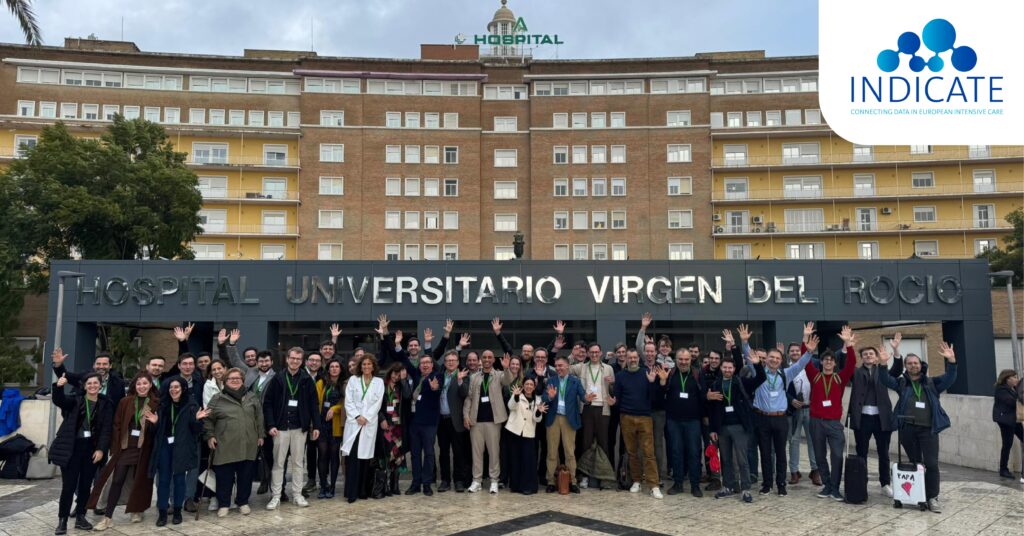
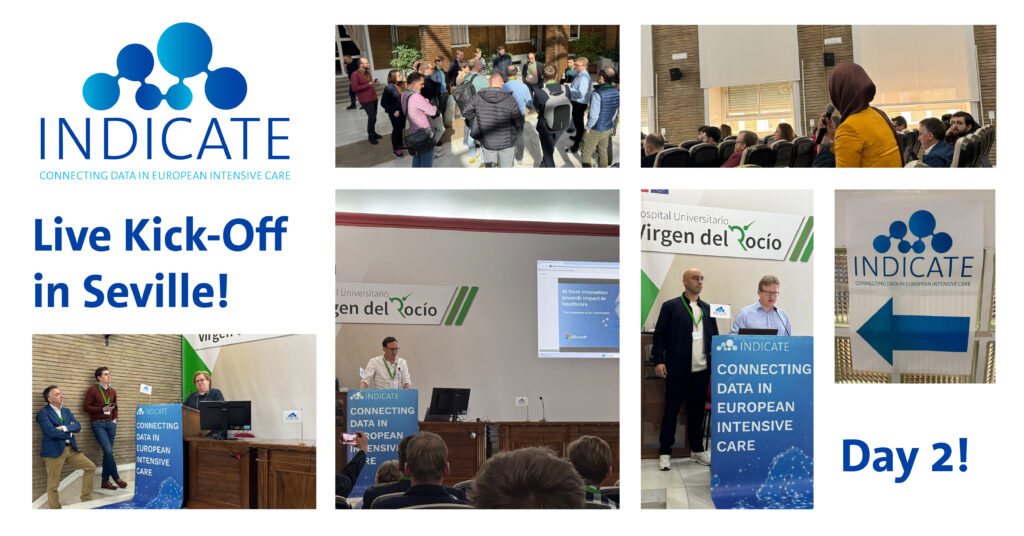
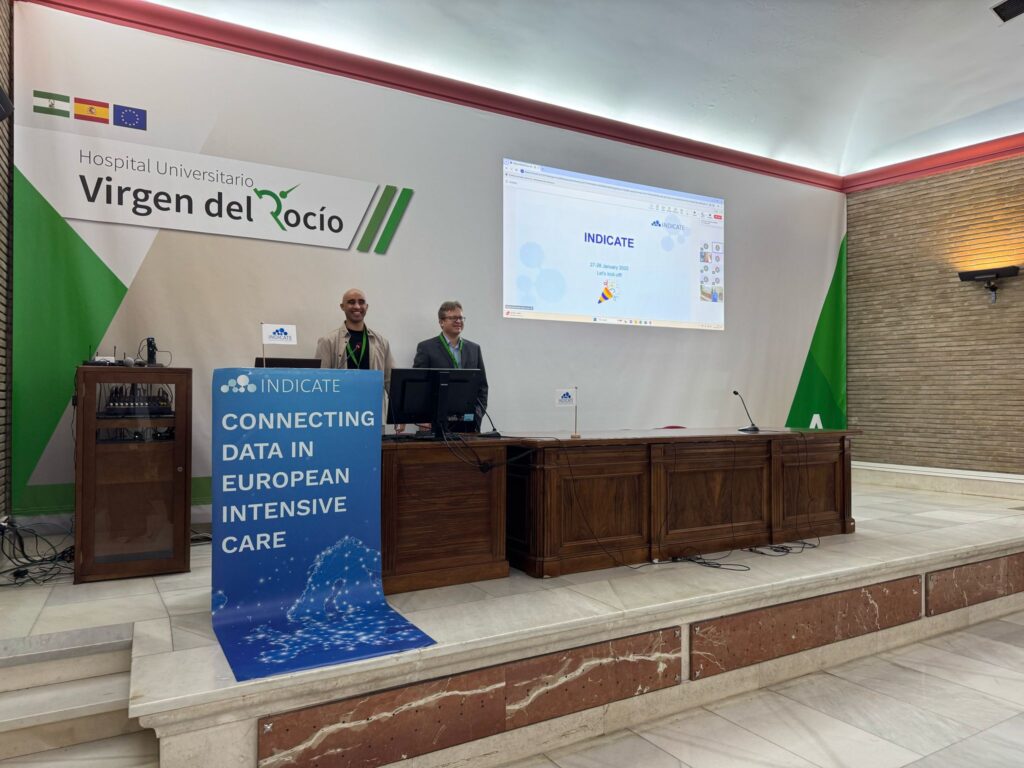
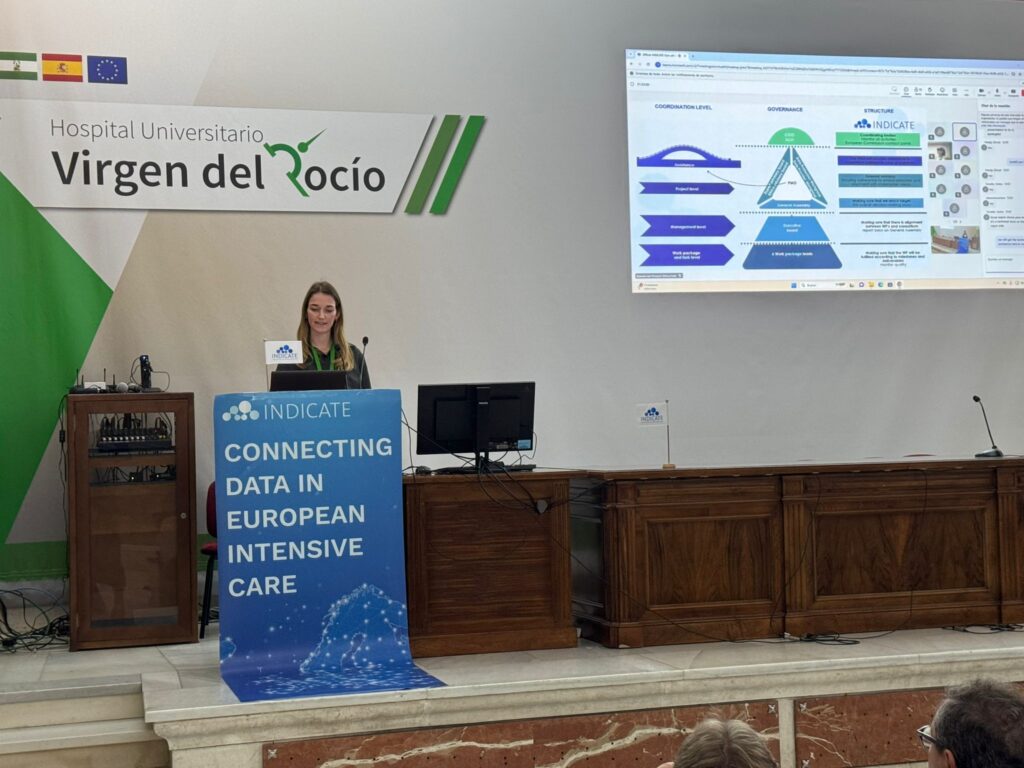
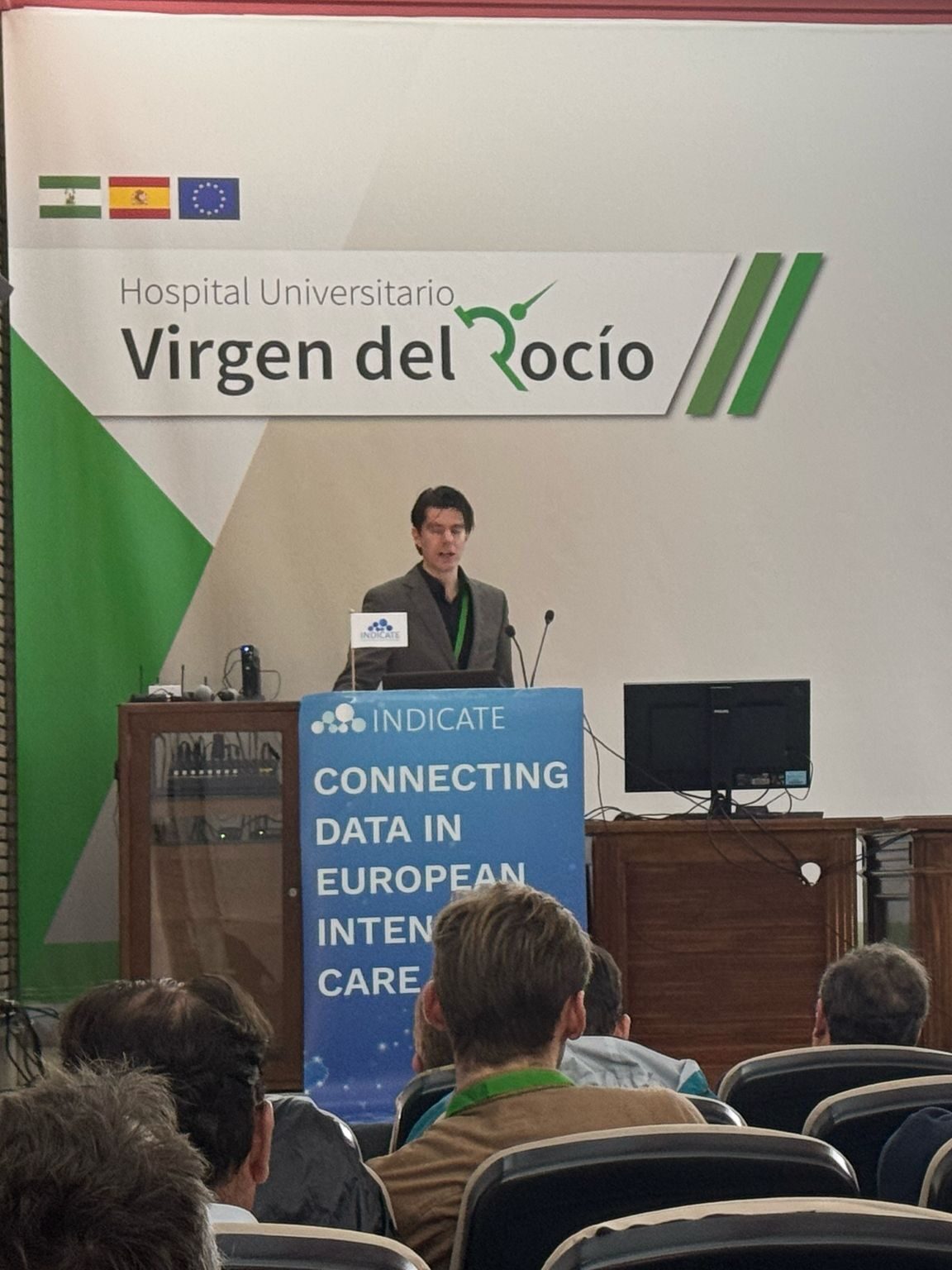
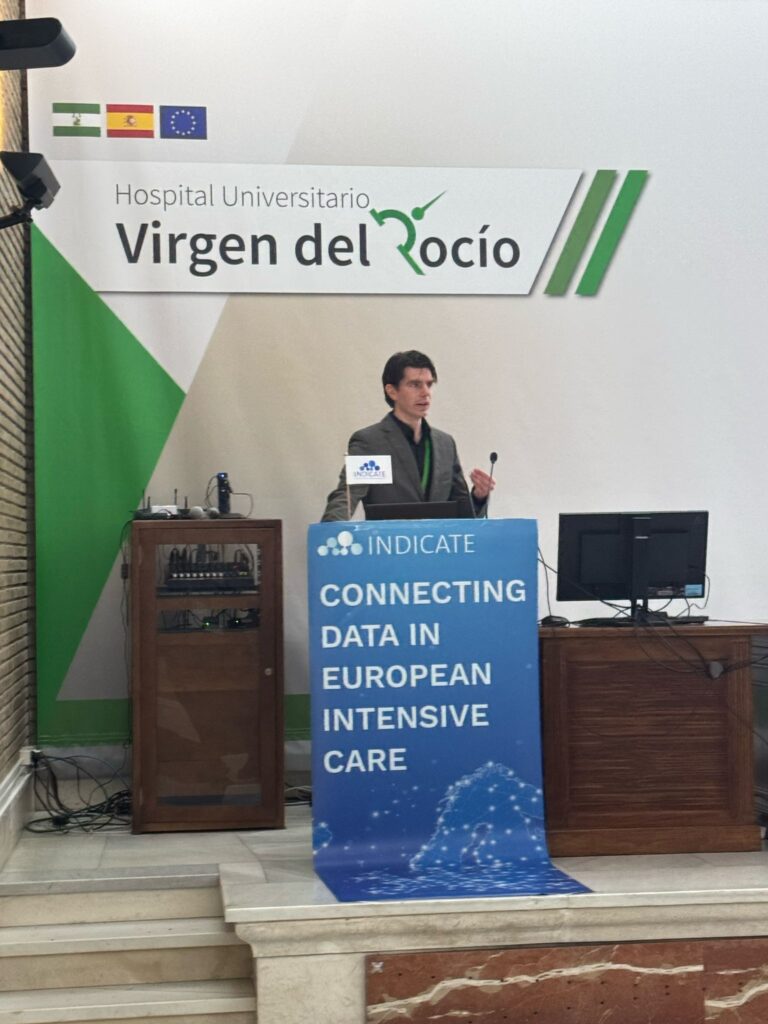
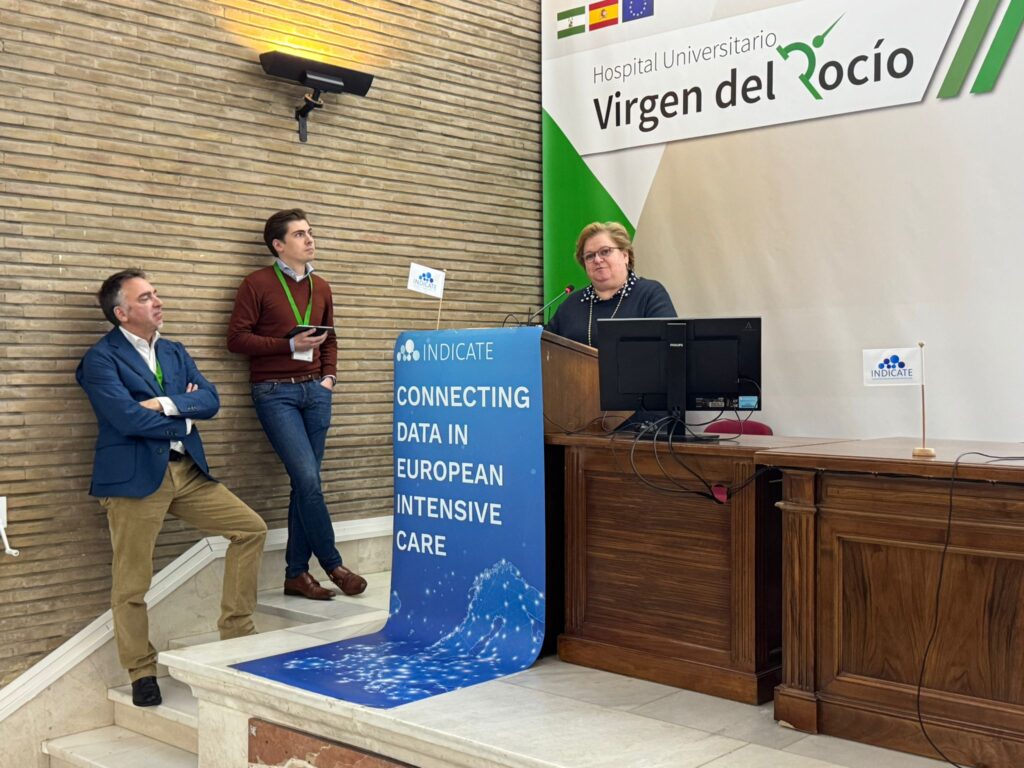
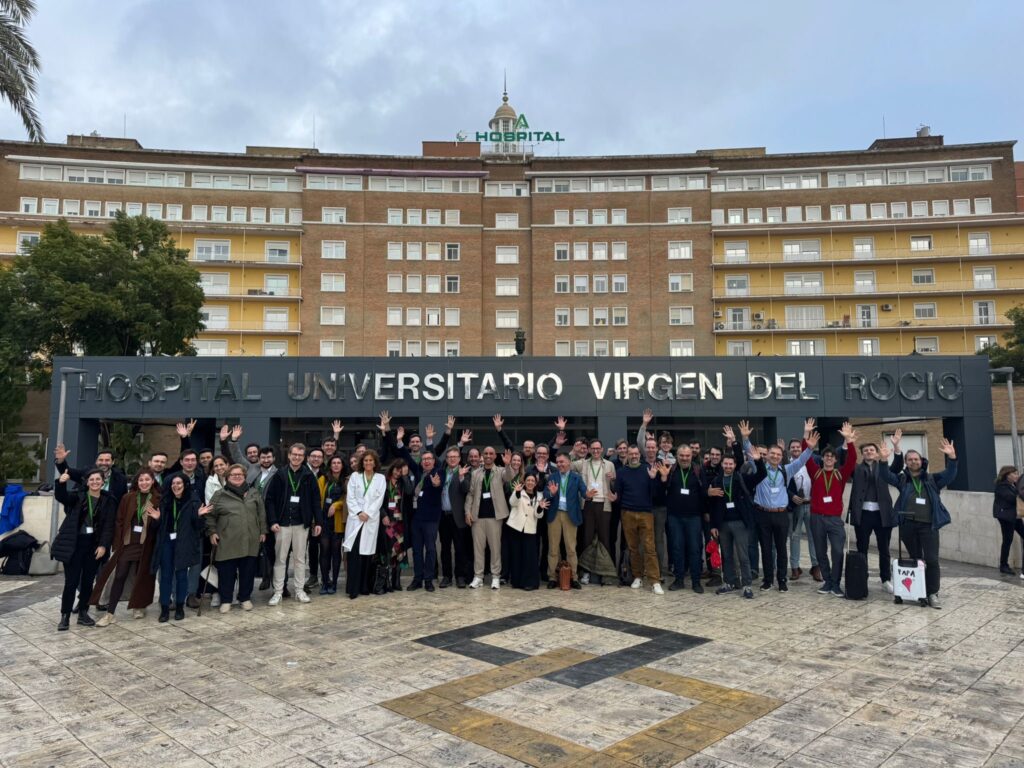
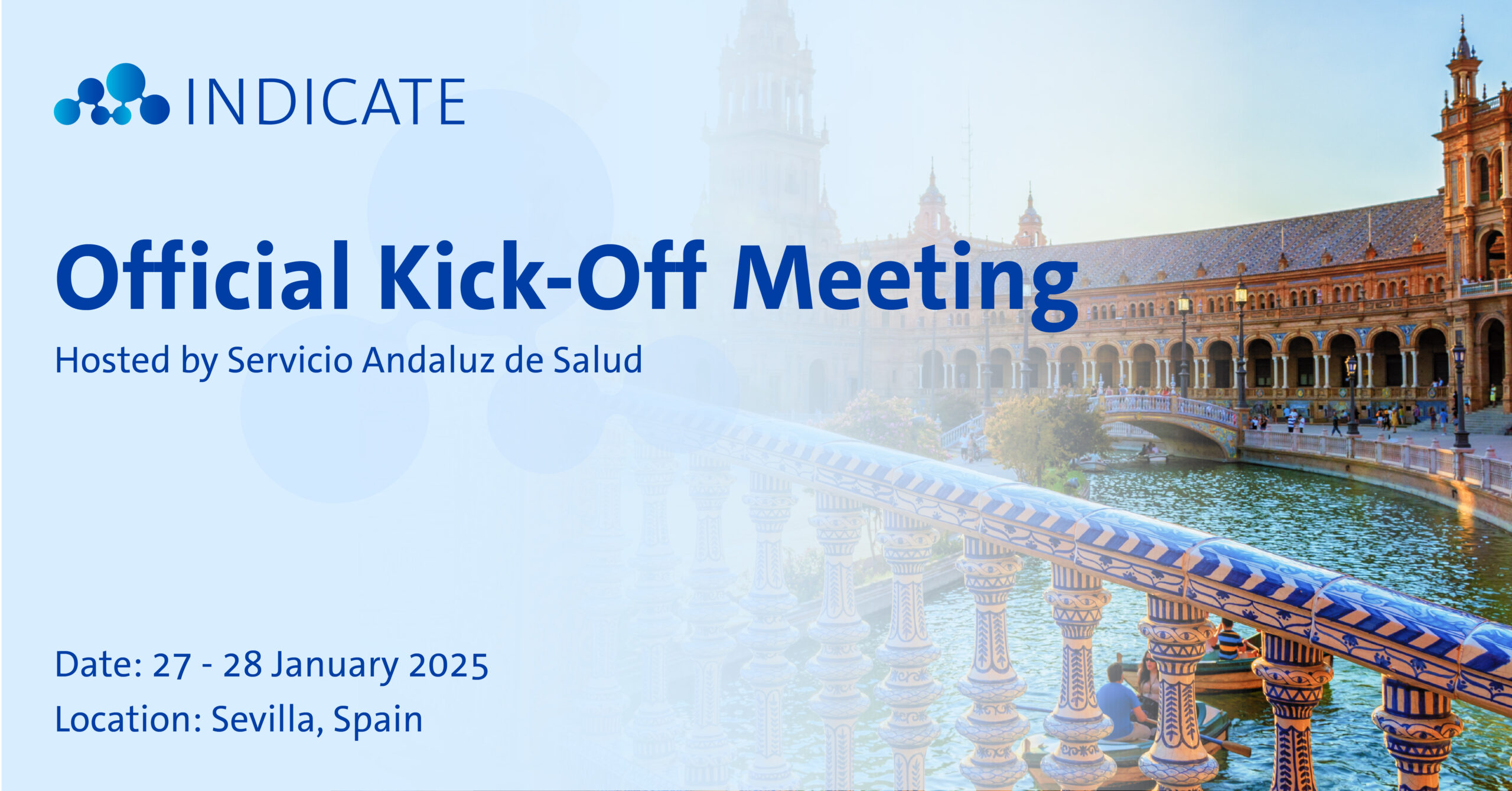
On January 27 and 28, 2025, the official kick-off meeting of the INDICATE project took place at Hospital Universitario Virgen del Rocío in Seville. This event brought together experts and project partners to discuss the objectives and plans for the project.


INDICATE – How data and AI models can improve intensive care medicine

An interview with Patrick Rockenschaub, Postdoctoral researcher at the Medizinische Universität Innsbruck, held by Sabine Kálóczi.

Since the beginning of December 2024, INDICATE has been a consortium working at European level to make data from intensive care units available and usable. In line with the EU General Data Protection Regulation, the aim is to create new AI models that will improve the care of patients in intensive care in the future.


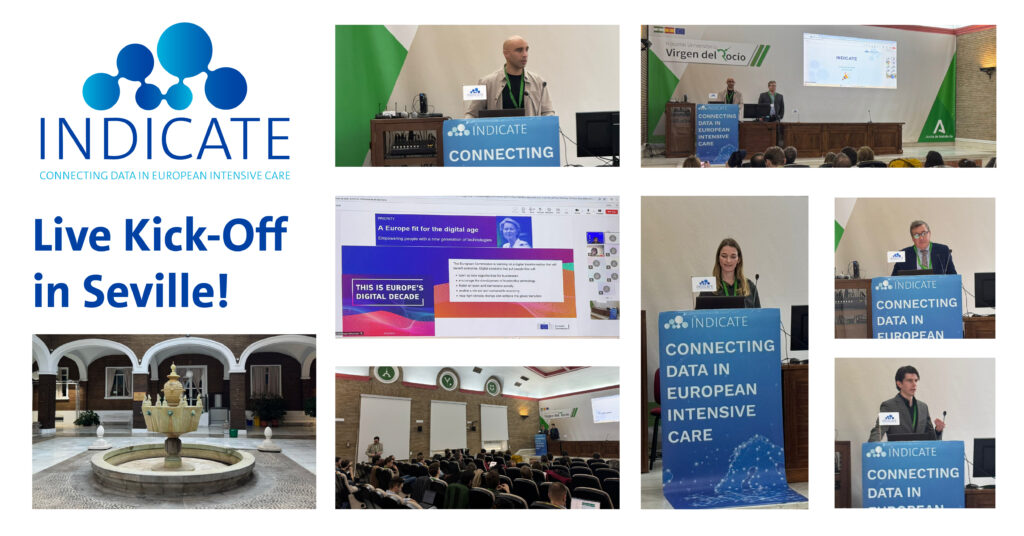
With Day 2 underway, we look back at an amazing Day 1 of the Live Kick-Off in Seville at Hospital Universitario Virgen del Rocío!🚀 On January 27 we officially launched our @EU-endorsed INDICATE research project in Seville, Spain! A big thank you to our wonderful hosts, Carlos Luis Parra-Calderón and Celia Alvarez Romero, for their warm welcome 🌍


Day 2 of the INDICATE kick-off was filled with engaging discussions on federated data models and federated machine learning in the #european union. What exactly are these approaches and how will we leverage them within the INDICATE project?


🇪🇺 INDICATE: Connecting Data in European Intensive Care 🚀Today – December 2, 2024 – marks the launch of the INDICATE project, a pioneering European initiative designed to enhance data access and sharing between intensive care units across Europe.


Logo Erasmus Universitair Medical Center Rotterdam

Jan van den Brand

Erasmus MC

Who am I?
I am Jan van den Brand and I am the Technical Lead for the INDICATE project.

What am I up to during INDICATE?
The roles and responsibilities of the INDICATE Technical Lead involve the technical aspects of the INDICATE project, which aims to establish a secure and widely accessible infrastructure for standardized ICU data from various European countries. This includes:

  • Technical Oversight: Ensuring the design and development of the federated data infrastructure according to the Well Architected Framework, which emphasizes resilience, availability, security, and sustainability.
  • Data Protection: Implementing a zero-trust approach to ensure the confidentiality, integrity, and availability of data and systems.
  • Strategic Planning: Establishing the ELSI framework for data access, data protection, and ethical application of AI.

To that end I am working closely with various work package leads and partners to ensure the successful integration and implementation of the infrastructure.

Get in contact!
e: a.vandenbrand@erasmusmc.nl


Logo Medizinische Universitaet Wien

Stefan Schaller

Medical University of Vienna

Who am I?
I studied medicine in Austria, was trained in Germany, did a research fellowship in the US, and continued working in Germany till recently.

I am Professor for Anaesthesia and Anaesthesiological Intensive Care Medicine and the Chair of the Clinical Division of General Anaesthesia and Intensive Care Medicine at the Medical University of Vienna.

What am I up to during INDICATE?
Providing data, collaborating regarding science, and clinical benchmarking. Think about the future and how the project might improve clinical care and critical care research.

Get in contact!
e: stefan.schaller@meduniwien.ac.at


We are keen to post a bio of everyone involved in this project on the website and in the newsletter as well! 

Please share:

  • Who am I?
  • What do I do?
  • What am I up to during INDICATE? Connected to which WP? Which cases do I work on?
  • What do you expect to accomplish within INDICATE?

Please share your bio and picture with: maaike@indicate-europe.eu


Michel van Genderen
Co-lead INDICATE
e: m.vangenderen@erasmusmc.nl

Christian Jung
Co-lead INDICATE
e: Christian.Jung@med.uni-duesseldorf.de

Lisanne van Prooyen Schuurman
Project Manager
e: e.vanprooyenschuurman@erasmusmc.nl

Jan van den Brand
Technical Lead
e: a.vandenbrand@erasmusmc.nl


Date: March 4, 2025 – March 5, 2025
Location: Brussels

Interesting event for Indicate partners!
EIT Health 2-day event in Brussels 04-05 March on the access/share/use of data.
Driving Innovation in Health Data and Digital Health
Two Days, Two Perspectives: Empowering Healthcare Providers and Start-ups 
to Shape the Future of Digital Health and Innovation.


Date: March 25, 2025 – March 26, 2025
Location: Luxembourg City

The European Health Data Space – the first common thematic EU data space to be implemented – is a major game changer for delivering healthcare across European borders and enabling breakthrough research and innovation. The third edition of the European Digital HealthTech Conference will explore how this influences the development, innovation, use and adoption of digital health solutions.


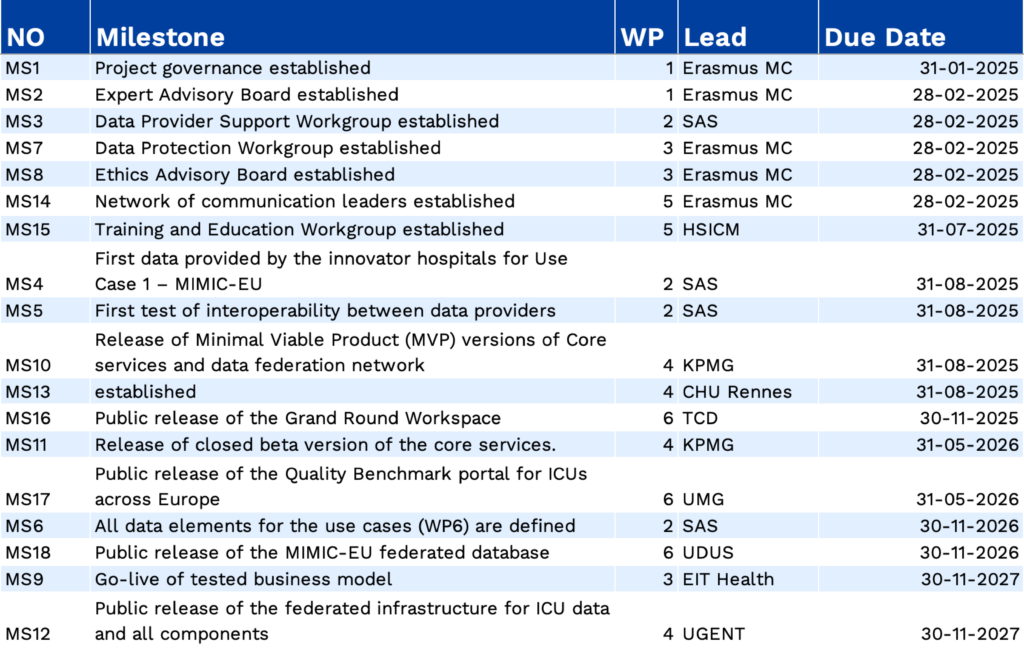
Milestones

Deliverables


Logo Assistance Publique Hospitaux de Paris
Bērnu klīniskā universitātes slimnīca Valsts Sia (Children’s Clinical University Hospital)
Logo Cradeq B.V.
logo Vereniging EIT Health België-Nederland
Logo Erasmus Universitair Medical Center Rotterdam
European Federation of Critical Care Nursing Association
Logo Fraunhofer Gesellschaft Zur Forderung der Angewandten Forschung
Logo Heinrich-Heine-Univeristaet Duesseldorf - universiteitsziekenhuis Dusseldorf
Logo HELLENIC SOCIETY OF INTENSIVE CARE MEDICINE
Logo Servicio Madrileno de Salud (Hospital Universitario 12 de Octubre)
Logo logo ervicio Andaluz de Salud (Virgen del Rocío University Hospital)
Logo INSTITUT CATALA DE LA SALUT
Logo INSTITUT NATIONAL DE LA SANTE ET DE LA RECHERCHE MEDICALE
Logo Region Stockholm (Karolinska University Hospital)
logo KPMG Advisory NV
Logo Medizinische Universitat Innsbruck
Logo Medizinische Universitaet Wien
Logo Paracelsus Medizinische Privatuniversitat Salzburg
Logo Sorbonne Université (INSERM-SU)
Logo Universitair Medisch Centrum Utrecht
Logo Ghent University Hospital
Logo Logo Univerisitatsmedizin Greifswald Kopperschaft Des Offentlichen Rechts
Logo Université de Rennes

Endorsed by:


Questions? Share news?

Do you have a special request? Would you like to share news or a publication? Would you like to be (digitally) connected to a certain person? Please feel very welcome to share your questions via: info@indicate-europe.eu


Follow the INDICATE channels!

www.indicate-europe.eu


Data Provider Support Workgroup established

The INDICATE Data Provider Support Workgroup has been established. The responsibilities and tasks include:

  • Provide technical and legal support to Data Providers (hospitals making their data available through the INDICATE infrastructure) in setting up the ETL process and establishing data quality assurance and data quality control policies. 
  • Monitor data quality and GDPR compliance after the initial onboarding of Data Providers, in close collaboration with the ELSI experts in WP3.
  • Develop and implement a structured monitoring plan to continuously monitor relevant KPIs for INDICATE, including the progress of Data Providers onboarding and the volume of data made available through the INDICATE infrastructure.
  • Implement data audit procedures based on those developed in IMI EHDEN and outlined in the OHDSI handbook.

Read more about the workgroup and composition.

INDICATE – How data and AI models can improve intensive care medicine

Logo Medizinische Universitat Innsbruck

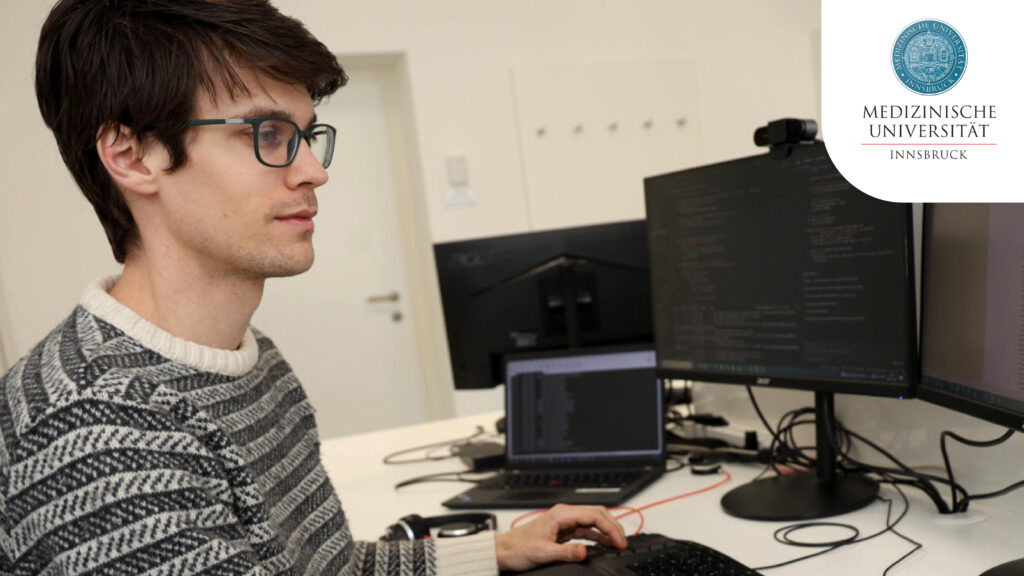
An interview with Patrick Rockenschaub, Postdoctoral researcher at the Medizinische Universität Innsbruck, held by Sabine Kálóczi.

Since the beginning of December 2024, INDICATE has been a consortium working at European level to make data from intensive care units available and usable. In line with the EU General Data Protection Regulation, the aim is to create new AI models that will improve the care of patients in intensive care in the future.

Read the whole interview here (in German).

Copyright Image: Medical University of Innsbruck/D. Bullock

Kick-off Meeting INDICATE Project – January 27-28, 2025

Hospital Universitario Virgen del Rocío, Seville

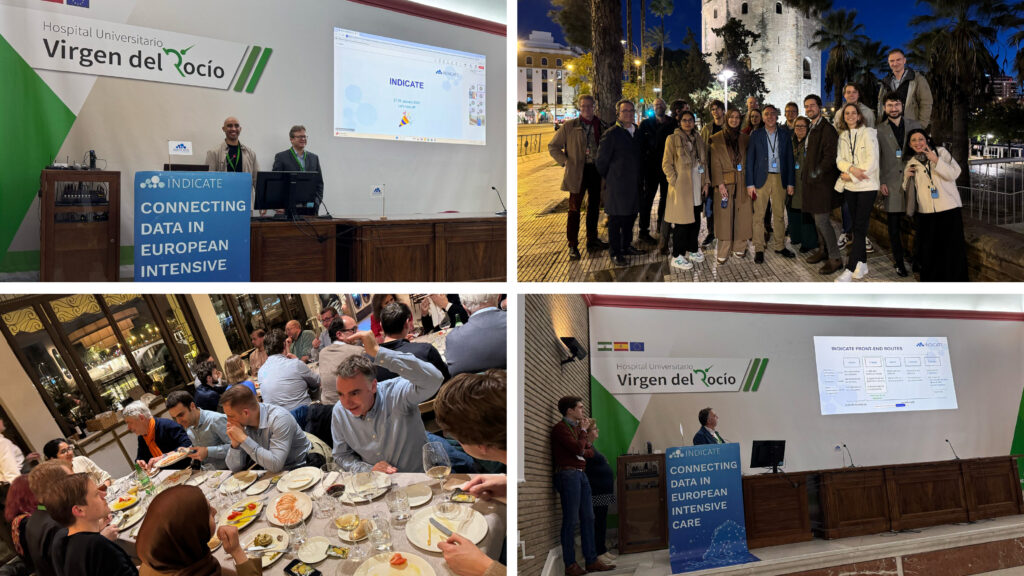
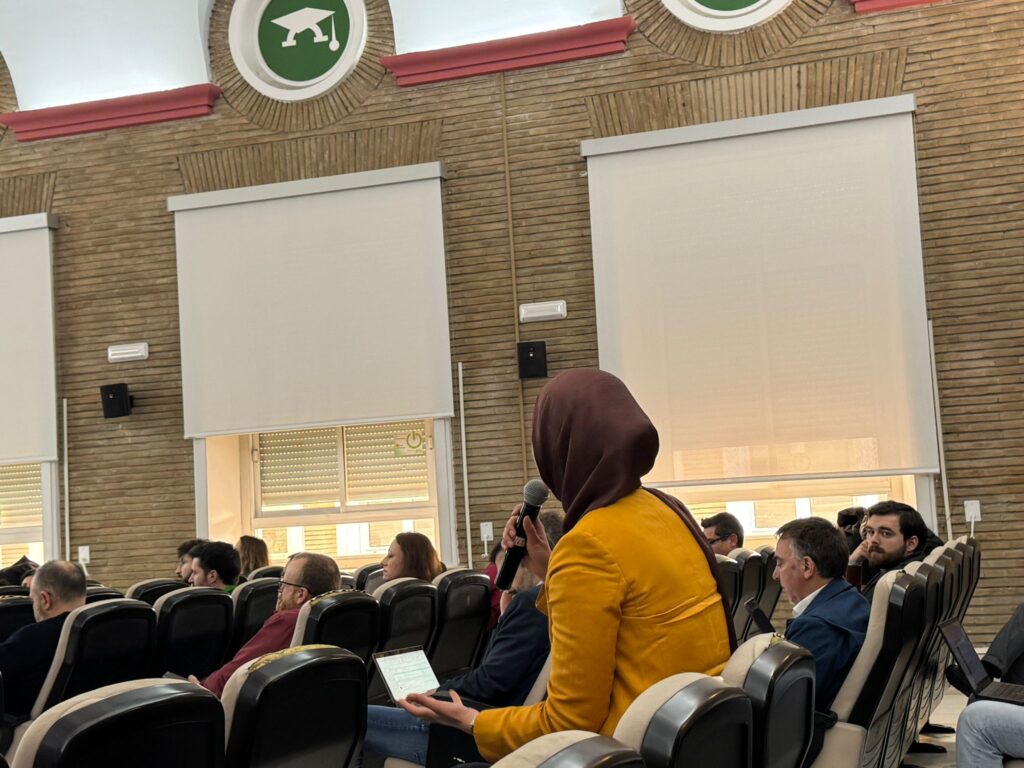
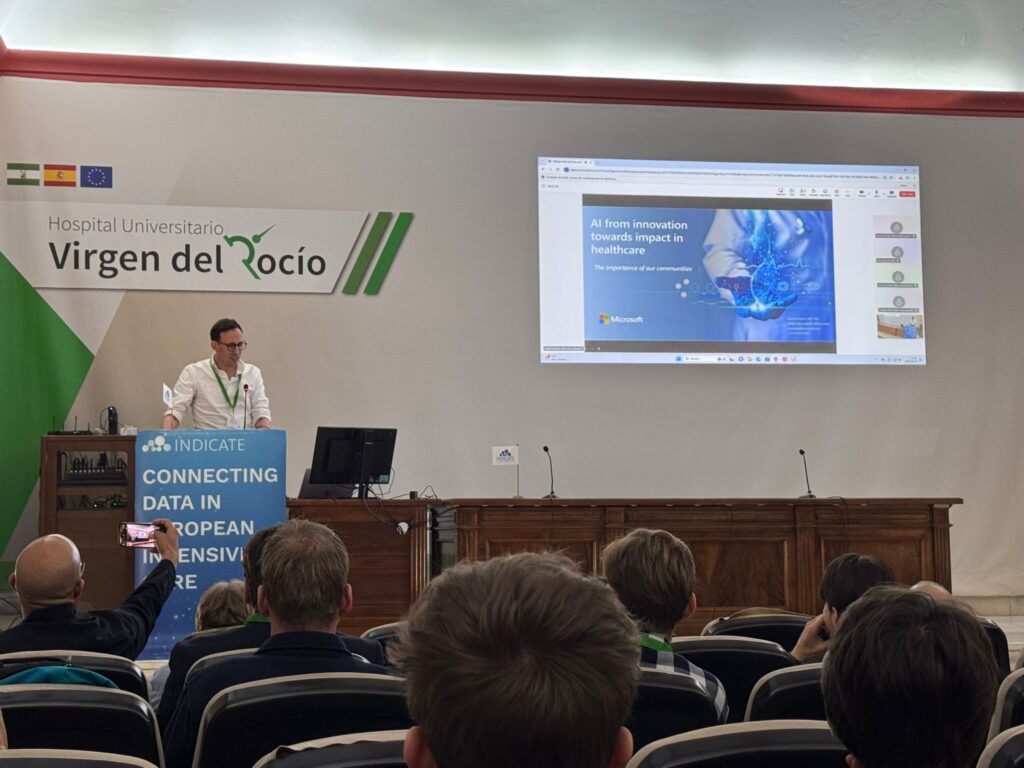
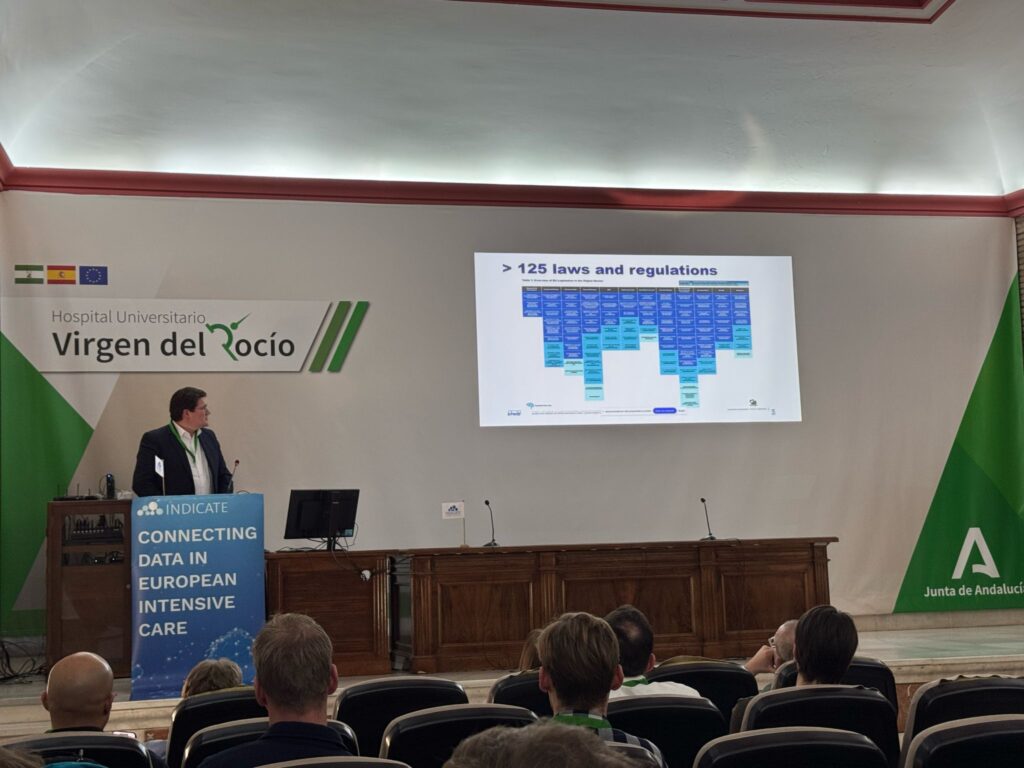
On January 27 and 28, 2025, the official kick-off meeting of the INDICATE project took place at Hospital Universitario Virgen del Rocío in Seville. This event brought together experts and project partners from 20 hospitals and 36 organizations in total to discuss the objectives and plans for the project.

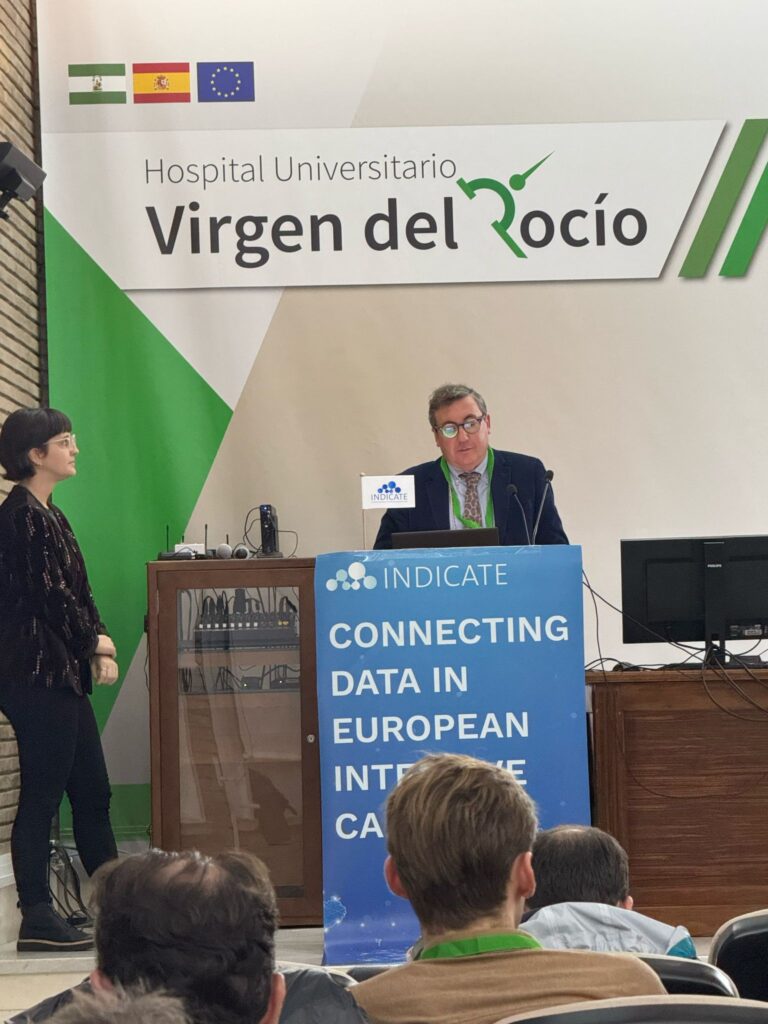
The two-day meeting started on Monday 27 January with a welcome speech from the project coordinators, Prof. Dr. Christian Jung and Dr. Michel van Genderen. They provided an overview of the project’s goals and its current status. Next, the Dean of the Servicio Andaluz de Salud presented insights on the role of Artificial Intelligence in Seville.

In the afternoon, an EU project officer gave a presentation on the European perspective, discussing funding opportunities and collaboration agreements between the consortium and the European Commission. After a short break, Maxim Moinat (Erasmus MC) introduced the OMOP Common Data Model, followed by Jan van den Brand (Erasmus MC), who gave a presentation on data architecture.

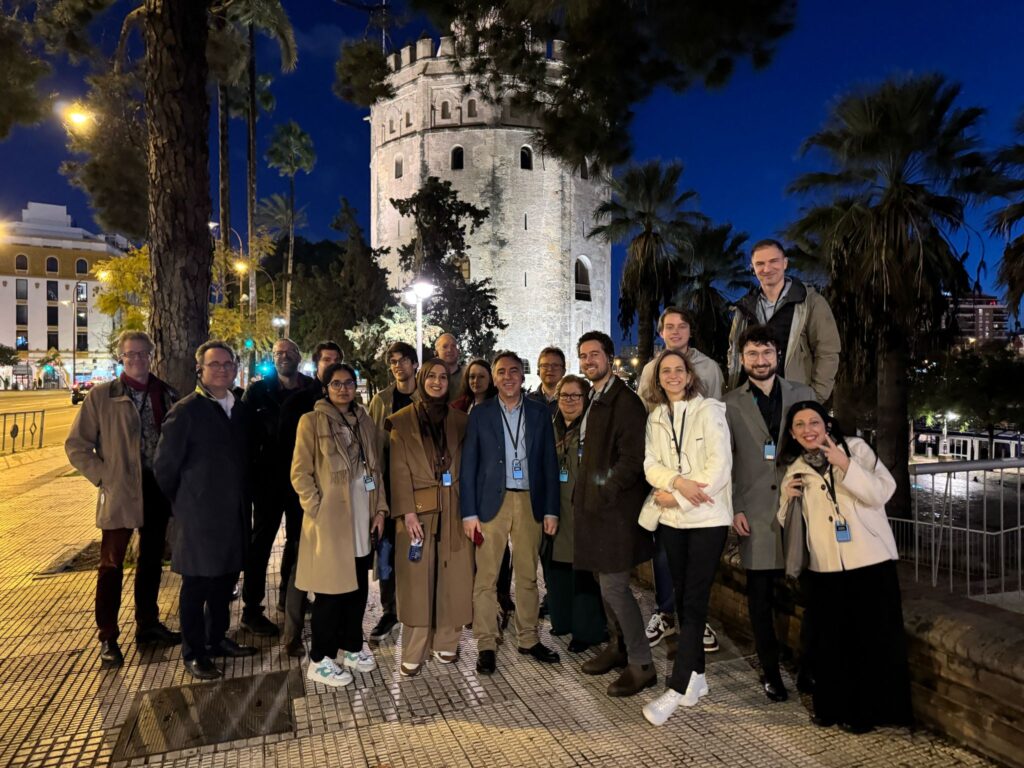
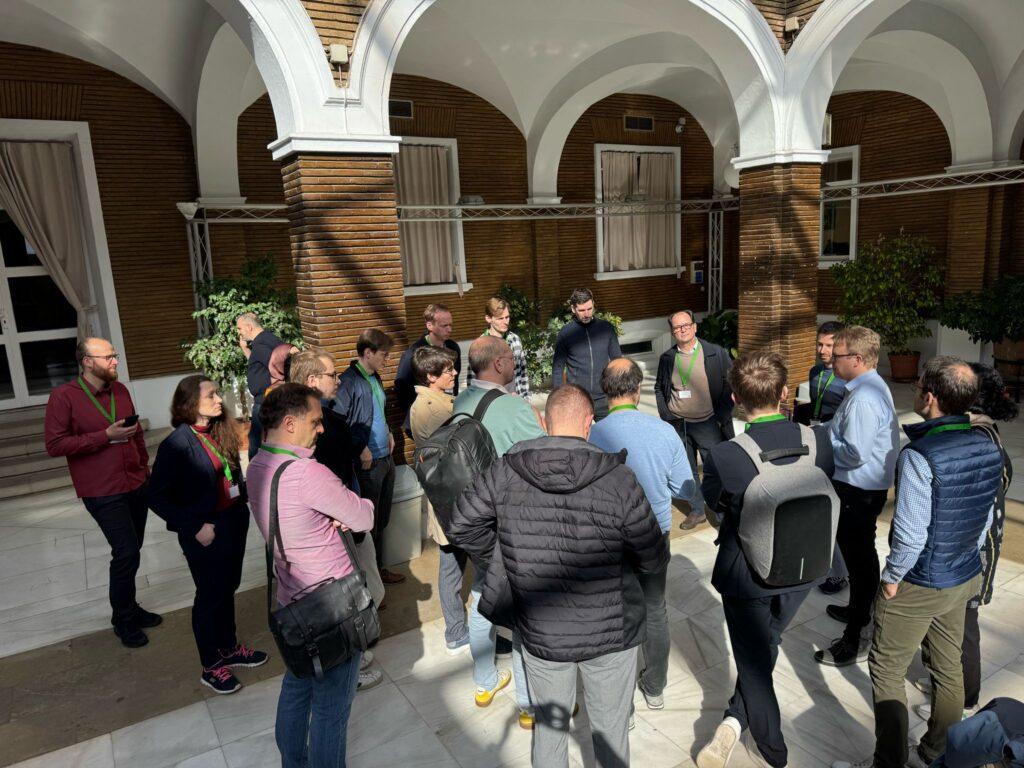
The day concluded with presentations from the first work packages, a summary of the discussions, and preparations for Day 2. Attendees also had the opportunity to tour the hospital. In the evening, participants enjoyed a guided city tour and an informal dinner at restaurant Rio Grande.

Highlights from Day 1 include:

  • Opening remarks by Christian Jung and Michel van Genderen, our project coordinators
  • Inspiring welcome by the Dean of the Servicio Andaluz de Salud – Dr. Cristina Suárez Mejías – Strategic Cabinet – Responsible for the Andalusian Health Service, on behalf of Mr. Ismael Vargas Pina – General Director for Information Systems and Communications
  • Followed by insightful presentations by the ICU department head Rosario Amaya Villar followed by EU officer Alina Lupu who nicely explained the importance of the Indicate project and the potential of Virtual Human Twins in Europe
  • Maxim Moinat (Erasmus MC OMOP Common Data Model expert) shared his data standardization insights
  • And the European data space architecture was explained by Jan van den Brand –  underscored by his quote: “People should have control over their health data” and “Data must be protected while enabling lawful access.”

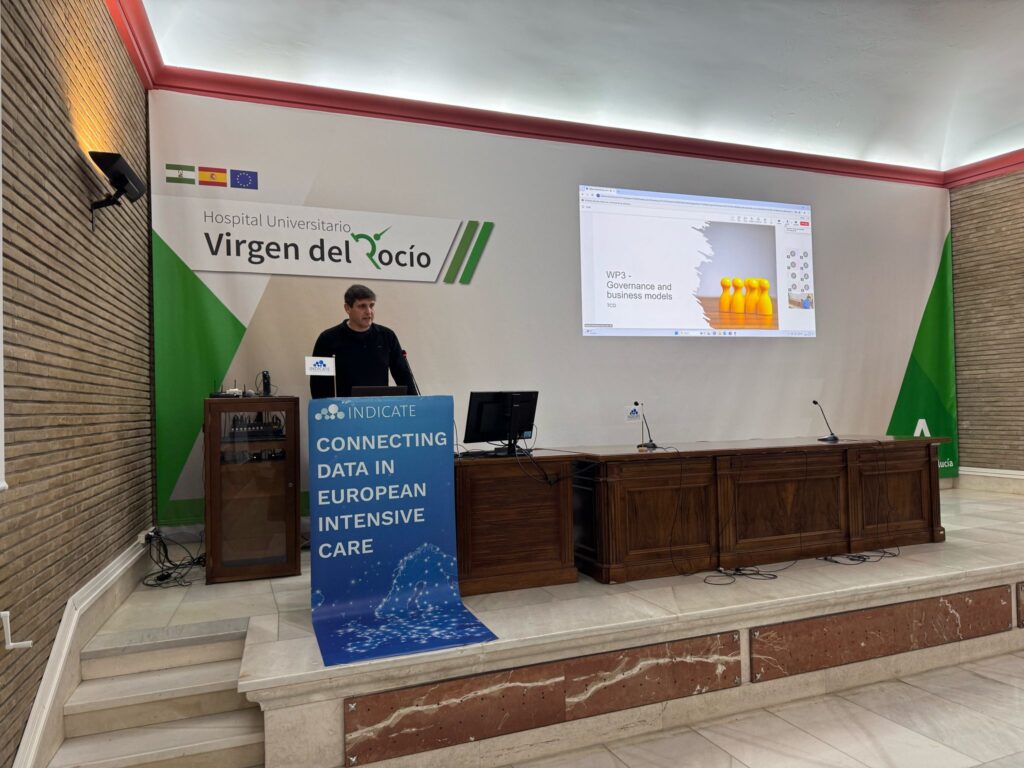
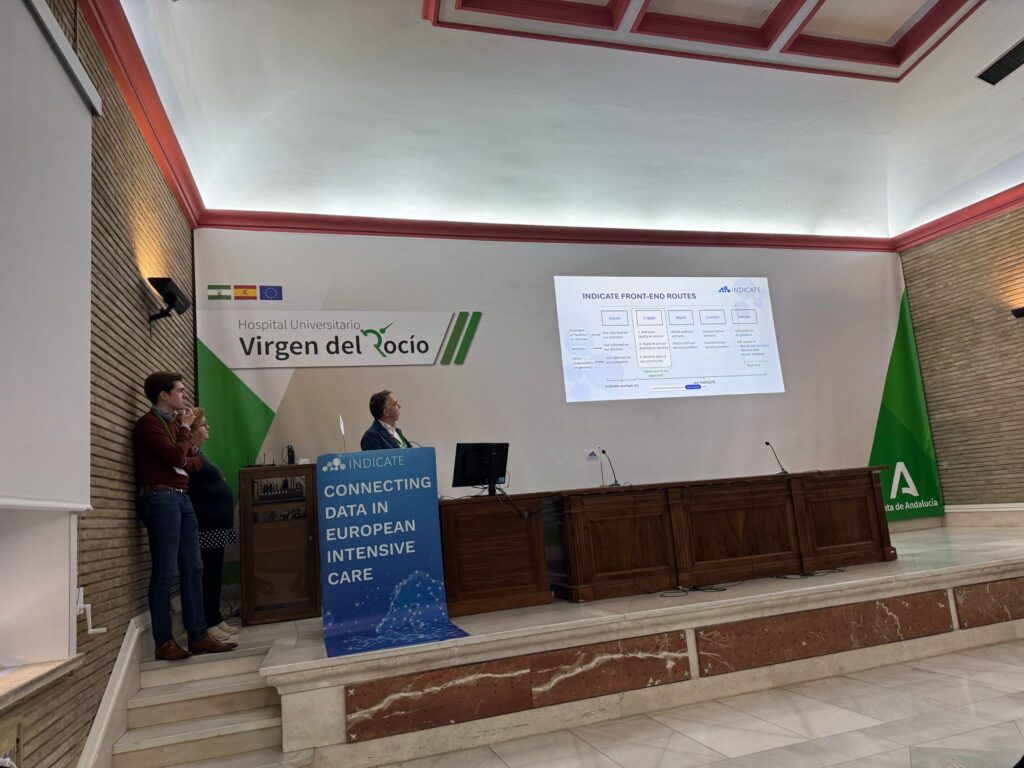
The second day Tuesday, January 28, 2025, began with a short introduction by the project coordinators, followed by presentations on various work packages, covering topics such as governance and business models, technical infrastructure, and dissemination, exploitation, and communication.

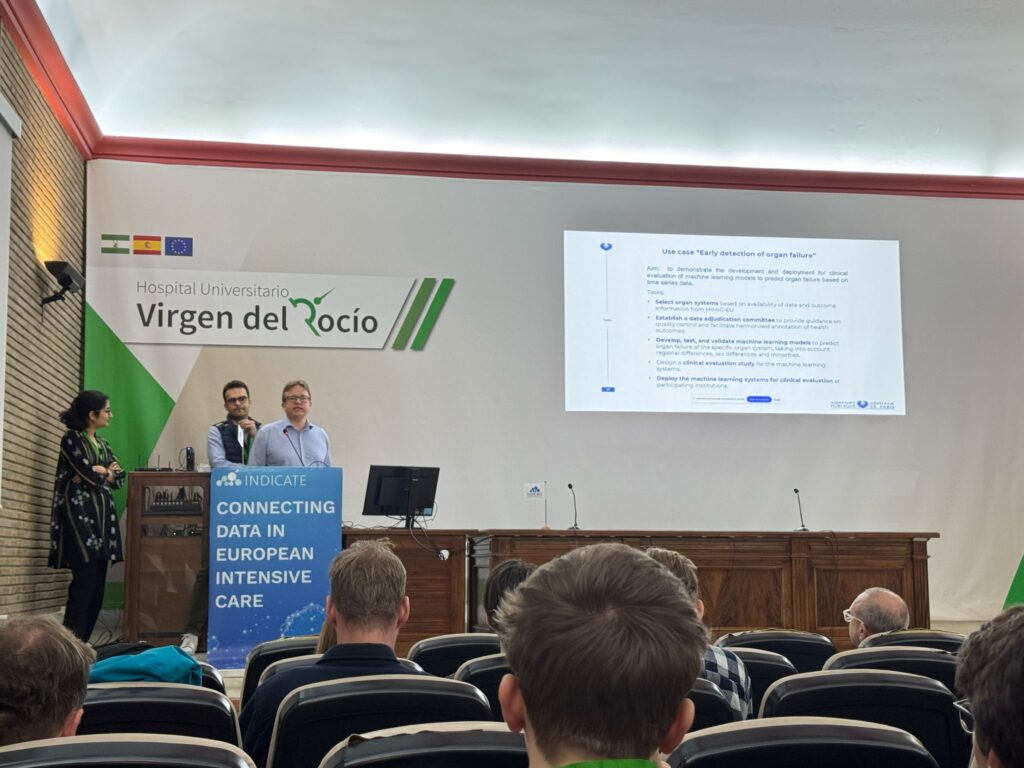
After a coffee break, clinical demonstrations were discussed, including use cases such as MIMIC-EU, early detection of organ failure, and prediction of neonatal and pediatric sepsis.

The meeting provided a valuable opportunity for partners to exchange knowledge, discuss plans, and establish a strong foundation for successful collaboration within the INDICATE project.

Read the full programme here.

INDICATE Official Kick-Off Meeting

INDICATE Official Kick-Off Meeting

Venue

KOM Conference Room, Hospital Universitario Virgen del Rocío, Sevilla (instructions and the end of the programme)
If you are participating online: the meeting link will be provided to you as soon as possible

Address: Av. Manuel Siurot, s/n, 41013 Sevilla
Link to Google Maps: https://maps.app.goo.gl/mWKy1cWWTB6ocuhW9

How to walk to the conference room? Click here: directions to the conference room.

Program Monday, January 27th  

12.00 – 13.00 CET

Arrival and Networking lunch

Informal lunch to welcome participants and encourage networking

13.00 – 13.05
Welcome to the official Kick-off Meeting of INDICATE

Welcome by the project coordinators: Prof. dr. Christian Jung and dr. Michel van Genderen

Prof. dr Christian Jung
Head, Coronary Heart Disease
and Critical Care division 
Universitätsklinikum Düsseldorf 

Dr. Michel van Genderen
Internist-Intensivist
Erasmus MC
13.05 – 13.30
Welcome in Sevilla

Introduction about Servicio Andaluz de Salud, AI in Sevilla
Welcome by the Dean of the Servicio Andaluz de Salud:
Mr. Ismael Vargas Pina – General Director for Information Systems and Communications

The dean will be accompanied by Dr. Rosario Amaya Villar, Head of the Intensive Care Unit, and Mr. Carlos Luis Parra Calderon, Head of the Technological Innovation at the Virgen del Rocio University Hospital.

13.30 – 14.00

Short Deep Dive into INDICATE – Current status

Prof.dr. Christian Jung and dr. Michel van Genderen
Overview of the project objectives, updates about current processes etc.

Prof. dr Christian Jung
Head, Coronary Heart Disease
and Critical Care division 
Universitätsklinikum Düsseldorf 

Dr. Michel van Genderen
Internist-Intensivist
Erasmus MC
14.00 – 14.30

INDICATE – The European Union Perspective

Project officer of the EU

  • Funding schemes – Where to fit in INDICATE
  • Working arrangements between the consortium and the EC
  • Q&A
14.30 – 15.00
Break with Tea & Coffee
15.00 – 15.30

OMOP common data model (CDM) for dummies (20min – 10min Q)

Explanation of the concept of Common Data Models, its objectives and benefits for standardizing healthcare data, and its significance for INDICATE.


Maxim Moinat
Medical Informatics
Erasmus MC


15.30 – 16.00

Data space architecture (20min 10 Q)

An introduction on a data space architecture and how we are progressing toward its implementation within INDICATE.


Jan van den Brand
Datahub
Erasmus MC     

16.00 – 16.30

Work Package Presentations – Session 1

WP1: Project management and coordination (5 minutes + 5 minutes Q&A) (Erasmusmc)

WP2: Common data models and vocabularies (15 minutes + 5 minutes Q&A) (SAS)

16.30 – 16.45
Wrap-Up of Day 1

Summary and preparation for Day 2.

16.45 – 17.45

Hospital Tour for all + Group picture

Mr. Carlos Luis Parra Calderon, Head of Technological Innovation at the Virgen del Rocio University Hospital – Including a short presentation about the hospital.
17.45
Walk from the hospital to the hotel
18.30
Meet in the lobby to take the bus to the evening activity (guided city tour) – followed by informal dinner (funded by central INDICATE budget)

Evening program

18.30

Pick up with bus from Hotel Silken Al-Andalus Palace to the city center

18.45
Drop off – Torre del Oro around 7pm
19.00 – 20.00
Guided city tour
20.00 – 22.30
Dinner at Rio Grande Restaurant: C. Betis, 69, 41010 Sevilla (https://maps.app.goo.gl/PtiCjeSRFdbsaM6G6)
22.30
Bus back to the hotel

Program Tuesday, January 28th

08.15 – 08.30
Meet in lobby, walk from the hotel to the hospital
08.30 – 09.00
Walk-in and Coffee & Tea
09.00 – 09.05
Welcome and Introduction of the Day
Prof. dr. Christian Jung and dr. Michel van Genderen

Prof. dr Christian Jung
Head, Coronary Heart Disease
and Critical Care division 
Universitätsklinikum Düsseldorf 

Dr. Michel van Genderen
Internist-Intensivist
Erasmus MC
09.05 – 10.30
Work Package Presentations: Session 2

WP3: Governance and business models (15 minutes + 5 minutes Q&A) (TCD)

WP5: Dissemination, exploitation and communication (15 minutes + 5 minutes Q&A) (HSICM)

WP4: Design and implementation of the technical infrastructure (Update and demonstration: 40 minutes + 5 minutes Q&A) (UGENT)
10.30 – 11.00
Coffee Break
11.00 – 12.00

Work Package Presentations: Session 3

WP6: Clinical demonstrations (25 minutes + 5 minutes Q&A) (Dusseldorf)
Use case 1: MIMIC-EU (Dusseldorf)
Use case 2: Early detection of organ failure (AP-HP)
Use case 3: Virtual digital twin of mechanical ventilation (VUMC)
Use case 4: Prediction of neonatal and pediatric sepsis (Erasmus MC)
Use case 5: Quality benchmarking dashboards (Greifswald)
Use case 6: Grand rounds workspace (TCD)
12.00 – 12.30
General discussion on WP challenges and next steps
12.30
Lunch
13.30 – 14.30

Breakout Sessions: Deep Dive into Challenges and Opportunities

Small groups focusing on specific project themes
(e.g., governance, data management, dissemination, etc.).

14.30 – 15.00
Coffee Break
15.00 – 16.00

Plenary: Breakout Session Feedback

  • Each group reports back, followed by discussion on action points.
16.00 – 16.15
Next Steps – Summary of key outcomes & action points
16.15 – 17.30

Inspirational talks by invited speakers including

Closing remarks by the Project Coordinators

17.30

ICU – presentation & Visit (possible for max 10 people)

Dr. Rosario Amaya Villar, Head of the Intensive Care Unit at the Virgen del Rocio University Hospital

18.00
Walk from the hospital to the hotel
18.30

Pick up by taxi – Celebratory Kick-off Dinner
(self-funded by institute INDICATE budget) payment details in the
 registration form) – Casa Ozama

Avenida Borbolla, 57-59, Cornering Calle Felipe II
In front of Maria Luisa park
Seville (Spain)

Continue reading